
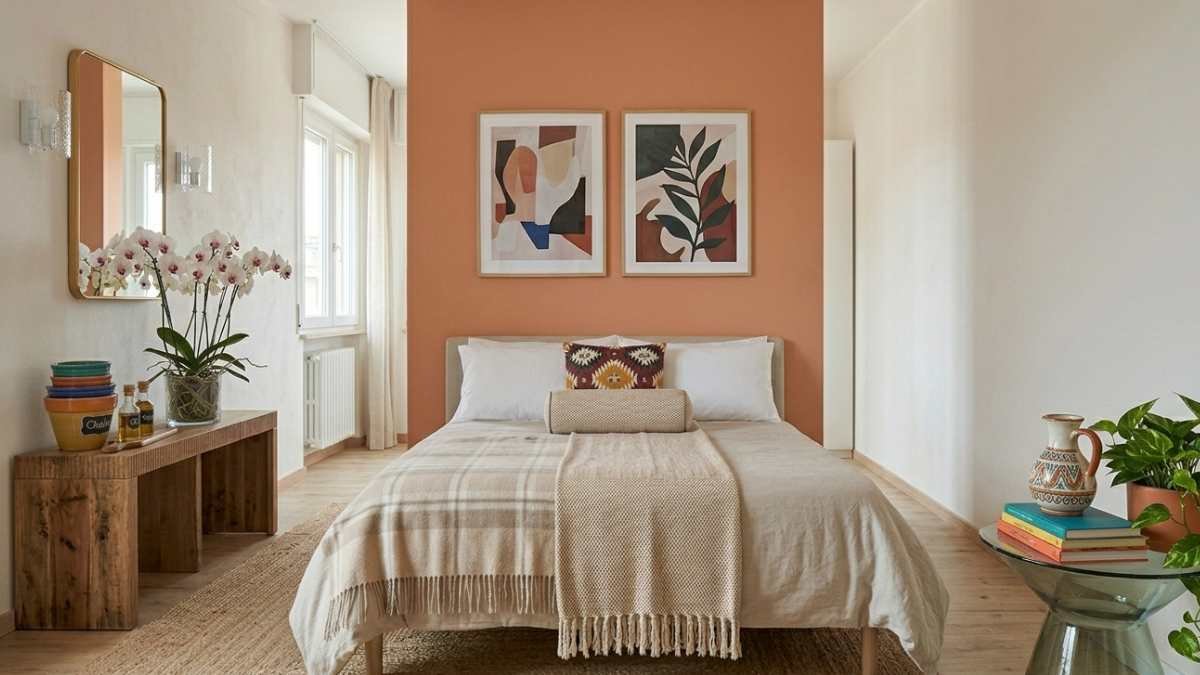

For years the headboard has been considered an essential element of the bed. Structured, paneled, often oversized, designed to give character to the room. Today, however, this approach is changing.
Bedrooms become lighter. The spaces are more fluid, less rigid and even the bed ceases to be a single block to become part of a more open composition. Here the headboard loses its central position and leaves space more flexible solutionsvisual and less cumbersome. It’s not about removing something, but replacing it with ideas that work better in the modern space.
Wall fabrics: softness without structure
One of the more direct alternatives is to use fabrics. A large sheet, an important fabric or even a curtain placed behind the bed can create the same visual effect as a headboard, but with much lighter presence.
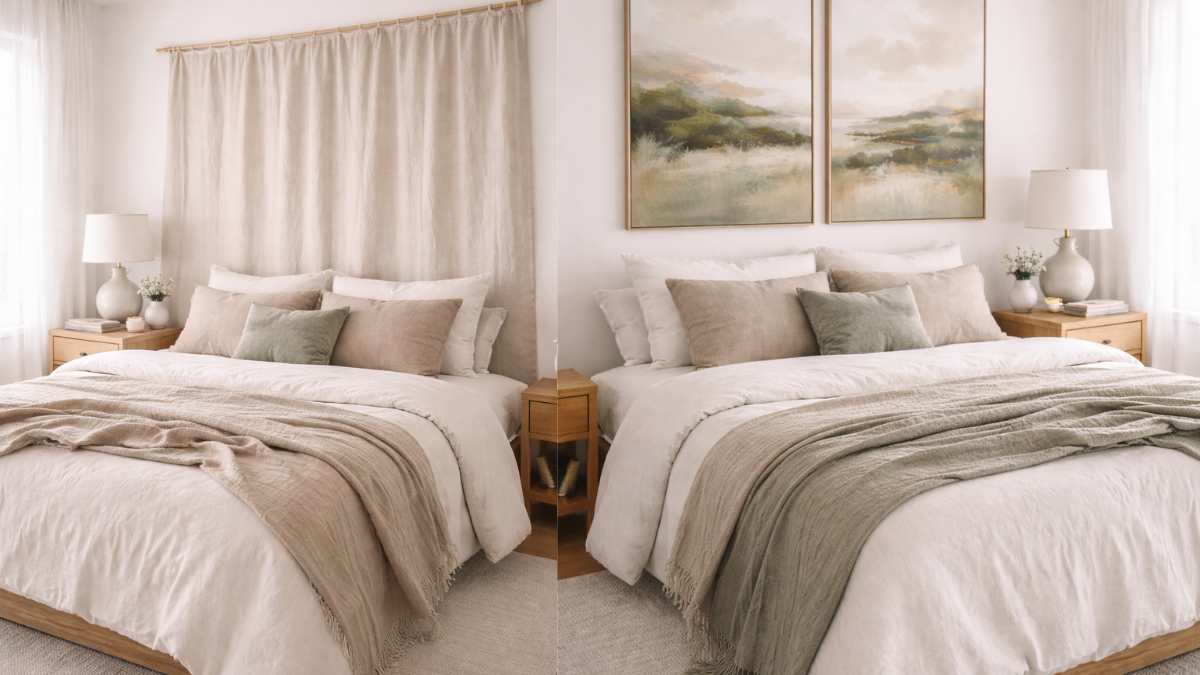
The difference is in the details. A slightly loose, crumpled sand colored linen creates a relaxed and natural effect. A light velvet, on the other hand, instantly makes the environment more elegant, especially in deep shades like forest green or midnight blue.
Even the way the fabric falls changes everything. Leave it soft, not too tight, avoid the “fake” result and makes the room more alive.
Edited wall: when a well-crafted gesture is enough
In many cases you don’t need to add anything, just work on the wall. A very effective solution is to create a vertical zone slightly wider than the bed, perhaps in a color such as light terracotta, gray or sage. This frames the bed without weighing it down.
The painted arch is also very interesting and is making a comeback: it softens the lines and completely replaces the headboard without introducing bulk. If you want something more graphic, a horizontal line up the middle of the wall, perhaps tone on tone, can already be enough to give structure.
Tables and compositions: how not to make mistakes
Another widely used alternative is that of tables. Not just one, but a thoughtful composition. The most common mistake here is placing panels that are too small or too far apart. They work best when they are optically “compact”almost as if it were a single surface.
Two large prints side by side above the bed are often more effective than four small ones spread out. Even a single, slightly oversized print can completely replace the headboard. If the room is neutral, you can use painting to introduce a color that you then recall in the bed fabrics. This is it login which makes everything cohesive.
Lightweight elements: weightless structure
For those who do not want to give up a minimal structure, there are modular solutions that are much lighter than traditional headboards.
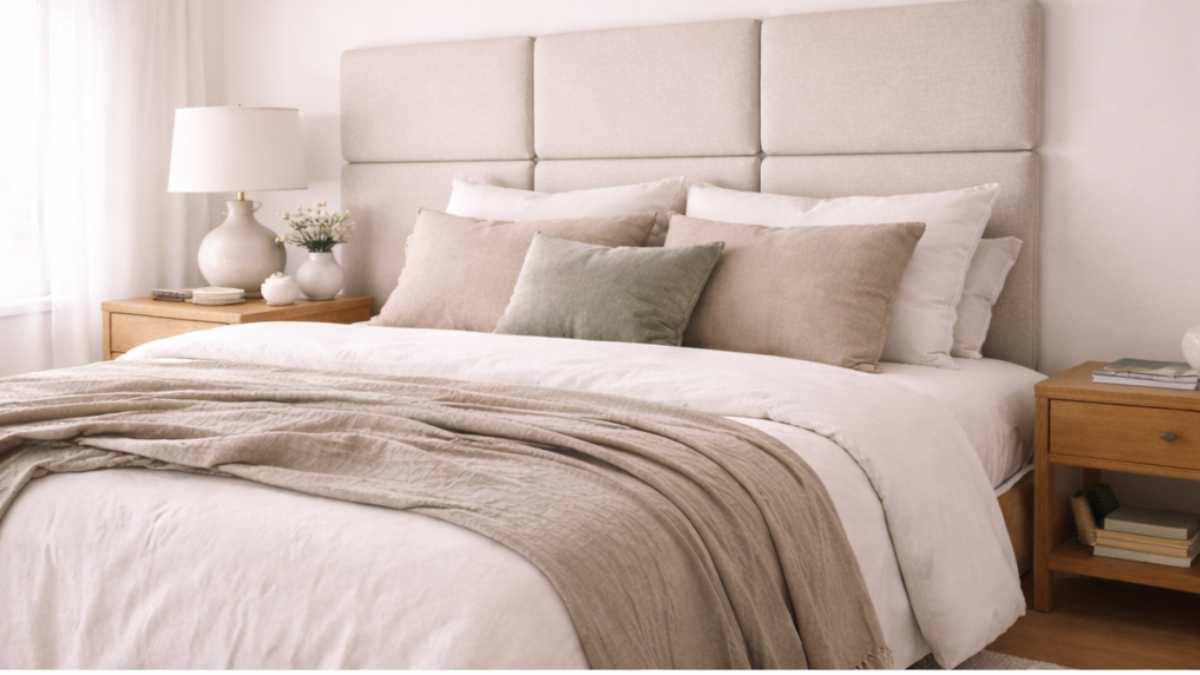
Square upholstered panels, for example, can be arranged in a row or slightly staggered. They don’t have to cover the entire width of the bed: even a shorter, centered composition works very well.
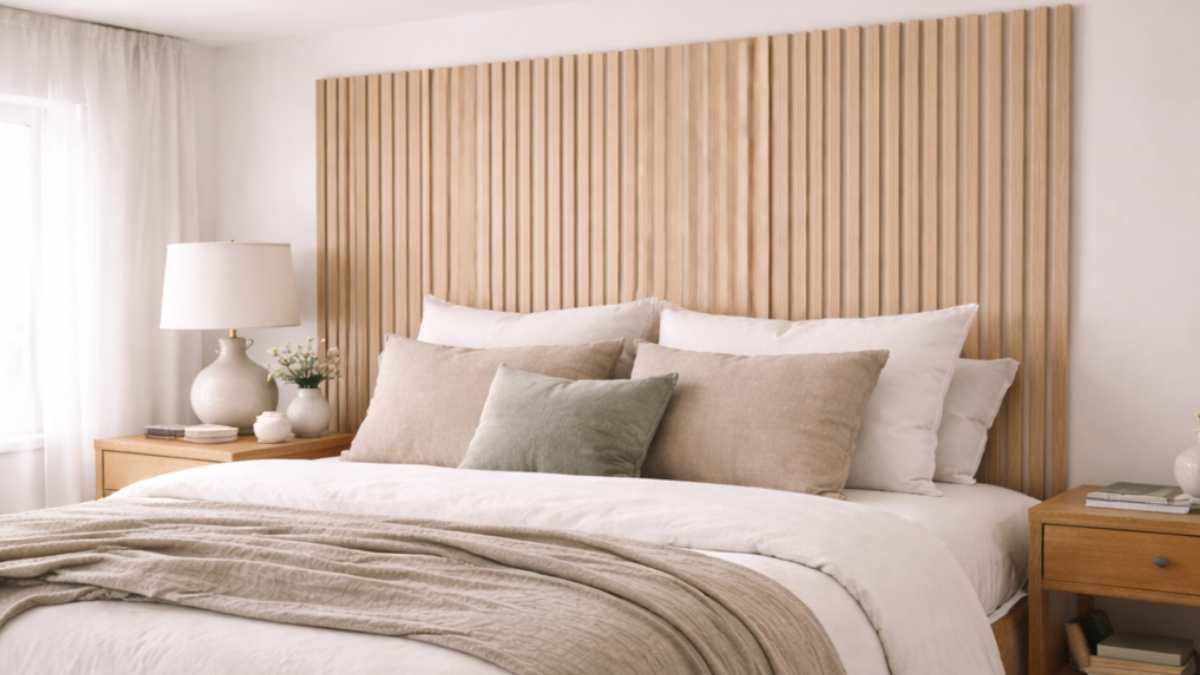
Another interesting solution is vertical slats in light wood. They create a continuous texture behind the bed without closing the space, especially if they are left with a little distance between them. The advantage is that these solutions give structure, but remain visually light.
A solution that hardly anyone uses (but works great)
A little-used alternative is to use a thin shelf behind the bed. Not a bookcase, but a light line on which you will place some elements: a lamp, a book, a decorative object. This way you create a “visual base” without creating an actual headboard. It works very well in small rooms, because it combines aesthetics and functionality without adding volume.



