


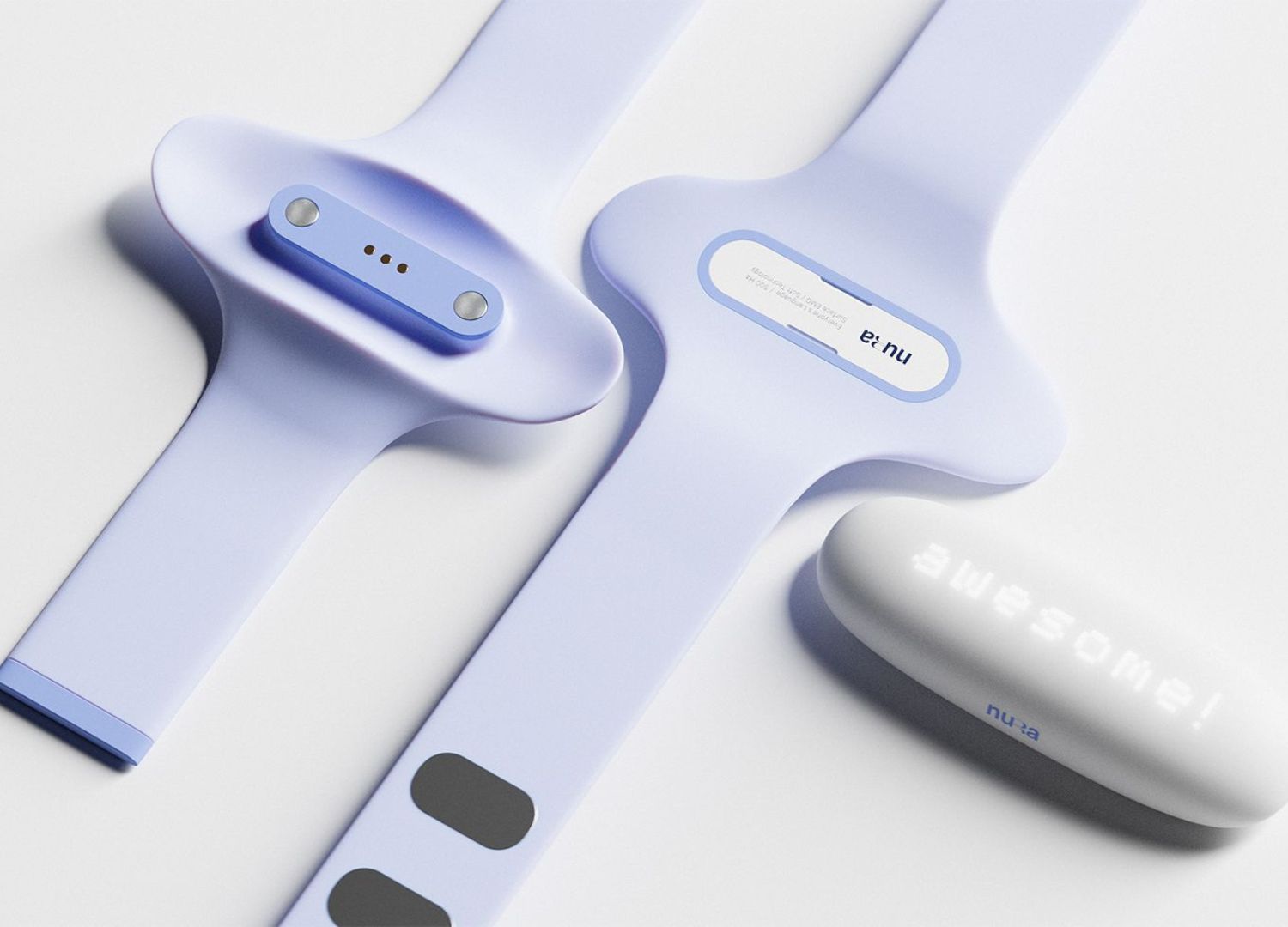
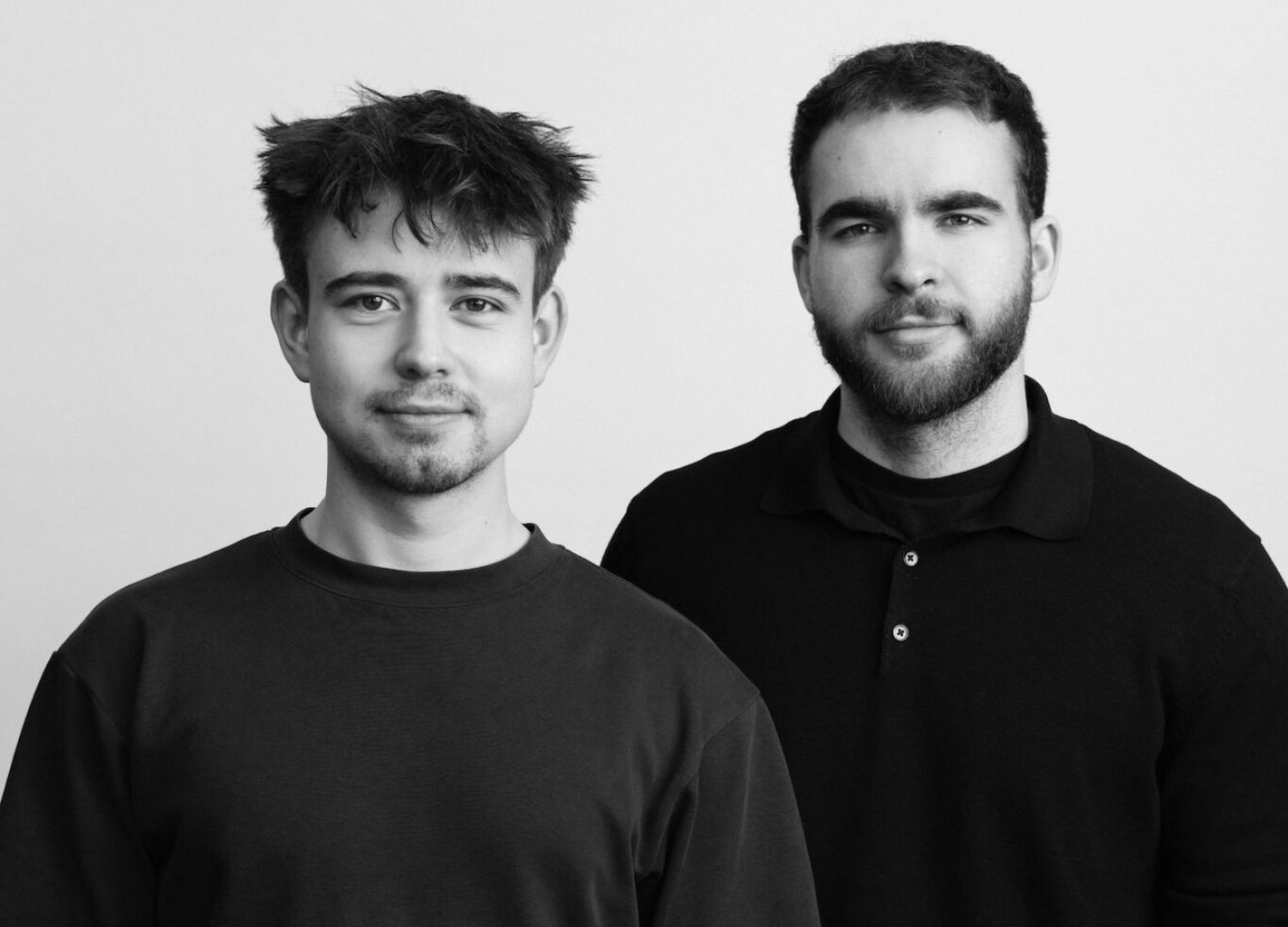
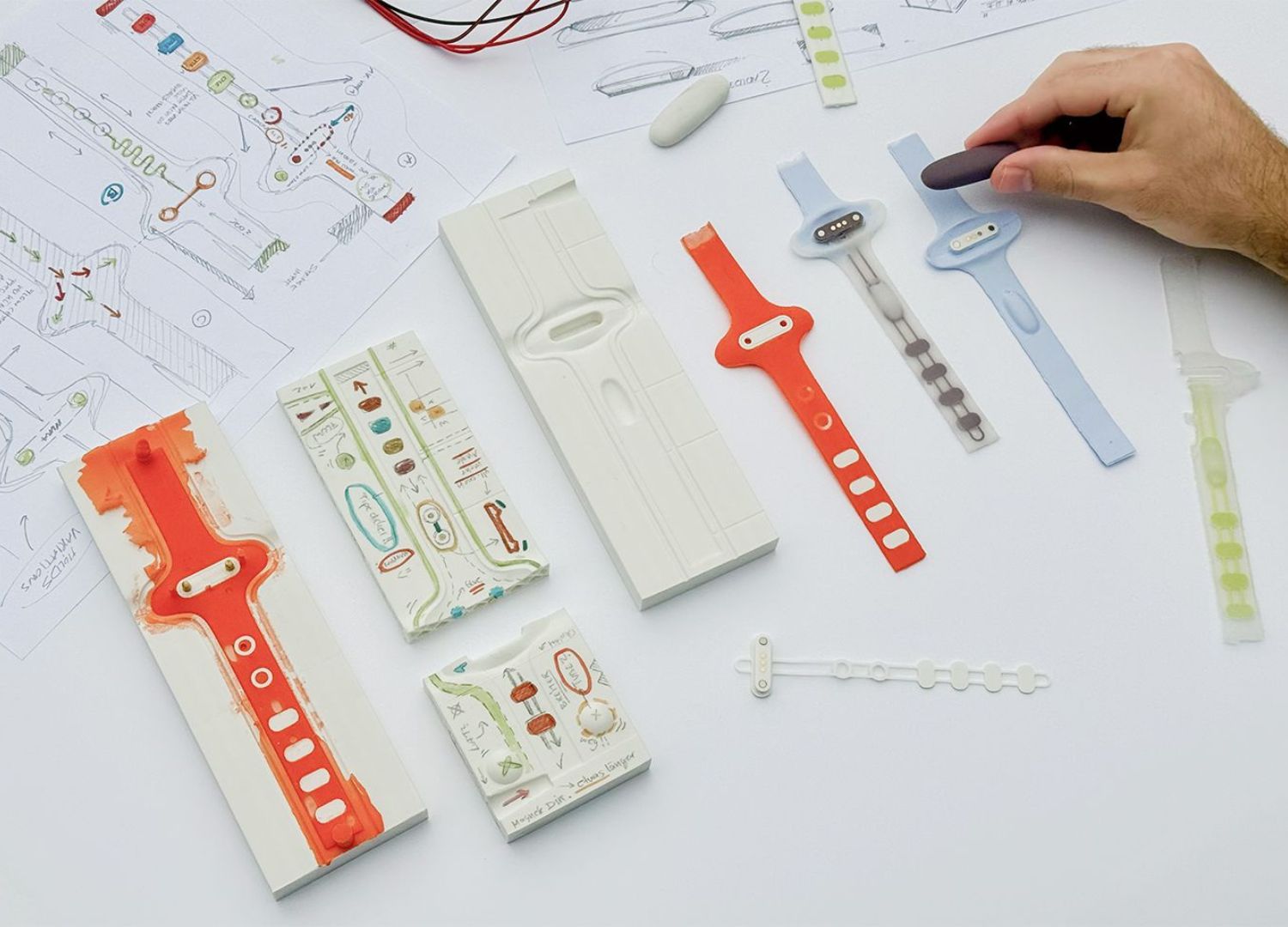
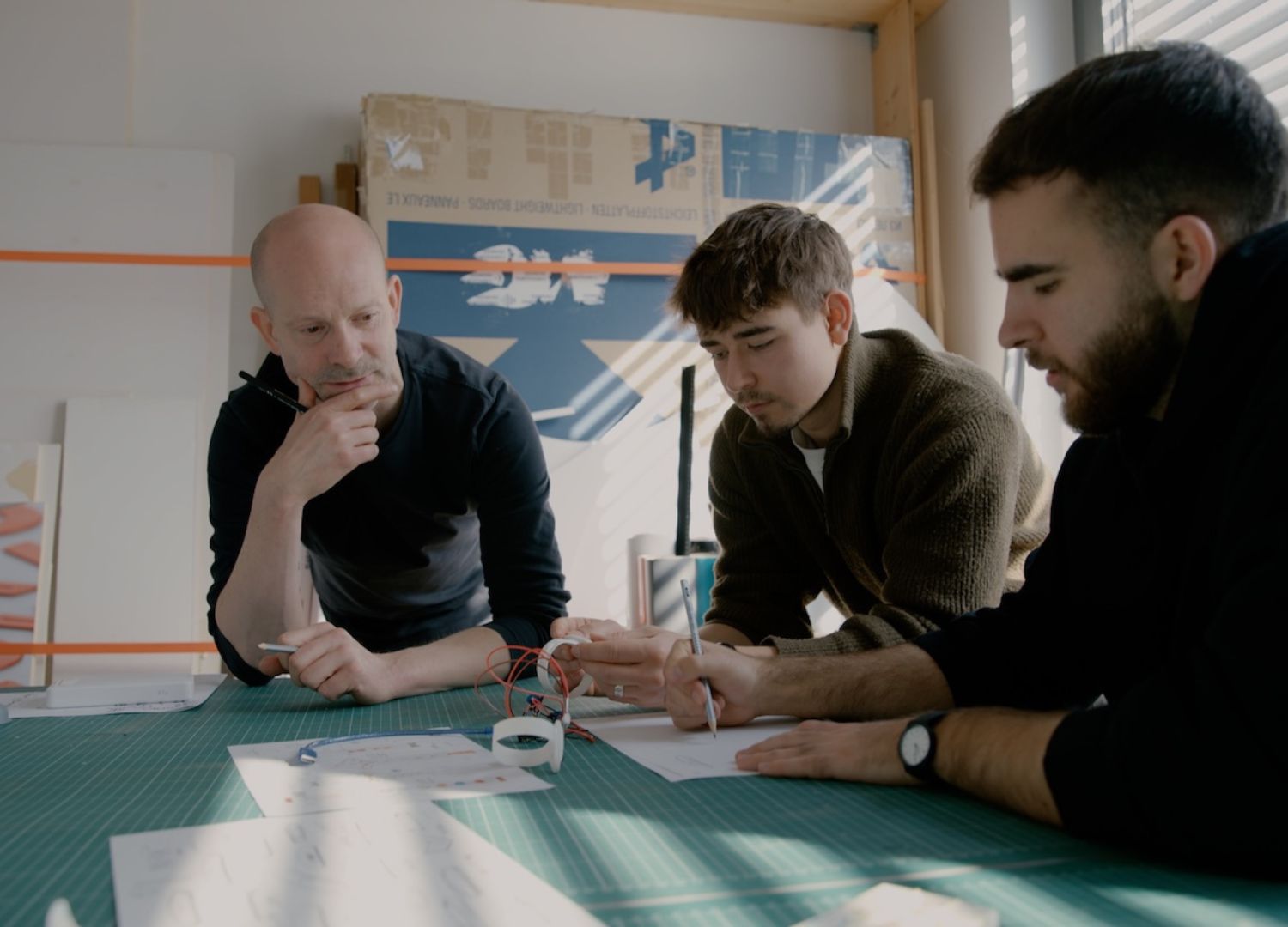
In May 2026, Samuel Nagel and Paul Feilertwo students from the University of Design in Schwäbisch Gmündits fourth edition was awarded RIMOWA Design Award. Their work, NURAis a wearable bracelet that translates sign language into audio speech in real time, using electromyography to read muscle signals in the forearm. It also works in reverse: spoken words are transcribed and displayed as visible text for the deaf user.
Assistive technology has a long history of treating good design as a rarity. Devices are often socially awkward, announcing the user’s difference before they do anything else. When accessibility tools are clunky, the implicit message is that the people who need them are an afterthought, that their dignity is secondary to their function. Good design in this space is the difference between a tool that gets used and one that doesn’t, between a person who moves freely in the world and one who can’t.
RIMOWA Design Award: NURA © Samuel Nagel and Paul Feiler
RIMOWA Design Award: NURA © Samuel Nagel and Paul Feiler
RIMOWA Design Award: NURA © Samuel Nagel and Paul Feiler
RIMOWA Design Award: NURA © Samuel Nagel and Paul Feiler
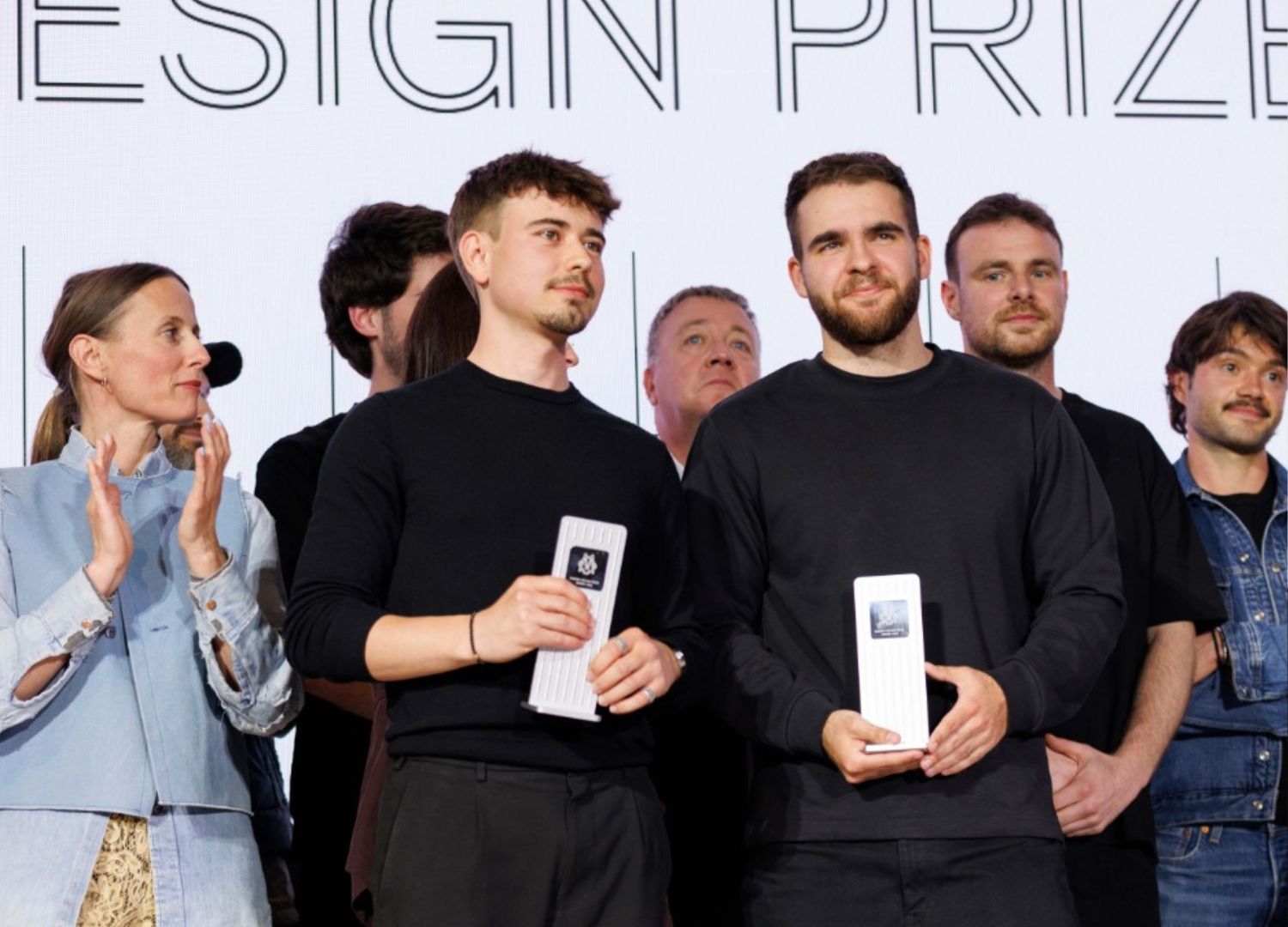
RIMOWA Design Award: NURA © Samuel Nagel and Paul Feiler
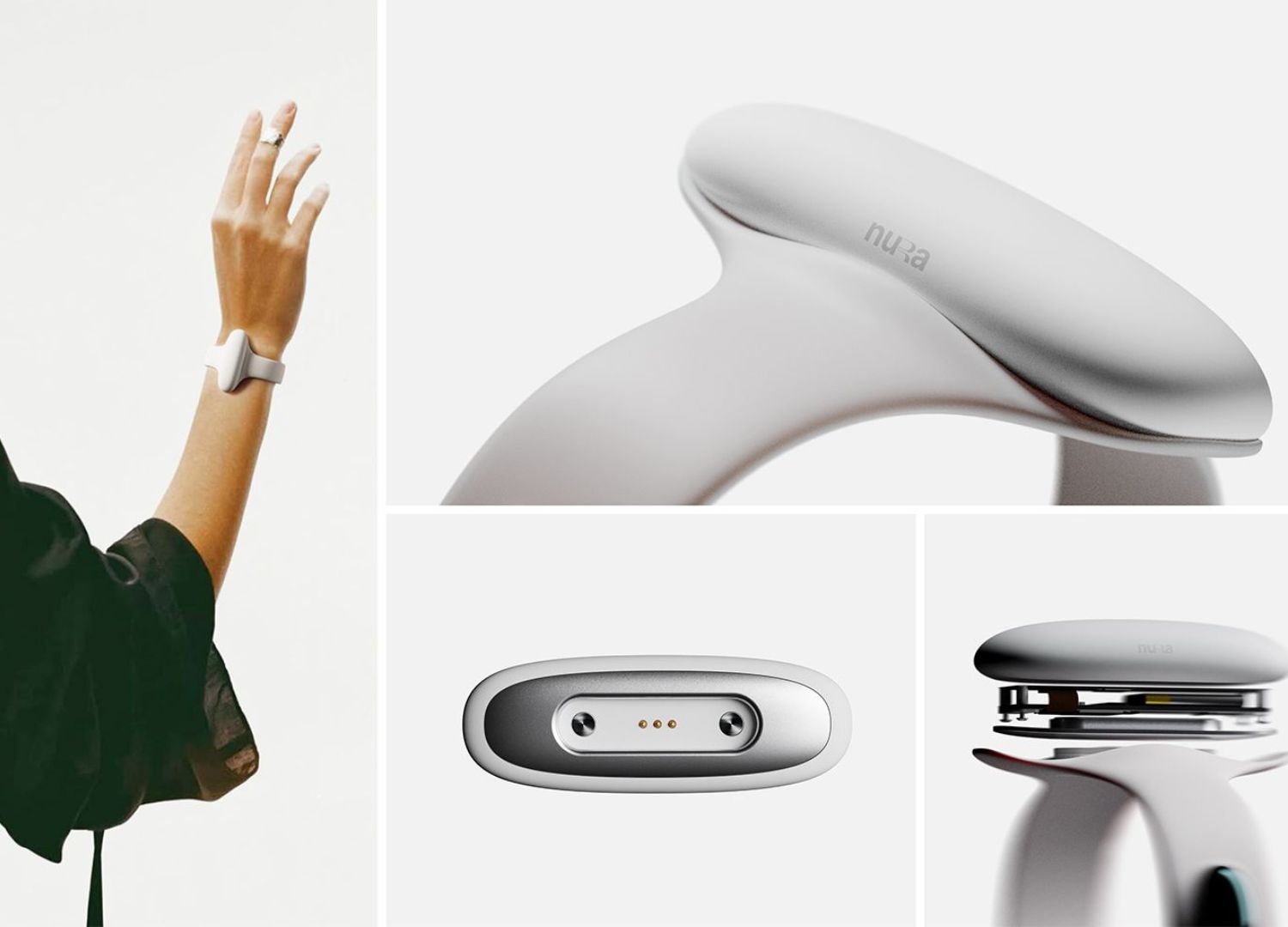
RIMOWA Design Award: NURA © Samuel Nagel and Paul Feiler
NURA by Samuel Nagel and Paul Feiler:
The RIMOWA Design Award
THE RIMOWA Design Award was founded in 2023 and operates as an annual student competition in collaboration with leading German design schools. The brief focuses on mobility, a word that, in the hands of a luggage brand, might seem to invite a narrow set of responses. However, the award consistently produced a broader interpretation, addressing mobility as a social and political condition as much as a logistical one.
Previous winning projects include; Hottiea wearable that addresses period pain, and Artificial Body Positivity, a set of redesigned luxury prosthetics that challenged the stigma attached to amputees and mobility aids.
About NURA’s association with briefs, the designers say, “Mobility is not only about getting from A to B, it is also closely related to communication. The great freedom to act spontaneously, make your own decisions or feel comfortable in everyday situations comes from being able to communicate directly with the people around you.”
NURA’s design choices
Deaf and hard of hearing people navigate a world whose default infrastructure was not built for them. Communication aids have been around for decades, but they generally prioritize function over form. The invisibility of recent hearing aids was not a proper design choice, but a response to stigma, a tacit agreement that disability was something to be hidden.
NURA suggests something different. Its silhouette is reminiscent of the fluid geometry of a manta, organic, ergonomic and in keeping with the aesthetics of many wearable devices that people enjoy wearing today, disabled or not.
The impact of the project
Whether NURA can make it to production is a separate question. EMG accuracy across different signing styles, body types, and sign languages remains an open and complex engineering challenge. However, prizes like this aren’t just about the products that will be shipped. They are also about imagination, expanding the scope of what designers think they are allowed to work with, what problems they think are worth solving, what users are interested in designing for.
The communication barrier between the deaf and the hearing is not a problem. It is a structural feature that shapes the mobility, as in the spontaneity and ease of movement in social space, of millions of people every day. Nagel and Feiler chose to address this problem head-on, take it seriously as a design issue, not just a technical one, and answer it with an object that defies the low expectations that assistive technology has historically set for itself.



