


The bedroom represents the ultimate intimate retreat, a domestic microcosm in which every detail must contribute to creating an atmosphere of absolute well-being. In this very personal space, light plays a fundamental and very subtle role, tasked with visually and psychologically defining the transition from the frenetic pace of the day to the refreshing quiet of the evening.
In this lighting scenario, the bedside lamp takes shape as an iconic piece of furniture, a real focal point able to define and enhance the style of the entire environment. However, the search for the perfect lampshade very often collides with a widespread and frustrating paradox: models with an exquisite and sculptural design, expressly designed to project a warm and atmospheric light, end up illuminating a very small and sterile part of the space, leaving the rest of the room immersed in a not-so-dark, fragmented and light.
Finding the right meeting point between bright lighting that invites deep relaxation and a light that allows you to read a book without tiring your eyes or move around the room in complete comfort, is the real challenge of modern interior design. It is not just a matter of choosing an aesthetic object, but of calibrating flows, shadows and reflections to transform the sleeping area into a multifunctional space, where technology marries visual comfort.
The geometry of the lampshade and the choice of filter materials
The fundamental secret to overcoming the structural limits of traditional lamps lies in the geometry of the lampshade and the conscious choice of materials that make up the diffuser. Very often the effect of the shape on the light flow is underestimated: completely opaque lampshades, made of metal or opaque materials, tend to channel the light beam in a rigid and directional cone, aimed exclusively upwards or downwards. This phenomenon creates sharp visual contrasts, creating clear areas of shadow and leaving the sides of the room completely dark, an effect that in the long run strains the visual system and makes the environment visually smaller.
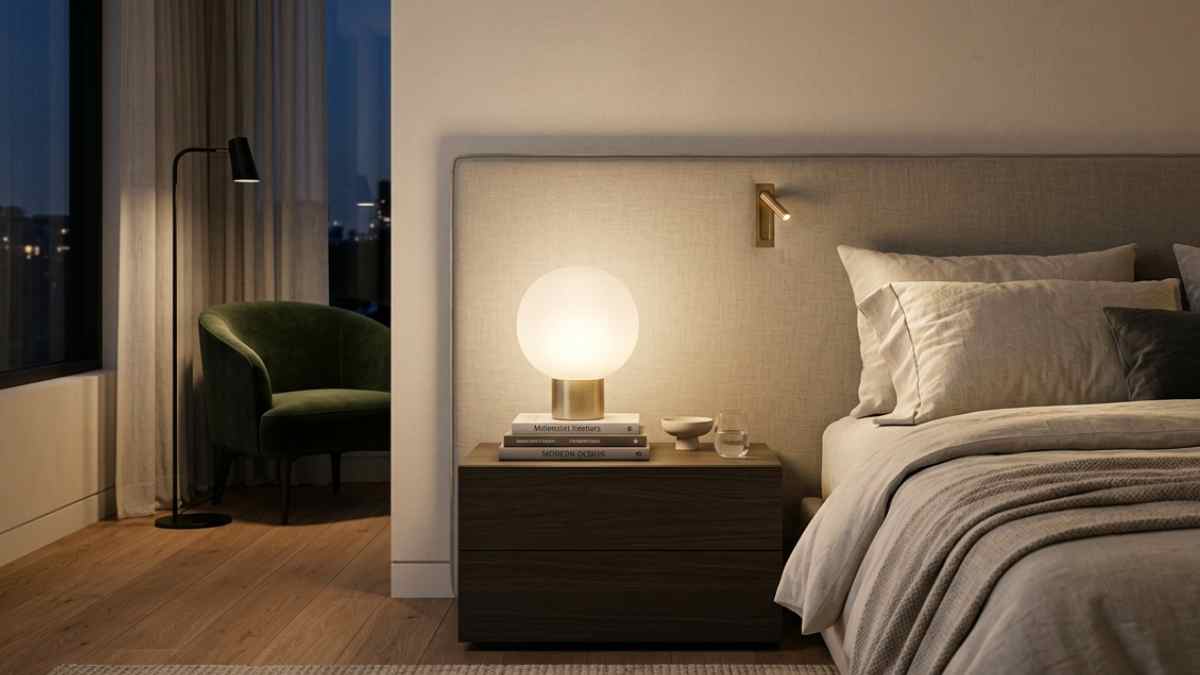
Instead, the way to achieve flawless lighting is through embracing it diffusers in satin glass, opaline glass or light and natural fabrics such as linen and parchment. These materials act as highly attenuating filters, allowing light to propagate 360 degrees in an extremely smooth, fluid and homogeneous manner. This design feature eliminates harsh and unpleasant shadows, distributing a soft and ambient brightness throughout the area around the bed, without ever being dazzling or aggressive to the eyes, even when you wake up at night.
The layering of light and the role of dimmable technologies
To obtain a professional, dynamic and flexible effect, the most effective and appreciated trend in modern lighting technology is based on the concept of layering light points, abandoning the idea that a single lighting body must perform all functions. Integrating the classic bedside lamp with adjustable reading sconces, strategically placed on the wall or with thin LED strips hidden behind the headboard, allows you to intelligently separate different daily needs.
In this way, it becomes possible to activate a soft and relaxing ambient light when you are looking for pure rest or meditation, and to activate a targeted, sharp and focused beam of light when maximum accuracy is required for reading, without disturbing those sleeping next to it. In this context, the introduction of latest generation smart lamps and adjustable lighting systems offers absolute control of the environment. The ability to adjust not only the intensity of the flow, but also the color temperature, allows you to go from a white and stimulating light to a warm and golden shade, perfect for sleeping.
Design the ideal nighttime oasis
Finally, the choice of the perfect lighting for the bedside table should not be limited to the crossroads between reading light and ambient light, but should aim for their harmonious coexistence. Taking advantage of the modularity of modern lighting systems, the bedside table ceases to be a simple support surface to become the control center of one’s visual well-being. Through calibrated material combinations and customized management of light fluxesthe bedroom can finally be transformed into a personalized, stylish and perfectly usable oasis of warmth at any time of the night.



