


Four-star hotels have a problem that no cleaning manual openly mentions: the sofas in the rooms are used by hundreds of people a month, they cannot be washed every week, yet they must look like they have just been delivered. The solution is not magic, nor frequent changing of covers. It’s a precise protocol, consisting of two steps that maintenance managers apply with a certain systematization, and which works just as well in a forty-square-meter apartment as in a hotel in Milan with a hundred rooms. The strange thing is that both methods use tools that you probably already have at home or that cost less than ten euros. The point is not to replace washing in the washing machine, which remains necessary periodically, but to manage everything that happens in between: the smell that settles, the mites, the sweat, the fabric that loses its freshness without being able to understand why.
Steam does what detergent cannot
The first method used in hotel environments is the textile steameran instrument that spread slowly in Italy but which in the Scandinavian countries is considered a basic household appliance like the iron. The high temperature steam, between 80 and 100 degrees, penetrates the fibers of the fabric and neutralizes bacteria and mites without wetting the cover. It leaves no residual moisture when used properly and the fabric dries in less than three minutes.
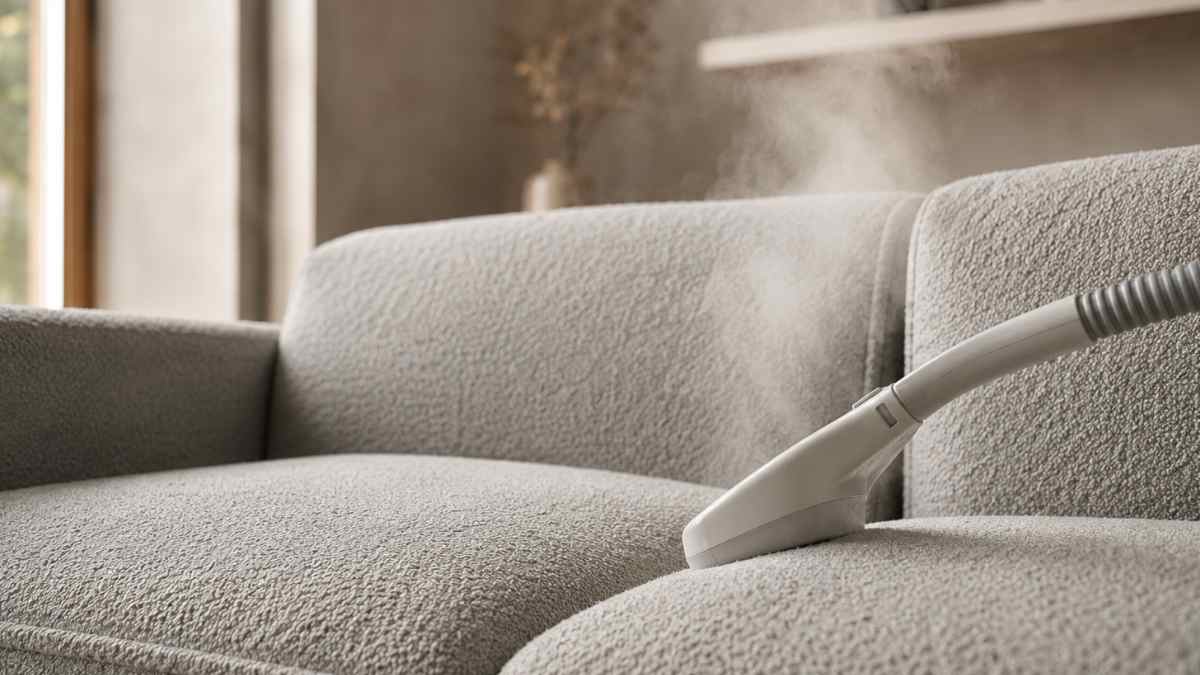
The most used model in the light commercial sector is the Rowenta DR8120a vertical vaporizer costs around 55 euros that reaches 100 degrees in forty seconds. It is not the cheapest model on the market, but it is the one that maintains constant pressure throughout the treatment, which makes a difference on thick fabrics such as velvet or boucle. For a three-seater sofa, four to six minutes of methodical passage is enough, moving the jet in parallel strips about five centimeters from the surface.
The most common mistake is to go too close with the jet, wetting the fabric instead of steaming it. The correct distance is between ten and fifteen centimeters. In linen and light cotton it is best to stay around fifteen; in microfiber and velvet you can go down to ten without problems. The result after the treatment is noticeable both visually, because the nap of the fabric rises, and olfactory: the stale smell disappears, leaving no artificial fragrance.
Bicarbonate, but not as you were told
The second method is the baking sodawhich enjoys a part-deserved and part-mythological reputation on the internet. It doesn’t disinfect, it doesn’t kill mites, it doesn’t work miracles on coated stains. What it does do, however, it does well: absorbs odors and moisture from the surface layers of fabric with an effectiveness unmatched by any value-for-money spray product.
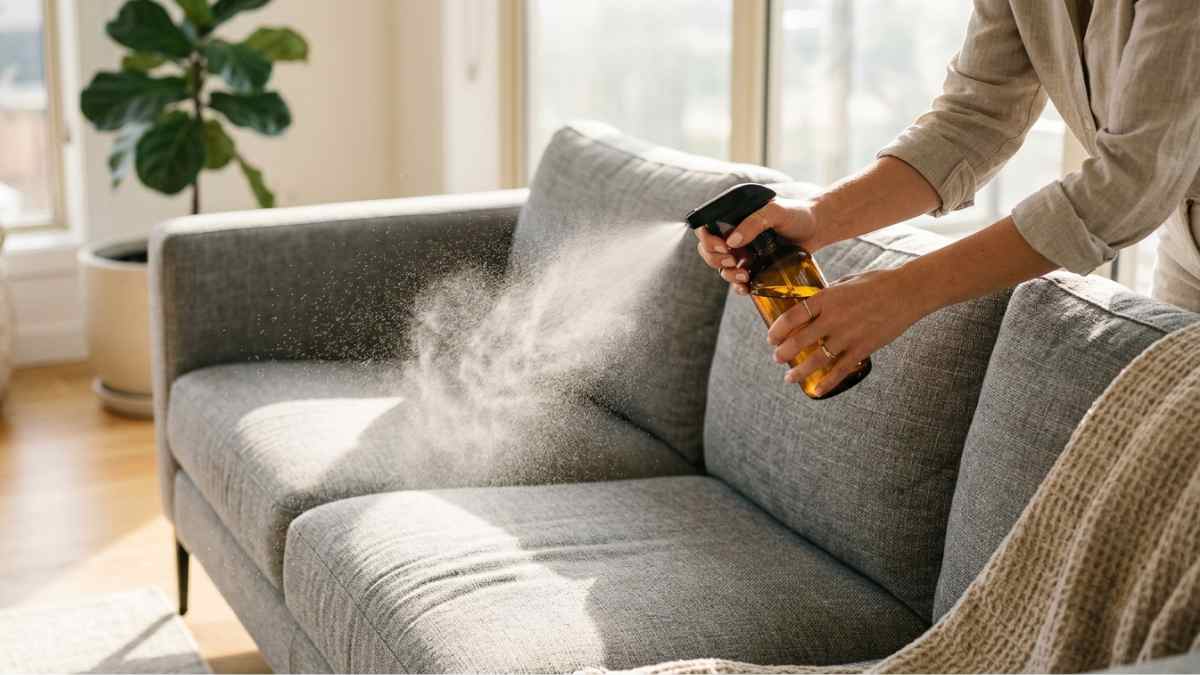
The hotel protocol calls for an even distribution of the bicarbonate on the fabric, an application time of at least twenty minutes, preferably thirty, and then complete vacuuming. The difference compared to home use is the amount and method of distribution: not a thin veil spread randomly, but a homogeneous layer applied by running an open palm across the pad as if salting a steak, to use a specific reference. The covered surface must be complete, including the edges.
The type of baking soda doesn’t change much: Standard supermarket Arm & Hammer works just as well as the premium versions sold as household products. What changes is the fineness of the soil, and the cheaper versions tend to be better at this because the finer grain penetrates better between the fibers without remaining on the surface. After wiping, the fabric is visibly more opaque and compact, without that sticky sheen that many commercial sprays leave.
Does order matter: steam first or baking soda first?
If you use both methods in the same session, the order does not matter. Bicarbonate should be applied before steamnot later. Spread it on a dry cloth, leave it, vacuum it. Only then do you move on to the vaporizer.
The logic is simple: steam opens up the fibers and makes it easier for anything left on the surface to penetrate. If you spray first and apply baking soda later, you risk pushing the residue deeper instead of removing it. The reverse sequence, bicarbonate then steam, uses heat to correct the cleaning and lift the pile of fabric in the most efficient way.
This combined protocol requires a total of approximately thirty-five minutes, including thirty minutes of passive waiting while the bicarbonate is applied. Active work is less than ten minutes. Applied once a month on a sofa for daily use, it maintains the fabric in conditions comparable to seasonal washing, without mechanical stress on the fibers and without the risk of shrinkage or distortion that comes with washing in the washing machine on covers not certified for this type of treatment.
When these methods are not sufficient
There are cases in which the steam-bicarbonate protocol is not sufficient. Old protein stains, those based on blood or dried milk, do not react to steam in a useful way, in fact the heat can harden them further. In these you need a specific enzyme, like the products in the series Vanish Oxi action designed for delicate fabrics, to be applied cold before any heat treatment.
The other limitation concerns leather and imitation leather upholstery: direct steam destroys them, softening the protective layers and encouraging cracking over time. In these materials the correct method is completely different and includes specific products such as those in the Colourlock range, which are also used in the automotive sector. Bicarbonate, however, is contraindicated on all unchecked dark fabrics because it may leave light streaks that are difficult to remove if the exposure time exceeds forty minutes.
A light gray boucle sofa, a navy blue striped velvet model, a raw canvas upholstery: each fabric has a slightly different response. It’s always worth trying both methods in a hidden corner the first time, not because the risk is high, but because knowing how your specific tissue reacts turns a general procedure into something precise.



