
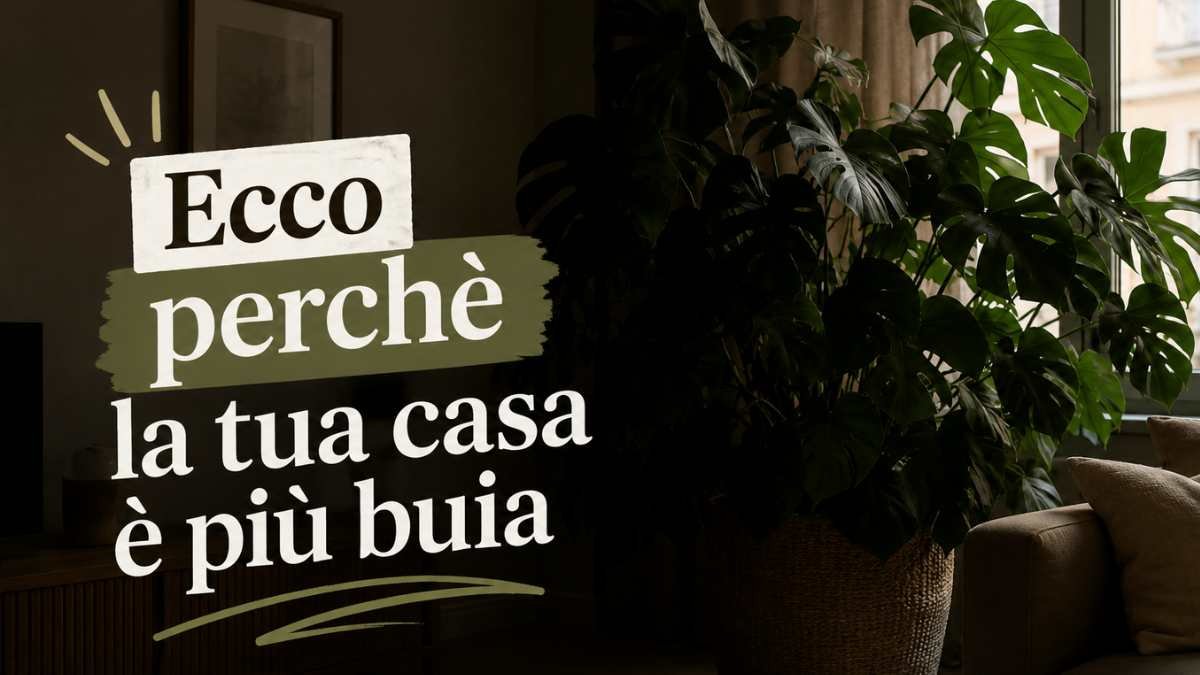

A zamioculcas with almost black leaves in the corner of the living room. A massive ficus next to the window. A huge strelitzia near the sofa, chosen because in the photo it seemed to give character. They have become permanent fixtures in many modern apartments, almost an automatic decorative habit. Green is good for you, it warms the environment, it breaks the rigidity of minimalism.
What no one says is that some of these plants they take away more light than they give back.
A dark mass is a dark mass, be it a piece of furniture or a sheet
The eye does not distinguish between a decorative element and a piece of furniture when assessing the visual weight of a room. A solid and very dark hair by zamioculcas works just like an anthracite piece of furniture: absorbs light, creates shadow, occupies visual space permanently.
In modern living rooms with neutral palettes, beige walls, light floors, minimalist furniture, this effect is enhanced. Any element that is too dark or too dense immediately becomes the dominant point of the room. If this element is a plant, no one disputes it because plants are automatically associated with something fresh and light. But the physics of light does not bargain with good intentions.
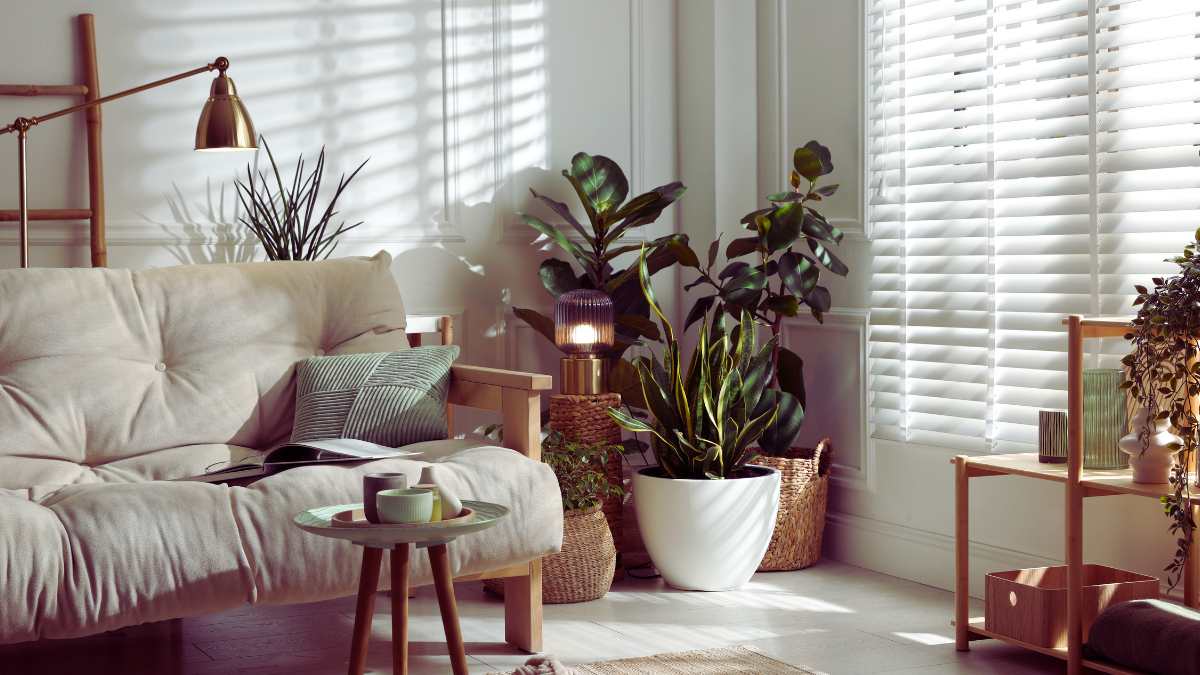
The founders of The Sill, the New York brand that has transformed the way plants are sold and communicated in modern interiors, have worked hard on this topic. Their philosophy is not only which plant to choose, but how it behaves in a real environment in terms of light, volume and proportion of space.
The pot is as important as the plant
There is one detail that almost no one considers when choosing a houseplant: the pot. A matte black and compact container under an already dense plant multiply the visual weight down. The floor seems darker, the corner more closed, the room smaller.
Base inside natural terracotta, light ceramics or light and porous materials they completely change the perception of the plant itself. It is not a minor aesthetic issue: it is the difference between a breathable angle and one that closes.
Which plants accompany the light instead of withholding it?
THE plants with open structures and less dense leaves they let the light pass through them instead of blocking it. An indoor olive, for example, has a airy hair which filters the light in an almost imperceptible way. The same goes for some ficus varieties with less compact foliage, for light hanging plants, or for compositions that are spread over several places instead of one huge scenic element.
The green remains, the plant presence remains, but the light does not meet a wall.
The location is also worth it. A very bushy plant right in front of a window filters the light in the central hours and the almost completely blocked the hours that are already low. Move it a few meters, hold it lateral to the light sourceit changes everything without changing anything in the composition.
A bright room is not a room without plants. It is where the plants have been chosen knowing that they occupy visual space and placed accordingly.



