
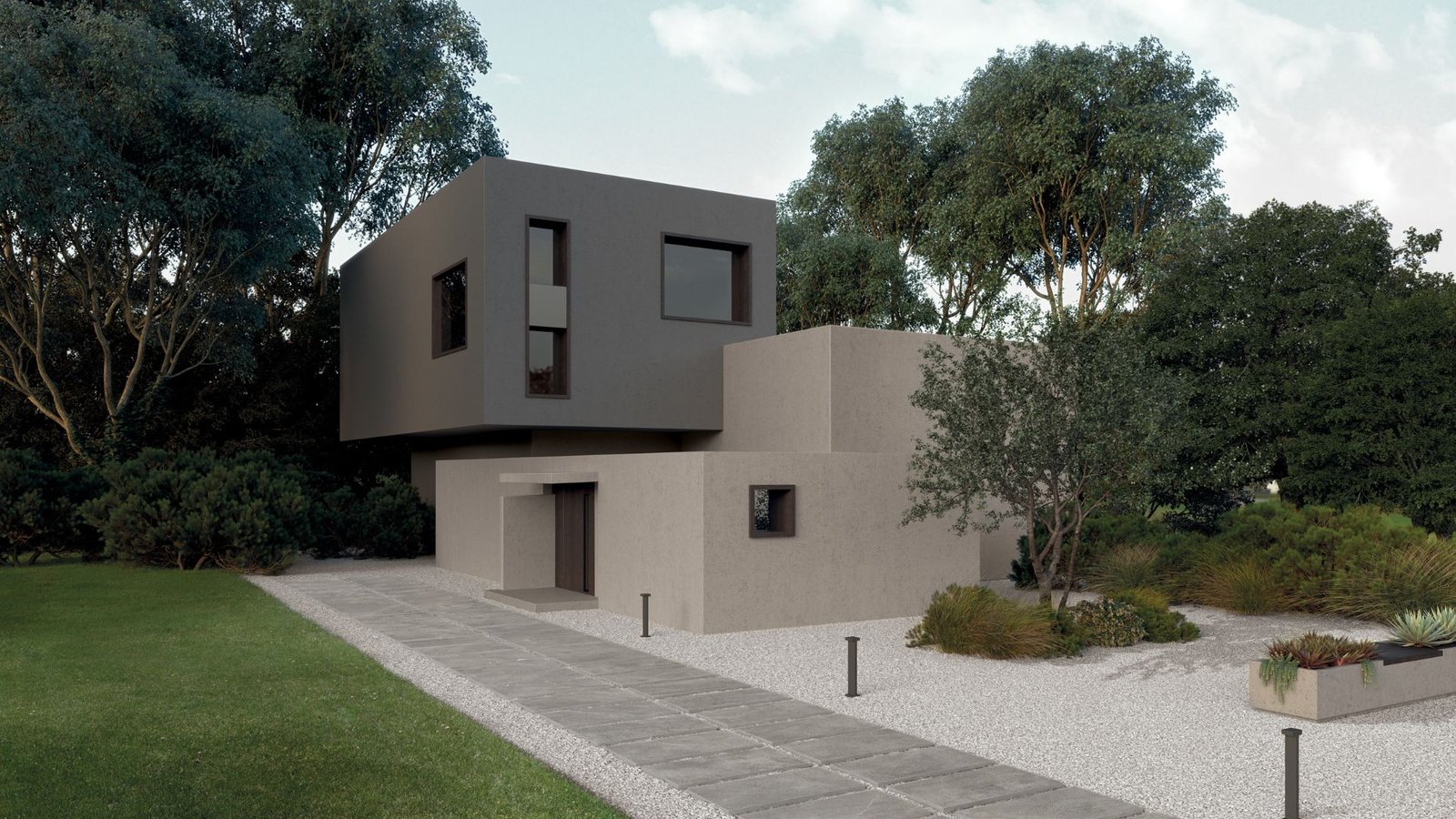

In the evolving landscape of architectural surfaces, Panariagroup is one of the key factors redefining the way materials contribute to the spatial experience. With a strong industrial backbone and a design-driven approach, the Italian group has built a portfolio of brands that operate at the intersection of technology, aesthetics and architectural thinking.
Through Lea Ceramiche, Cotto d’Este and Panaria Ceramica, the team articulates different but complementary visions — each exploring the potential of ceramic surfaces as a language capable of shaping contemporary environments, both indoors and outdoors.
©Panariagroup
©Panariagroup
©Panariagroup
Panariagroup – Three surface brands:
Lea Ceramiche: we imagine new material identities
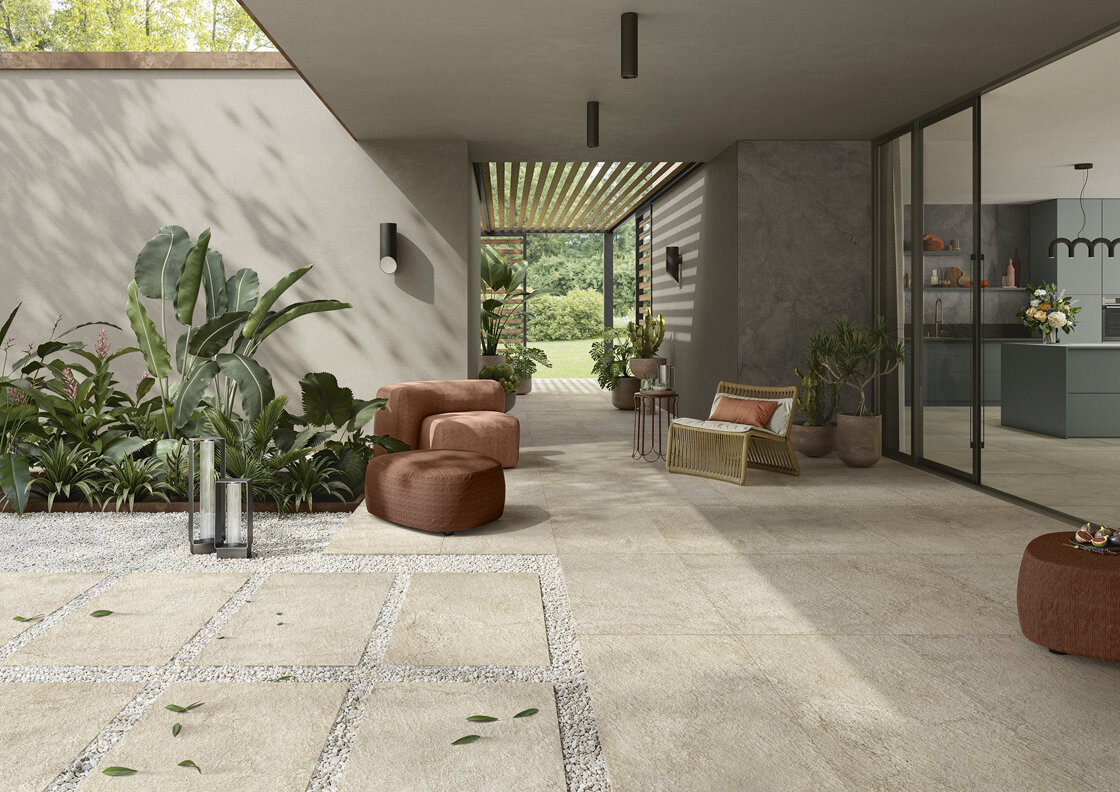
With Pulse, presented at Cersaie 2025, Lea Ceramics moves beyond the idea of reproduction to adopt a more speculative approach to materiality. Instead of reproducing an existing stone, Pulse introduces a “patterned stone” – a surface that gathers fragments, textures and irregular patterns into a new, expressive material. The result is a collection that feels both grounded and abstract, where reference to nature becomes a starting point rather than a limitation.
At the core of the project is the 3-Tech Project, a system that enables visual and material continuity across different applications, allowing architects and designers to create fluid environments where surfaces seamlessly extend between indoor and outdoor spaces. With Pulse, the material is no longer just a finish – it becomes an active component of the narrative, able to define atmosphere and spatial identity.
Cotto d’Este: light, landscape and Mediterranean atmospheres
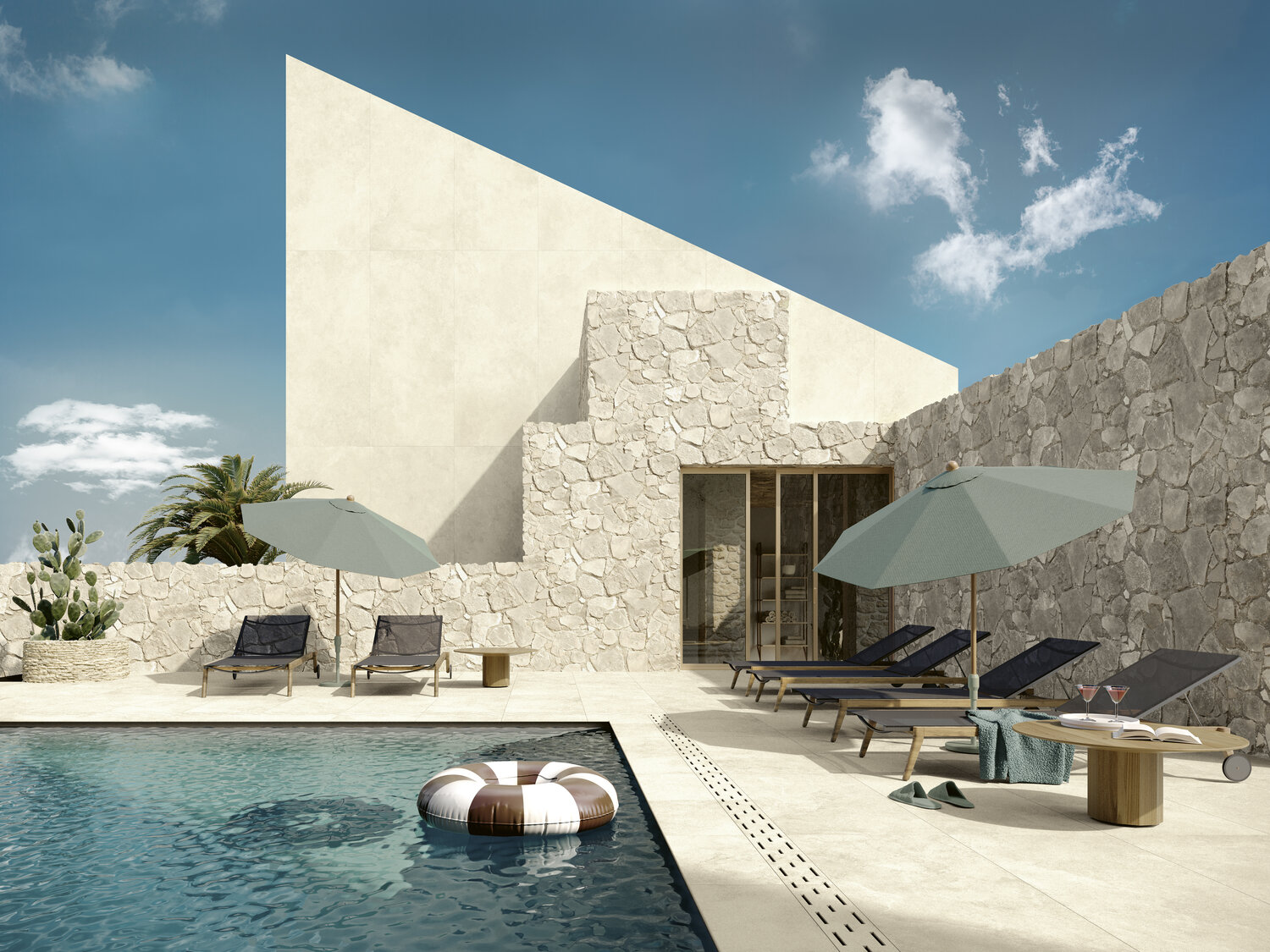
If Pulse explores the imagination, Solaris by Cotto d’Este turns to memory—specifically, the warm and bright landscapes of Southern Europe. The collection evokes the tactile and visual properties of limestone shaped by the sun and time, turning them into surfaces characterized by fine veins and tone-to-tone variations. The result is a calm depth: a material that does not impose, but supports the architecture with a sense of natural elegance.
The four shades—Ostuni, Trani, Spalato and Rodi—form a refined palette inspired by the geographies of the Mediterranean, from the shores of the Adriatic to the horizons of the Aegean. Designed for both indoor and outdoor use, Solaris reflects Cotto d’Este’s expertise in creating surfaces that balance technical performance with atmospheric quality, enhancing the connection between architecture and landscape.
Panaria Ceramica: the basic language of modern life
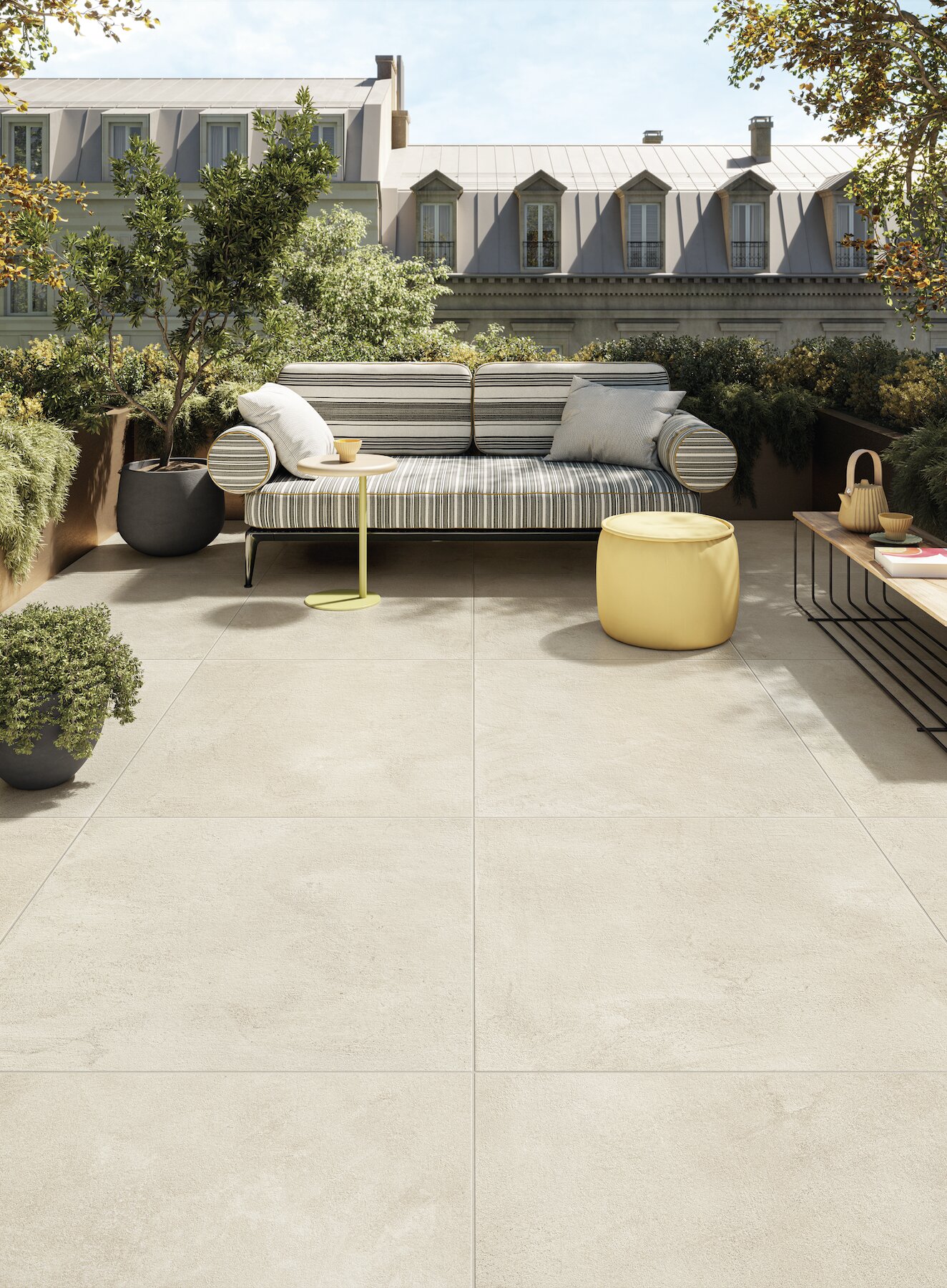
With La Matière, Panaria Ceramica focuses on reduction—distilling the aesthetics of troweled concrete into a surface that is both minimal and expressive. The collection reinterprets the visual softness and material depth of cement-based finishes, offering a neutral and bright base that adapts to a wide range of interior styles, from contemporary minimalism to the most urban, metropolitan environments. Its strength lies in flexibility.
Three coordinated finishes—Naturale for interior spaces, Ext for exterior applications, and Strutturata in 20 mm thickness—ensure continuity throughout all spaces while allowing for different functional requirements. La Matière becomes a tool for designers: a surface that does not dominate, but supports the spatial composition, allowing flexibility and coherence between projects.
Panariagroup: a collective vision of surface design
In these three collections, a larger narrative emerges — one that reflects PanariagroupThe approach to ceramics is not simply as a building material, but as a means of design. From the expressive experimentation of Lea Ceramiche to the landscape-driven sensibility of Cotto d’Este and the essential versatility of Panaria Ceramica, the team shows how surfaces can go beyond decoration and become an integral part of architectural thinking.
In this context, ceramic is no longer just about strength or performance. It becomes a vehicle of narrative, continuity and spatial identity – able to connect environments, enhance atmospheres and ultimately shape the way we experience modern life.



