
Somewhere between Sweden’s tastiest semla and its picturesque beach lies the unassuming town of Ronneby – quietly, a cradle of circular innovation. In a country where progress has long been shaped by an ethos of the common good—where Nobel Peace Prize ideals of collective improvement meet pragmatic design, and where inventions like Volvo’s three-point seat belt were famously launched for universal use—innovation is rarely about exclusivity. It’s about impact.
Tarketta world leader in innovative and sustainable flooring and sports surface solutions, embodies this DNA. From this pastoral setting, the global brand has spent decades promoting a cyclical manufacturing model that feels less proprietary than infrastructure—designed for performance, scale, and life.
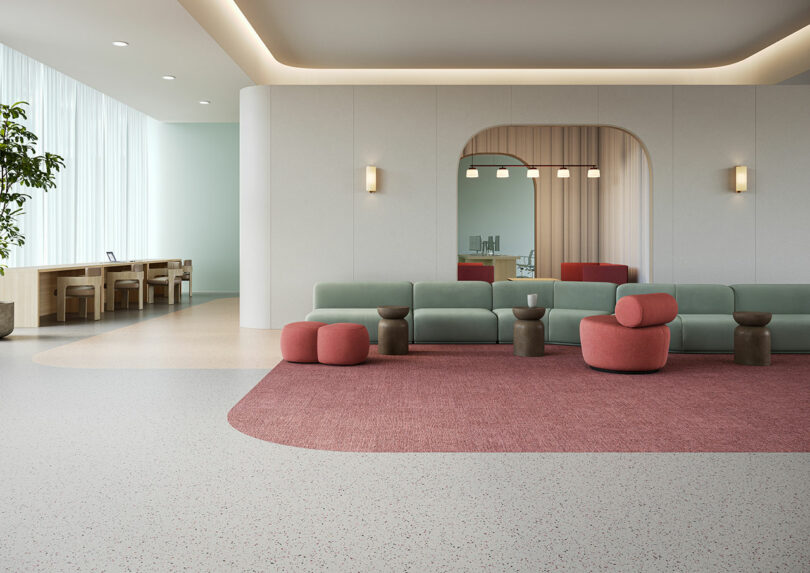
This contrast fits. Tarkett’s approach to innovation is not sound, nor is it based on unique discoveries. Instead, it is iterative, embedded, and constantly refined. Nowhere is this more evident than this iQ Motionthe company’s newest addition Homogeneous range of iQ vinyl floorswhich reframes the floor as a performative surface—a surface that shapes how spaces function, endure, and evolve.
Ronneby himself reads as a study in continuity. Dating back to medieval times, it once served as a key trading hub. Today, it is known for its historic spa park and long-standing association with health and rehabilitation. This pedigree of care provides the context for what Tarkett continues to build there. Within this seemingly modest city lies the brand’s homogenous vinyl flooring manufacturing business core, steadily redefining what circularity looks like on a growing scale.
The factory in Ronneby is not just a place of production. it is part of a larger ecosystem. Nearby, the Tarkett Recycling Center processes homogeneous vinyl flooring after use — collecting, sorting and reintegrating material back into the production cycle. It’s a system that breaks down the traditional linear model of “make, use, discard” into something more regenerative: a continuous loop that reduces waste, saves resources and challenges the very idea of material end-of-life.
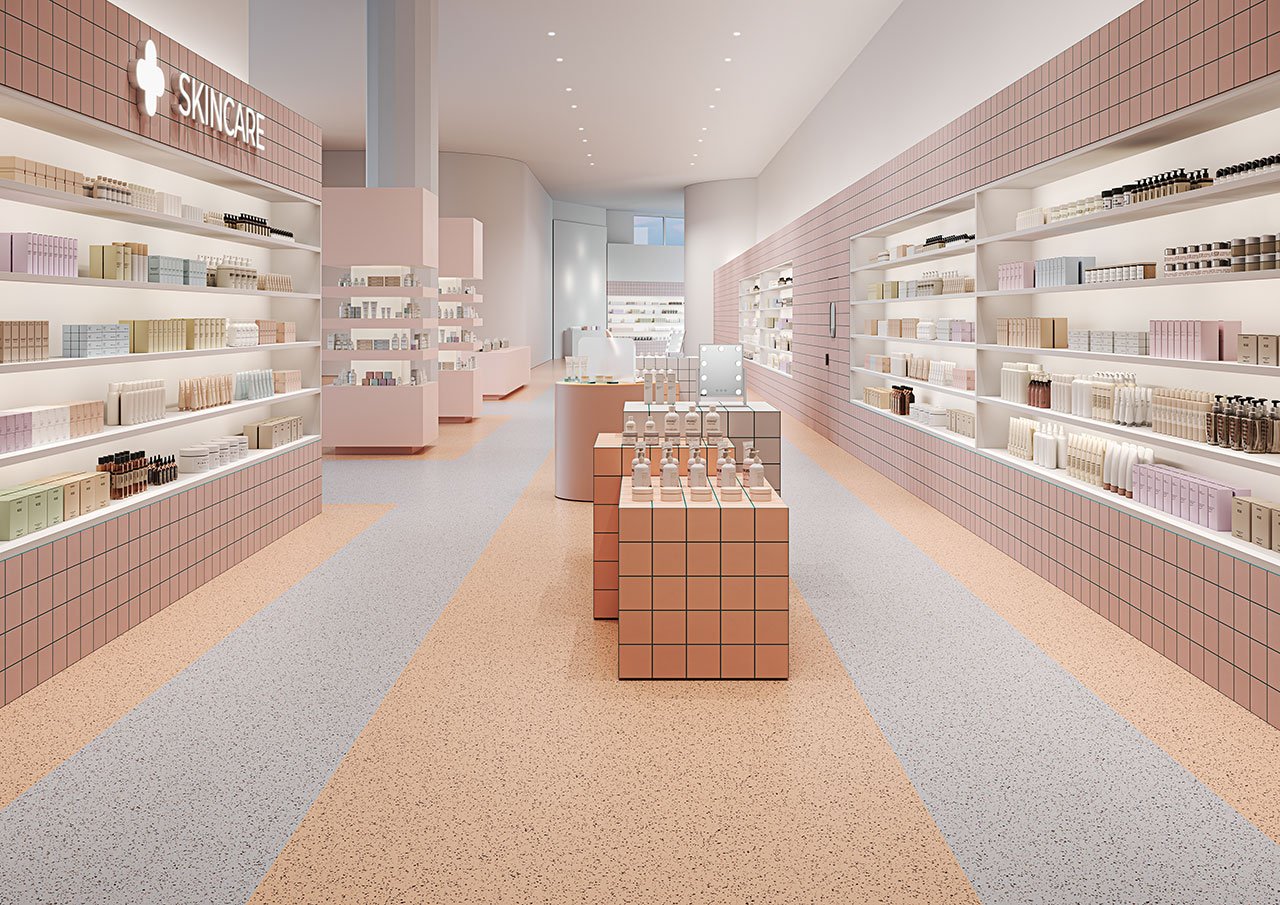
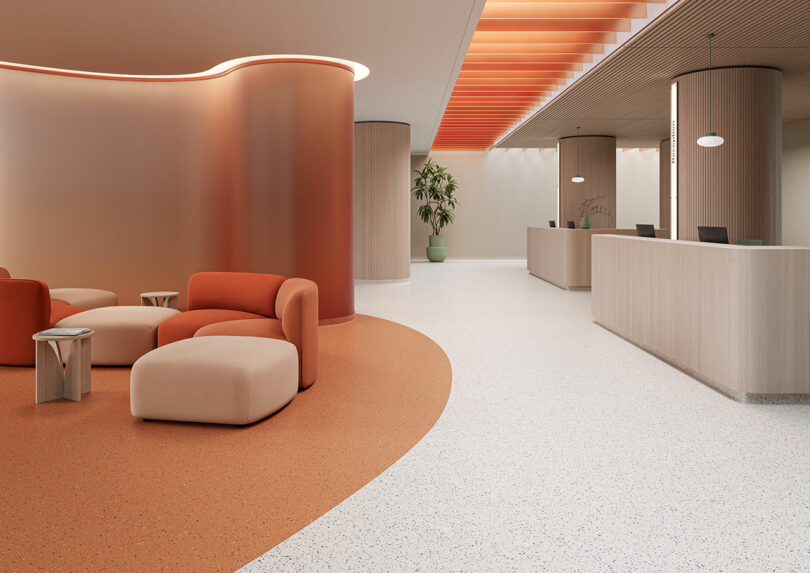
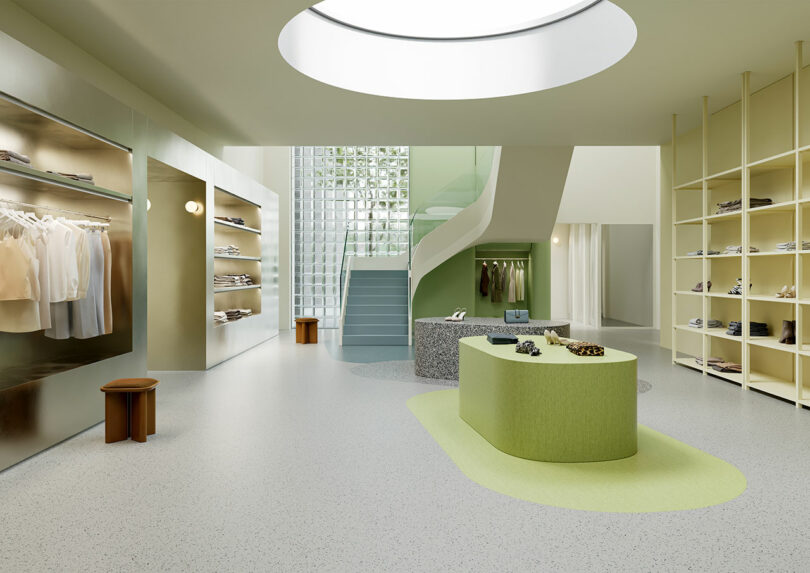
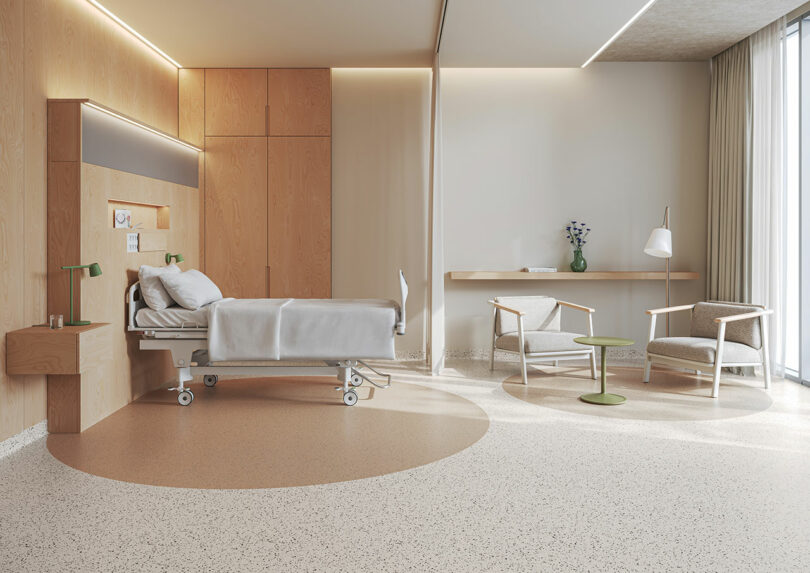
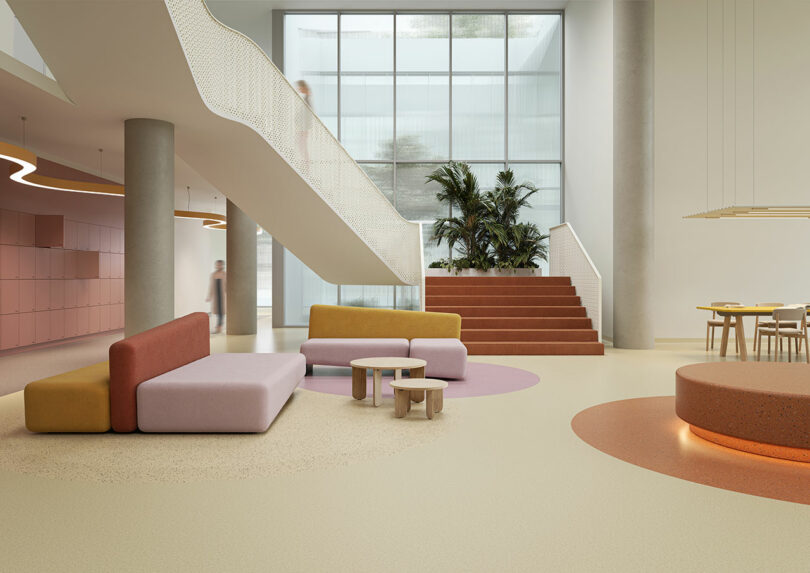
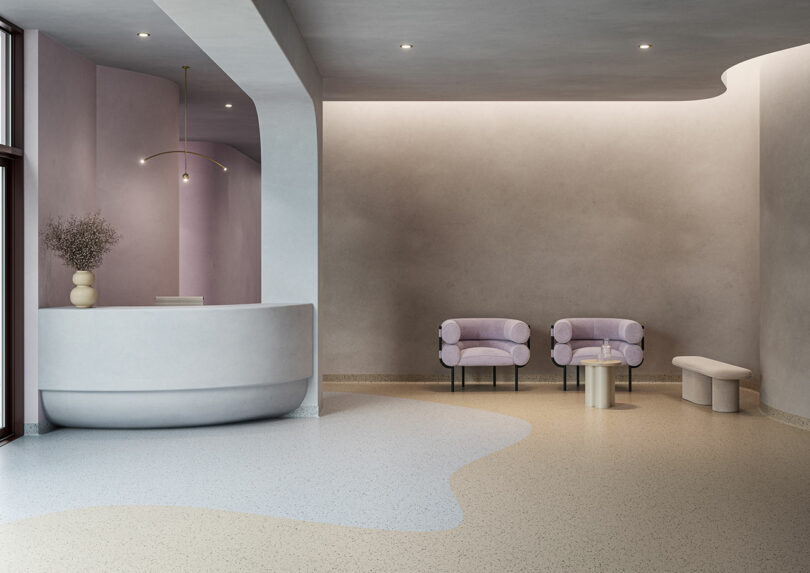
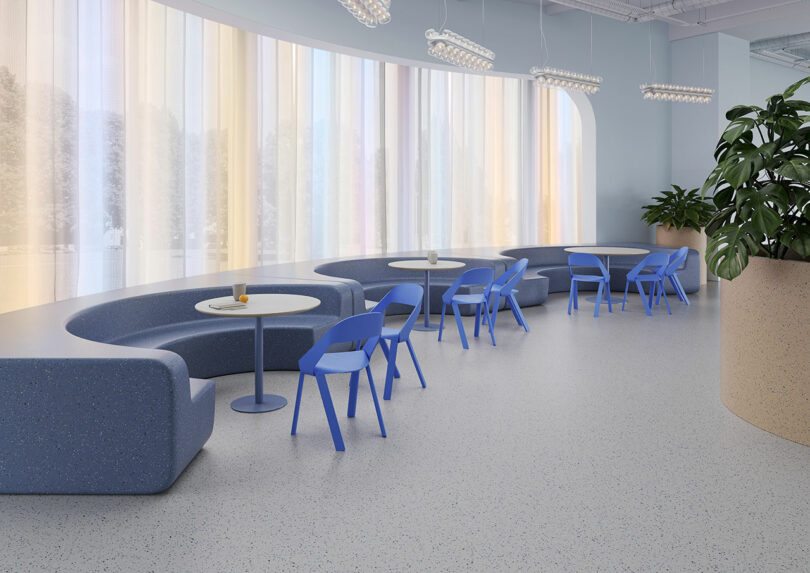
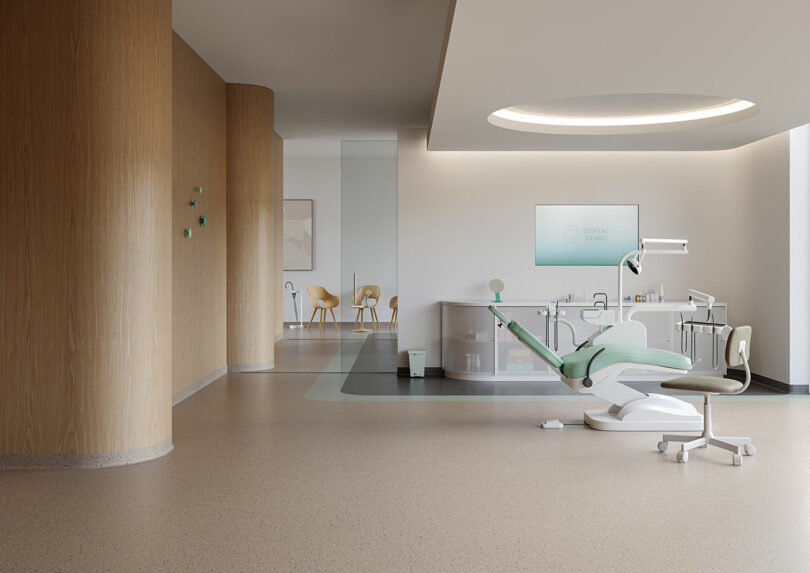
It is in this context that iQ Motion starts to make sense. Part of Tarkett’s wider iQ range – long recognized for its technical performance – iQ Motion introduces a visual language inspired by terrazzo. Its surface consists of multi-layered double-sized chips drifting on a neutral ground, with subtle mother-of-pearl accents that shift with light and movement. The result is understated yet dynamic, striking a balance well suited to the high-demand environments the hardware is designed to serve.
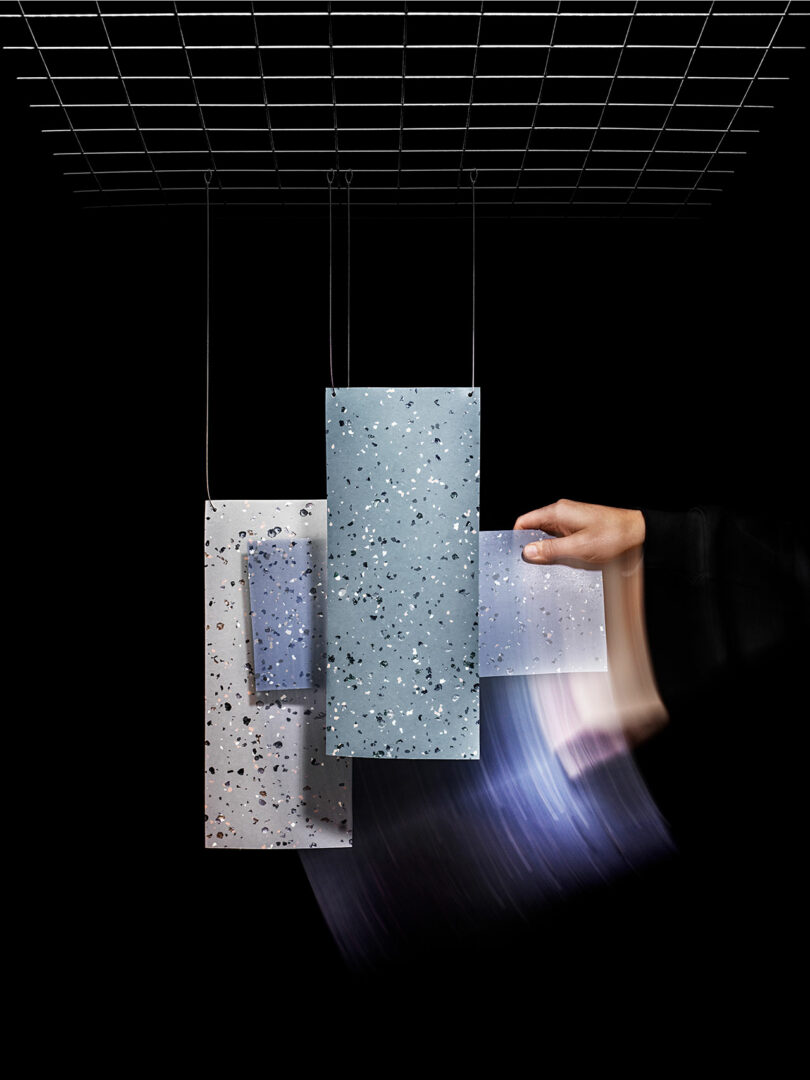
Healthcare facilities, schools and high-traffic public spaces require durability that often pushes design to the sidelines. Underpinned by two key pillars––design for durability and build for circularity––Tarkett’s proposal argues that this trade-off is no longer necessary. iQ Motion carries the defining characteristics of the iQ family: best-in-class resistance to scratches and stains—including those found in clinical conditions—and a unique resurfacing capability that allows the floor to be restored in place rather than replaced, provided cleaning and maintenance instructions are followed. The result is a material built to last and designed to age well, maintaining its visual integrity in areas where wear and tear is inevitable.
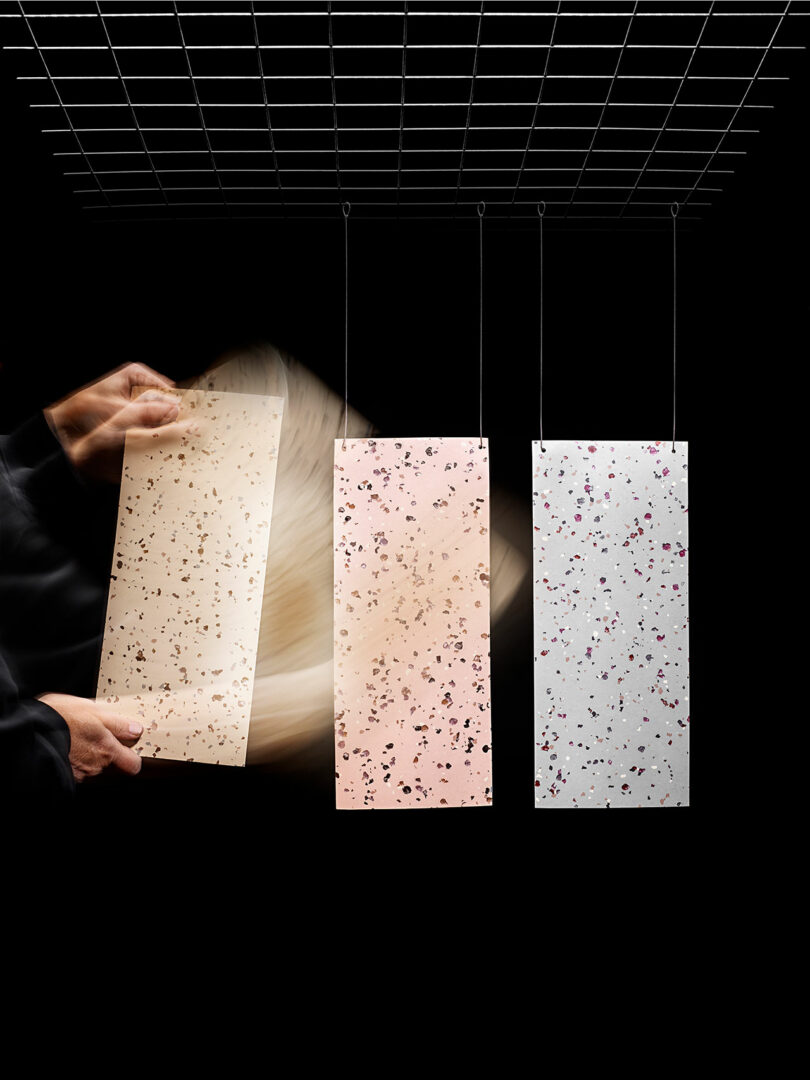
This convergence of performance and design is no accident. It reflects a broader shift in how Tarkett approaches product development, positioning the floor as both infrastructure and interface. Rather than treating aesthetics as a surface layer applied at the end, design is embedded in the material itself – within its composition, its pattern, and its ability to interact with space.
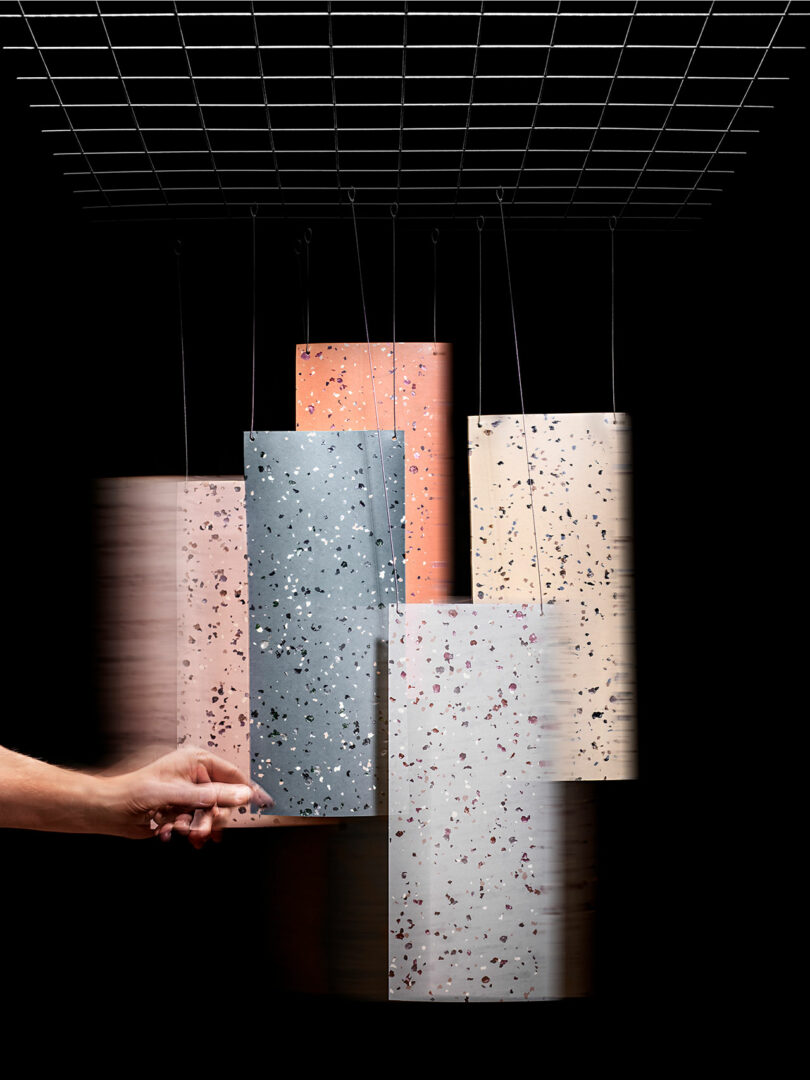
This interplay becomes particularly apparent when considering Tarkett’s larger ethos. At its core is a commitment to inclusion — understanding that people experience spaces differently, shaped by age, neurodiversity and mobility. While the collection is not limited to a single application, the floor becomes a tool to support these varied experiences.
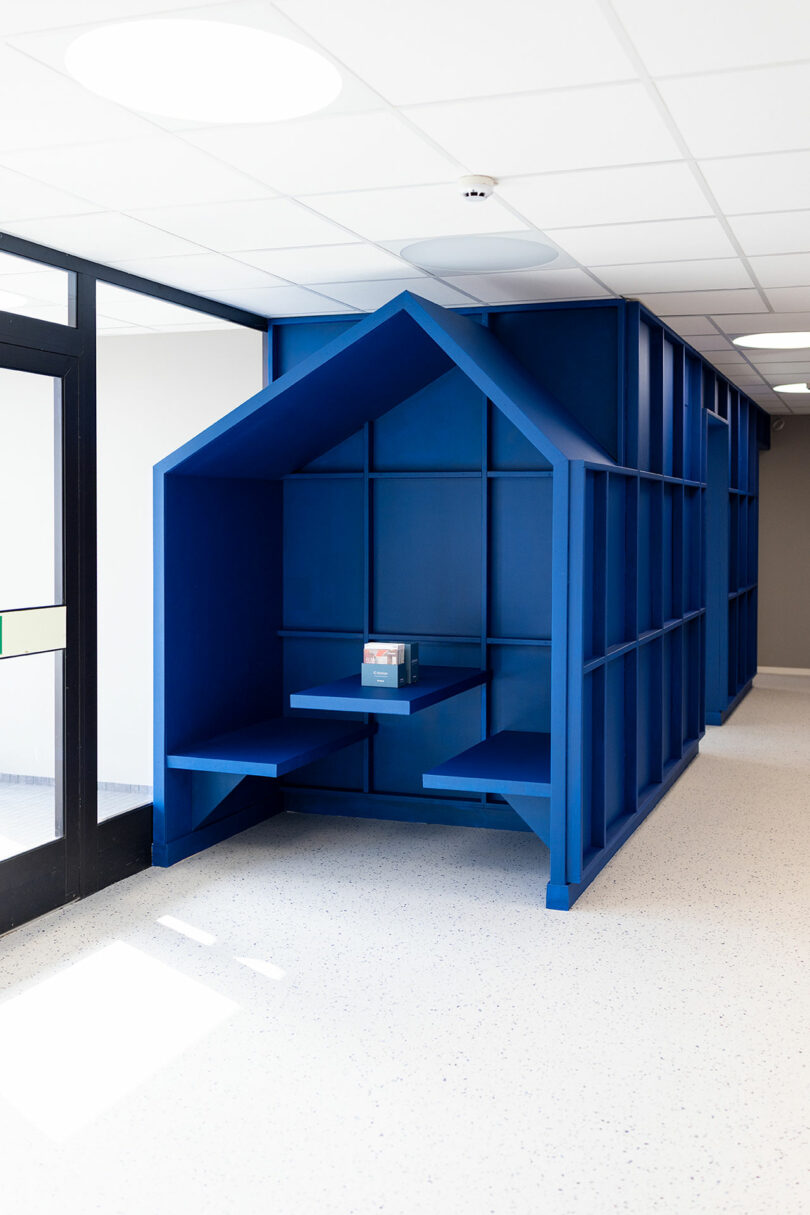
iQ Motion’s 16-tone palette reflects this sensibility. Individually, the colors are calm and grounding. combined, they create subtle energy and movement. In healthcare settings, this can support wayfinding or reduce sensory overload. In educational settings, it can help with zoning without relying on physical barriers. The floor becomes a quiet driver building experience without demanding attention.
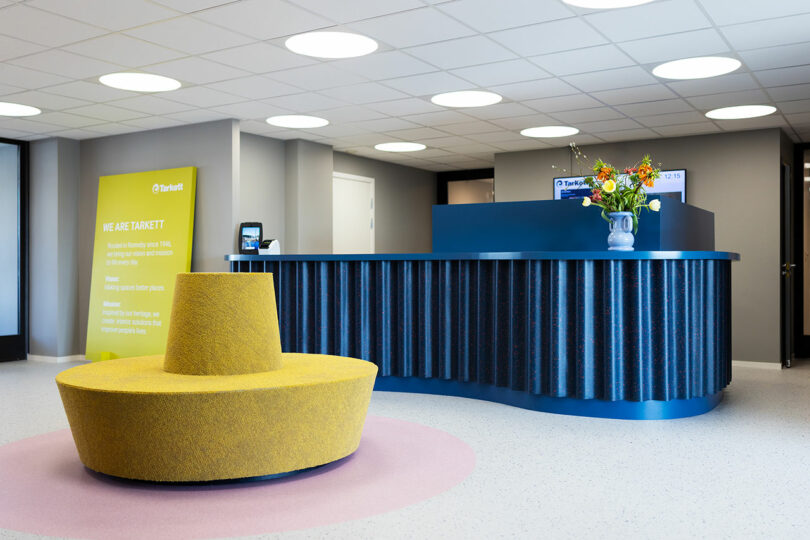
And yet, what is perhaps most striking is how far this seems from the expectations usually associated with conventional flooring. There is a long-standing assumption in the design trade that performance-based materials must sacrifice aesthetic ambition, that durability comes at the expense of expression.
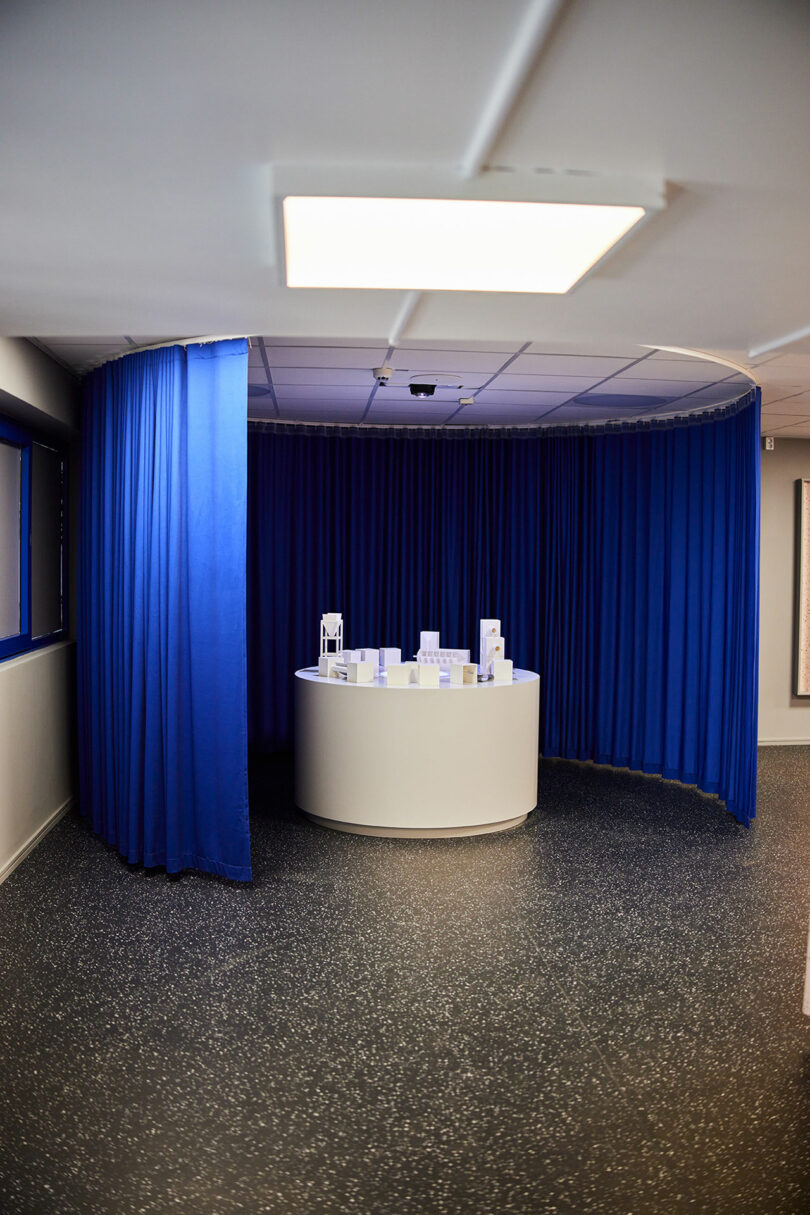
Tarkett’s Ronneby showroom suggests otherwise. The floors extend to the walls, the walls become sculptural and the sculptural elements become seats. By incorporating design thinking into the structure of the material itself, the company challenges the binary between function and form, suggesting instead that the two are inseparable. This philosophy extends, critically, to circularity.
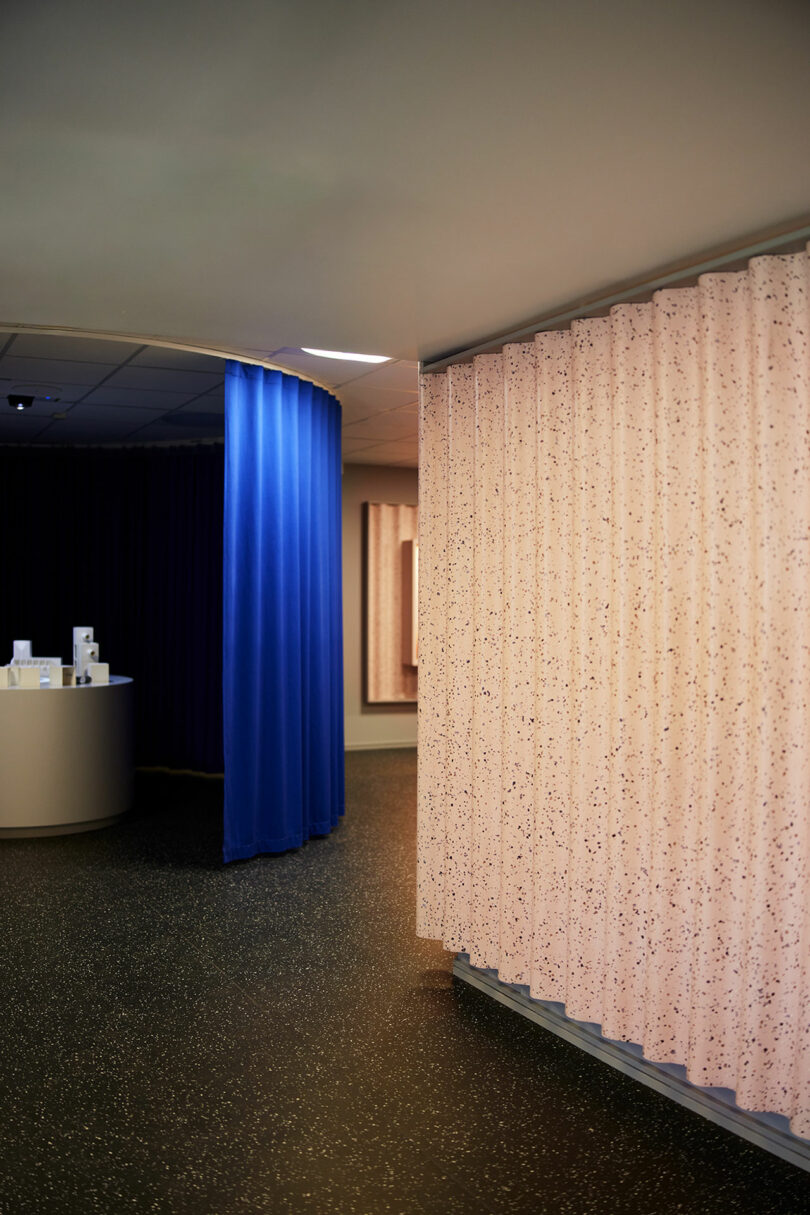
iQ Motion is designed as a single material product, meaning it can be fully recycled without needing to be separated at the end of its life. On average, it contains an average of 25.5% recycled content, including post-consumer flooring, and is fully compliant with Tarkett’s ReStart® recovery and recycling program. This closed-loop system reduces reliance on virgin materials and avoids more carbon-intensive disposal methods such as incineration or landfill. In addition, it has the lowest circular carbon footprint compared to similar materials from competitors.
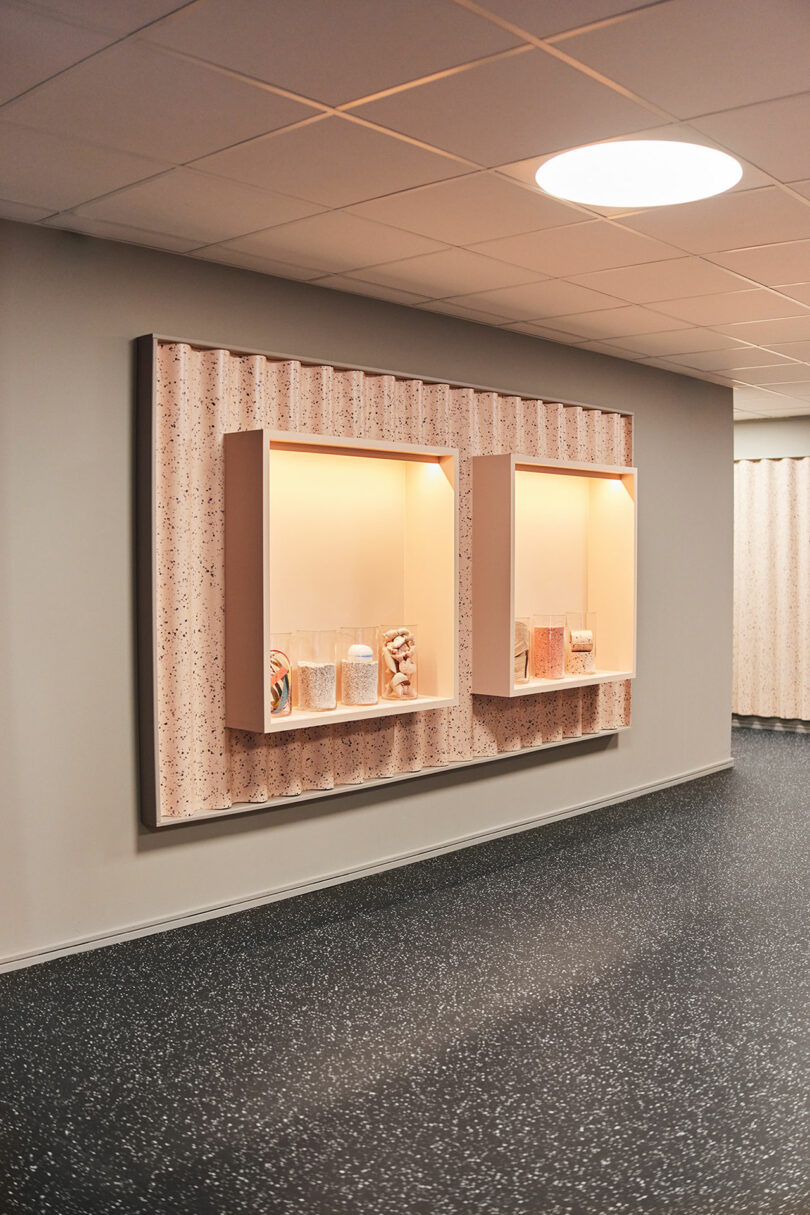
But circularity, as conversations during the visit reveal, is not a static achievement – it is an ongoing process. Legacy materials, installed decades ago with different regulatory and material standards, present a complex challenge. Removing unwanted substances, separating components and developing economically viable recycling methods require cross-industry collaboration and continuous innovation. The work is gradual, often invisible, but essential.
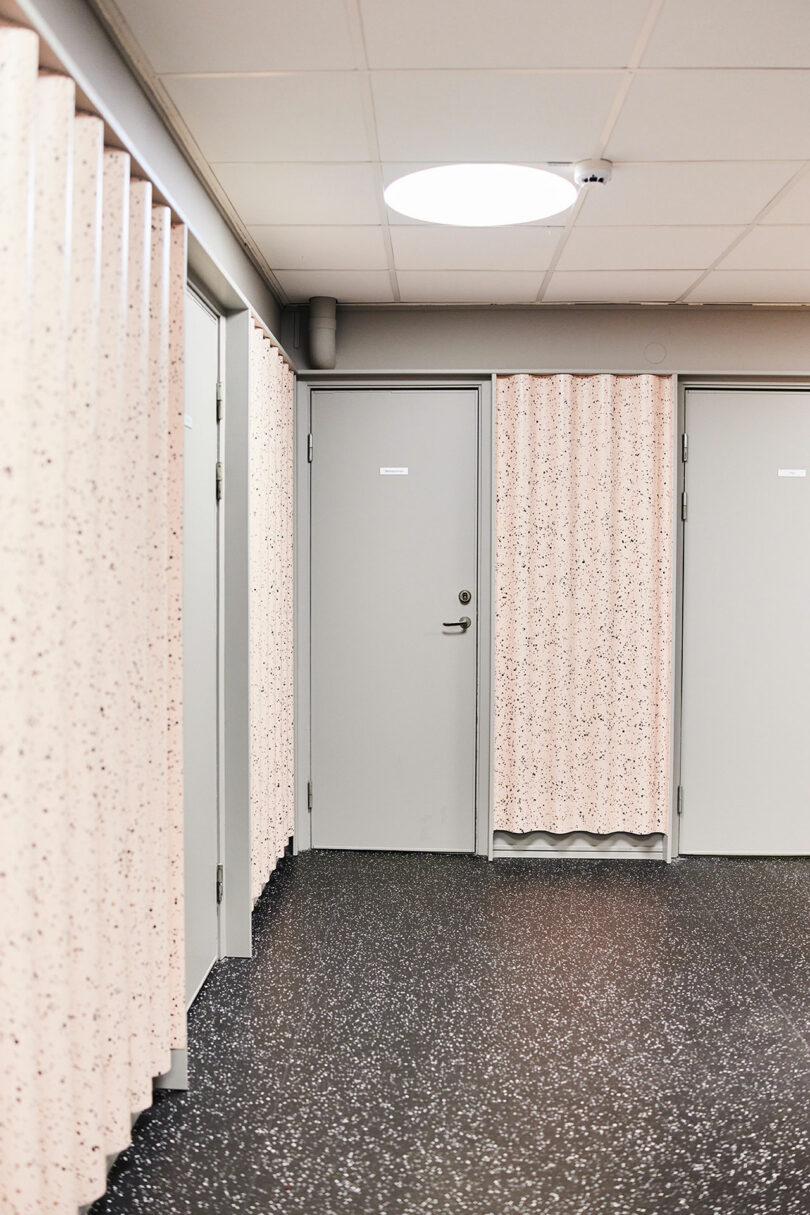
And perhaps this is what defines Tarkett’s Ronneby site most clearly. It is not a place for spectacle, but for the accumulation of knowledge, know-how and small, steady advances that, over time, amount to something significant.

What begins as a product launch expands into something more systemic: a rethinking of how materials are designed, used and reused. The floor, in this context, is no longer an afterthought. It is a foundation, both literal and conceptual, of how spaces function over time.

Ronneby may remain unassuming, but his impact is anything but. Here, in this quiet corner of Sweden, the future of circular design isn’t just imagined – it’s actively built, one surface at a time.
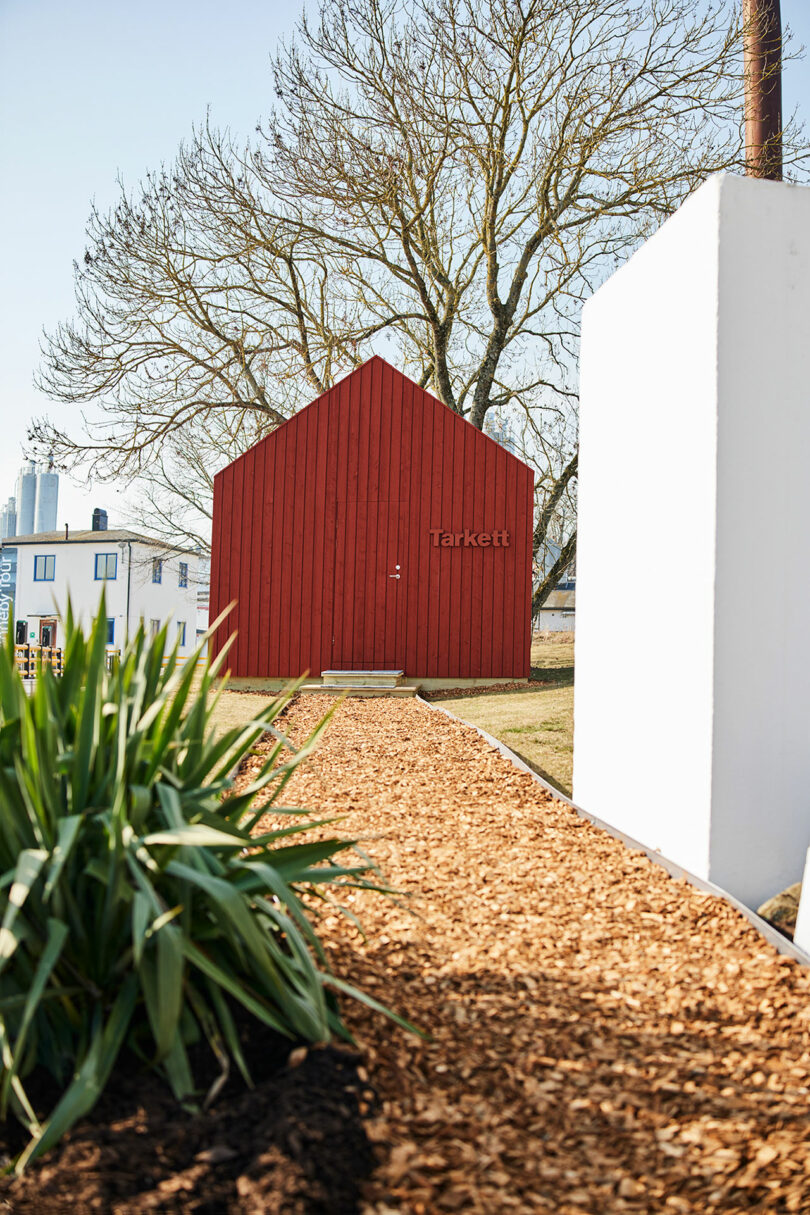
To know more about the brand and its innovations, visit professionals.tarkett.com.
Photo courtesy of Tarkett.