Three hours in the car. Five hours on foot. Forty-five minutes sitting in silence looking at the sky.
The numbers tell the story more honestly than any museum label. They describe a day that started in Germany before turning south into the Austrian Alps, where the roads narrowed, the villages got smaller and the mountains gradually replaced everything else. They also describe something increasingly rare in contemporary culture: travel not for an event, a sight or a destination, but for a single work of art.
James Turrell’s Skyspace Lech is located 1,780 meters above sea level above the village of Oberlech. It is not visible from afar. It doesn’t dominate the landscape or announce itself with the kind of architectural indignation we’ve come to associate with cultural landmarks. In fact, its greatest asset may be its refusal to be.
Today we wait for art to meet us where we are. It pops up on our phones before breakfast, fills museum gift shops before we enter the exhibit, and circulates endlessly online before we even stand in front of the original. The artwork often arrives before us.
Skyspace Lech is asking for something completely different.
He asks you to come to it.
The journey itself becomes the first gallery.
Today we wait for art to meet us where we are. James Turrell’s Skyspace Lech calls for something completely different. He asks you to come to it.
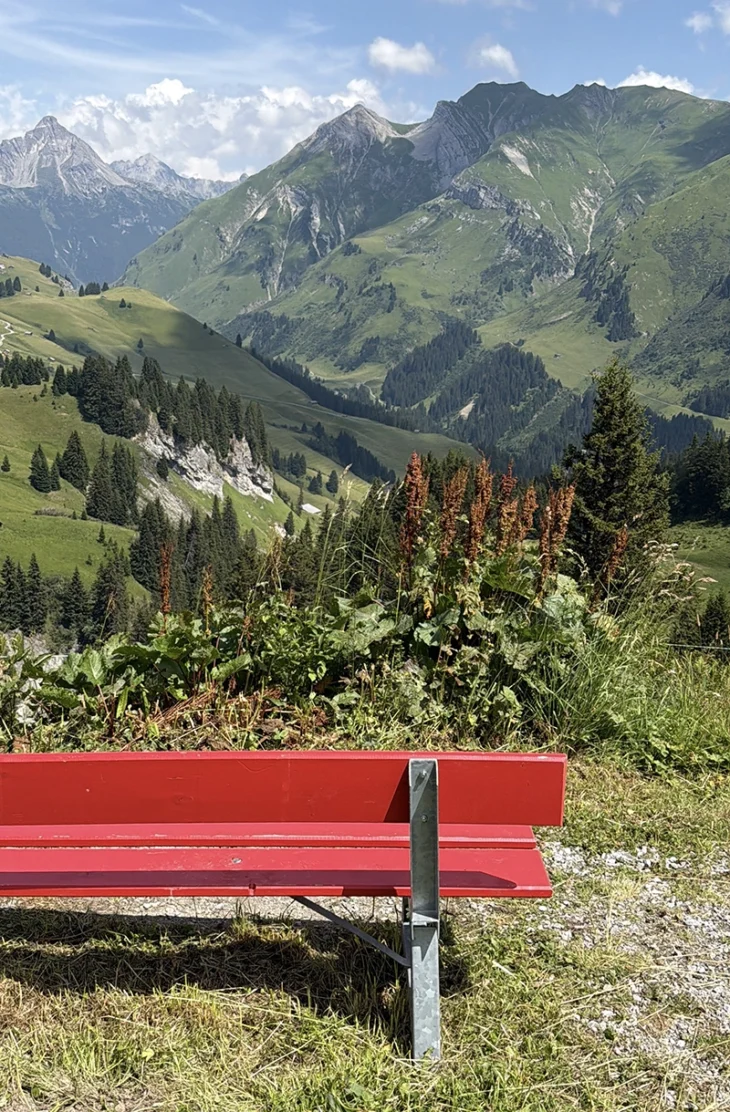
We parked the car in one of the most beautiful landscapes imaginable. The Alps have a quality that photography has never been able to explain. They are huge without feeling overwhelming, dramatic without being theatrical. Their scale is constantly adjusting yours. The mountain peaks that surround Leh seem almost impossible in their precision, carved over millennia into forms that no architect would dare to invent.
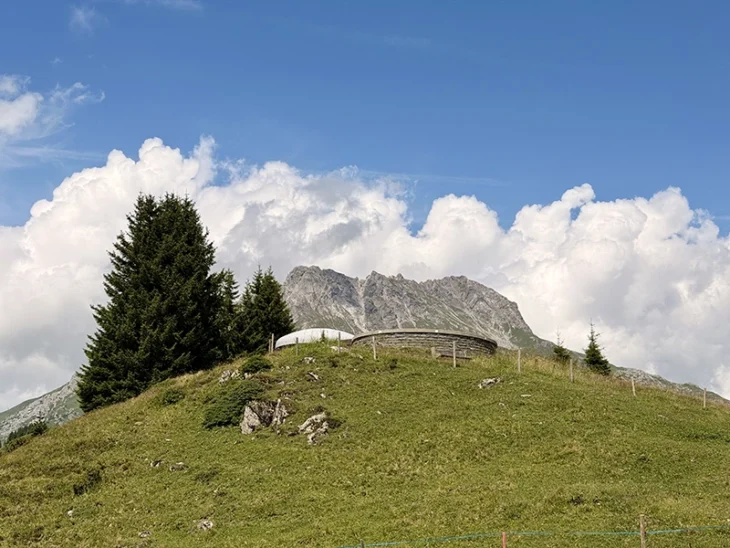
The drive to Skyspace Lech begins quietly. There are no queues, no monumental entrance plaza, no shopping area leading visitors to a cultural attraction. Instead, a footpath runs up the hillside, sharing the landscape with walkers, cyclists and skiers depending on the season.
This may be one of the most generous features of the project.
It belongs equally to those who came specifically to see James Turrell and to those who just happened to be passing by.
Public art often struggles with accessibility. Museums require tickets. Biennales require maps. Galleries often require familiarity with a language that many people have never learned. Skyspace Lech requires none of these things. It only asks for your willingness to walk.
Architecture itself understands this.
From the outside, there is remarkably little to admire. Most of the building is below ground. There is no impressive facade to compete with the mountains that surround it. No attempt to become another Alpine icon. In an age where architecture often performs before it works, this limitation is almost radical.
The building knows it cannot improve the landscape.
Instead, it processes the way we experience it.
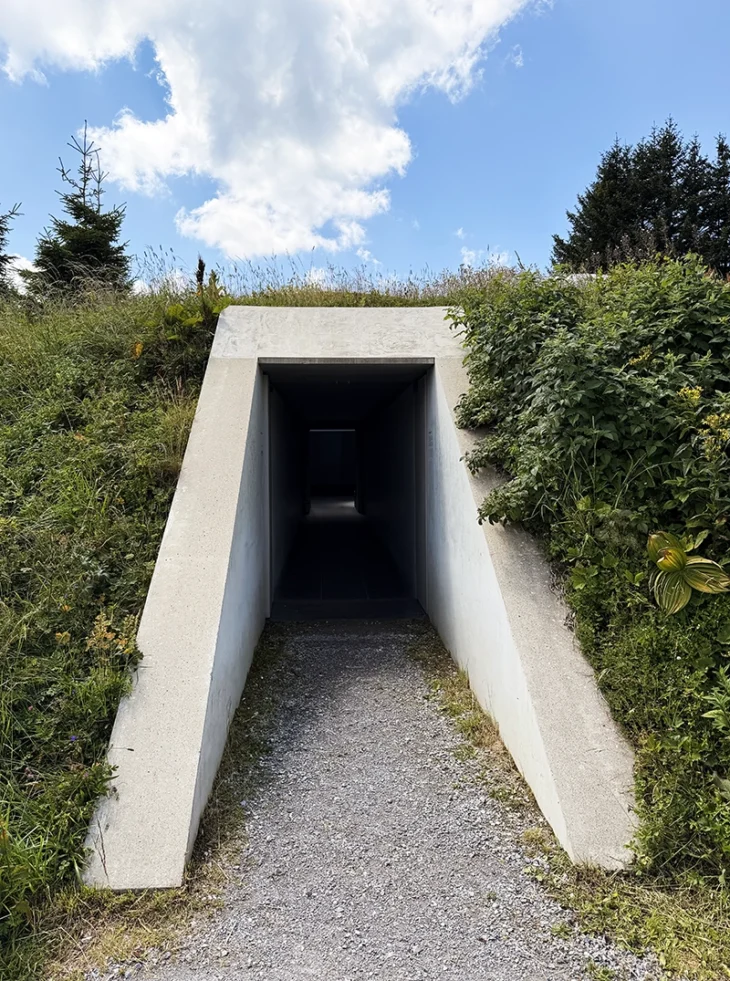
The real threshold comes fifteen meters later.
A narrow tunnel leads to the mountain. For a brief moment everything disappears. The peaks disappear behind you. The sky is disappearing above you. The landscape gives way to concrete, shadow and silence. The tunnel then opens into the oval chamber that Turrell calls the Sensing Room.
The project knows it cannot improve the landscape. Instead, it processes the way we experience it.
There are benches around the perimeter.
Nothing hangs on the walls.
Nothing occupies the center.
Above, an opening frames the sky.
Calling it a skylight somehow seems wrong. It is not an architectural detail. It is the work of art.
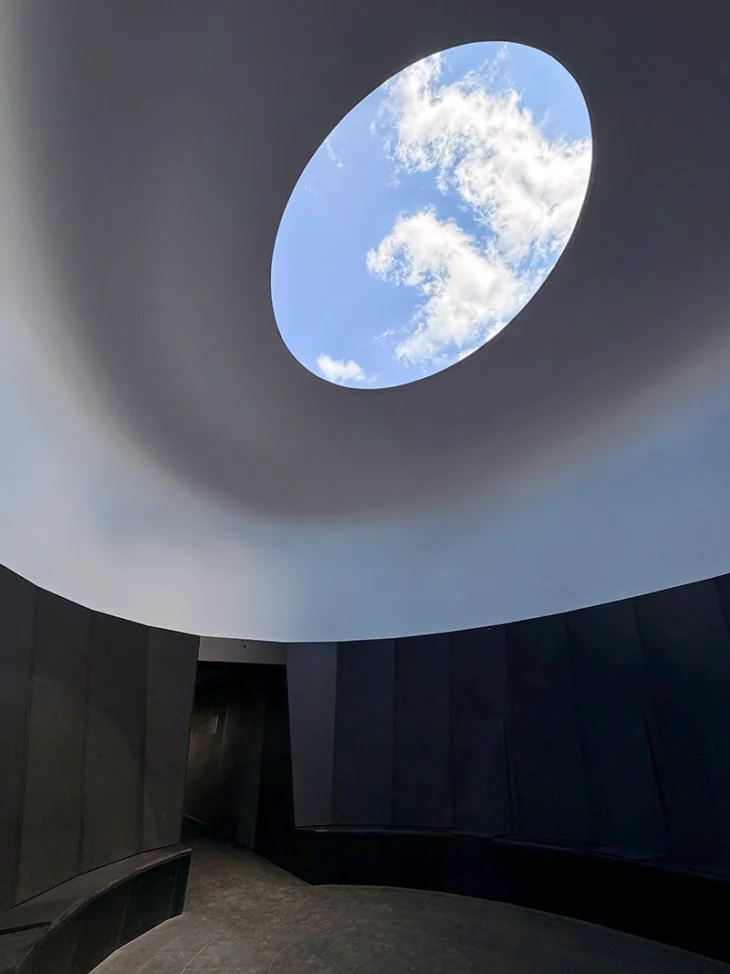
James Turrell has spent decades asking us to rethink one of the simplest acts we do every day: looking. His work was never really about light itself. It has always been a matter of perception. As he once observed, we participate in creating the reality we think we are merely observing.
Inside Skyspace Lech, this idea becomes tangible.
The sky is starting to change.
Or maybe not.
Perhaps only our perception is changing.
The clouds pass through the opening with surprising slowness. The colors change gradually. As twilight approaches, carefully programmed artificial light washes the walls, changing the way the eye reads the color of the sky itself. The blues deepen. Grays appear violet. White clouds suddenly convey unexpected warmth. The sky begins to flatten and then deepen again. At times it looks almost solid, as if someone put a painted surface on the ceiling.
Inside Skyspace Lech, the smallest changes become the whole experience: a passing cloud, a color change, a sky that suddenly feels unfamiliar.
Nothing actually happens.
Everything is done.
Time begins to dissolve.
I remember sitting there thinking we should probably leave soon.
Then we wondered if we had already been there for an hour.
Then I realized I didn’t care anymore.
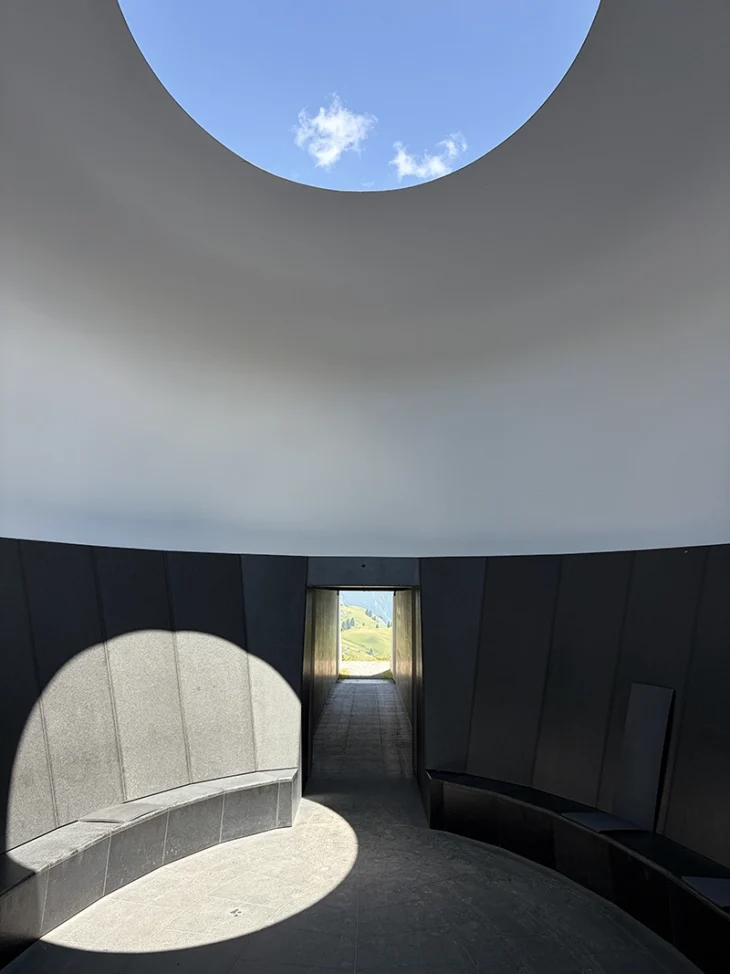
Modern life trains us to constantly measure time. We check watches while waiting for elevators. We track battery percentages, delivery estimates and countdown timers. Inside Turrell’s room, these habits are quietly disappearing. Nothing demands your attention but the sky. Without realizing it, you stop measuring time because there is nothing left to measure.
Silence becomes another material in the room.
Not absolute silence. The distant sound of the wind is still there. A faint movement of air passes through the opening. A breath echoes on the concrete. However, even these sounds seem absorbed into the experience rather than interrupting it.
It is deeply meditative without pretending to be spiritual.
This distinction matters.
Too often, modern conversations around slow experiences drift toward wellness clichés or manufactured mindfulness. Skyspace Lech never instructs visitors to reflect, heal or disconnect. It just creates the conditions under which these things can happen naturally.
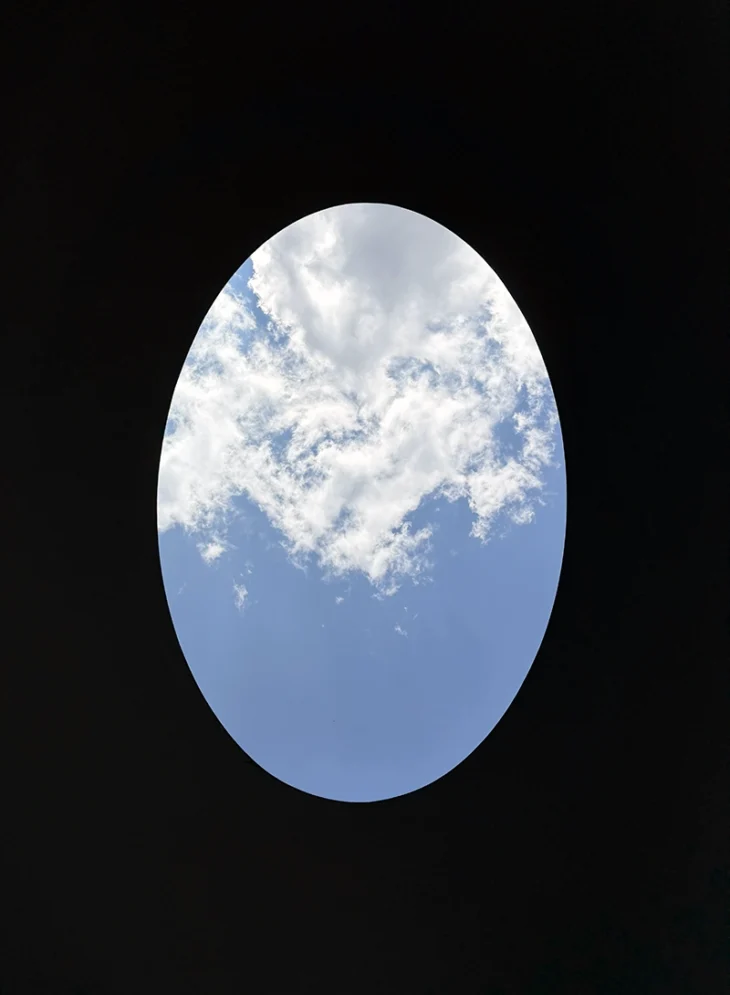
Perhaps that is why the work is so unpretentious.
It does almost nothing.
A room.
An opening.
Light.
Heaven.
However, achieving this simplicity is extremely complex. Every ratio, every surface, every change in artificial light has been calibrated with enormous precision. Architecture disappears only because it is designed with extraordinary discipline.
Leaving the room felt strangely difficult.
Not because there was more to see, but because the room had quietly calibrated our view.
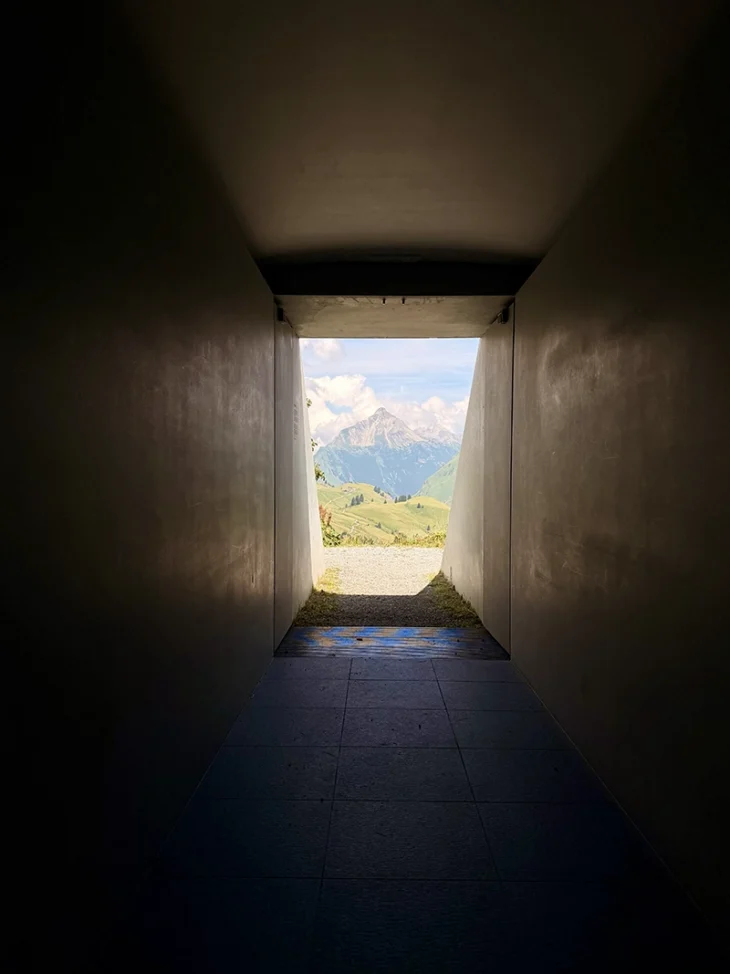
Outside the mountains remained exactly where we had left them.
Yet somehow they seemed different.
Instead of going straight back to the car, we kept walking.
For the next five hours we hiked in the surrounding Alps. We reached an alpine lake whose stillness rivaled anything within Skyspace itself. Marmots ran among the rocks. An eagle circled high above the valley. Wildflowers moved with the wind. The afternoon unfolded with no destination beyond mere continuation.
They all enter through the same tunnel, look at the same sky, and leave carrying a slightly different version of it.
Only later did I realize that the hike had become an extension of Turrell’s work.
The same sky we had watched through an oval opening now stretched out endlessly above us. The mountains framed it differently at each turn of the path. The clouds continued their slow choreography. The light shifted almost imperceptibly on rocks, grass and water. Nothing in the landscape had changed. We had.
It was impossible not to think of Theodor Adorno’s writing on natural beauty. In Aesthetic Theory, he argues that art does not replace nature or improve it. Conversely, great works of art sharpen our perception of the natural world, allowing us to experience it differently. Nature, in turn, completes the work of art long after we have left it.
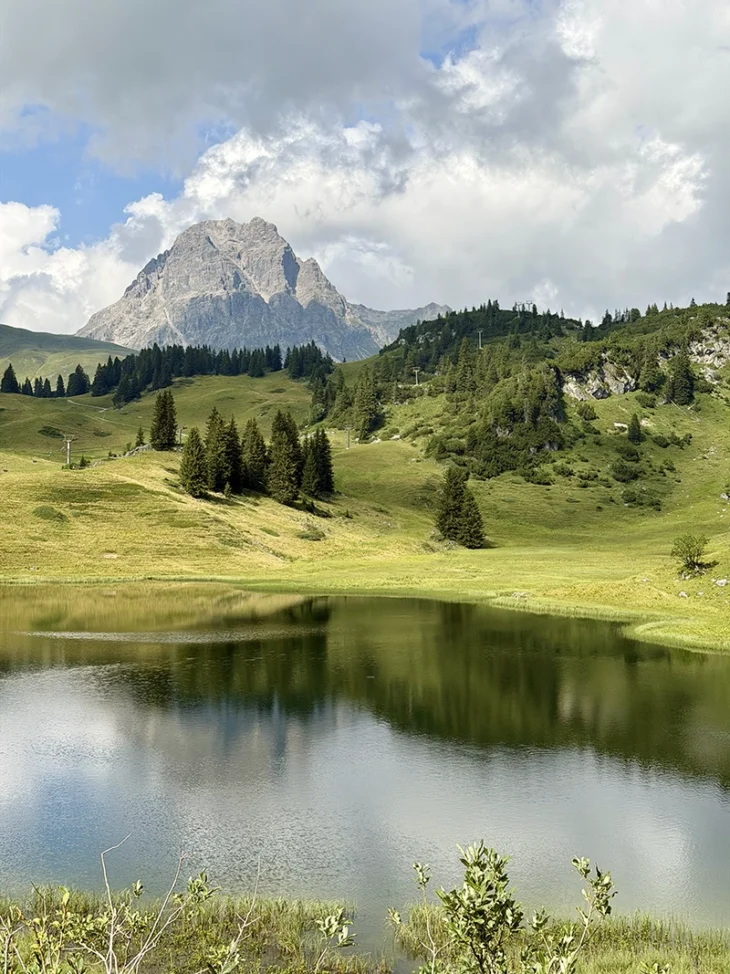
Where had Turrell’s artwork finally ended up?
In the tunnel?
In the building?
Or sometime much later, sitting in the car after sunset, replaying the day in complete silence?
Perhaps Skyspace Lech’s greatest achievement is that it refuses to separate art from nature.
We often think of art and nature as separate realms. One belongs to museums, the other exists beyond them. One is made by human hand. the other completely precedes us.
Skyspace Lech is quietly dissolving that distinction.
The architecture contributes little to the mountain. It buries itself beneath the landscape, refusing the temptation to become another Alpine landmark. There is no monumental facade, no sculptural object that demands attention. Instead, Turrell builds more than just a room, a tunnel, and an opening to the sky.
However, leaving this room, the Alps no longer look the same.
Adorno believed that the highest achievement of art was never to imitate nature but to illuminate it. Natural beauty, he argued, does not exist independently of our perception of it. Art has the ability to awaken this perception, allowing us to encounter the world with renewed attention. Sitting inside Skyspace Lech, this relationship feels less like a philosophical theory than a lived experience. Architecture does not compete with landscape. It recalibrates the viewer.
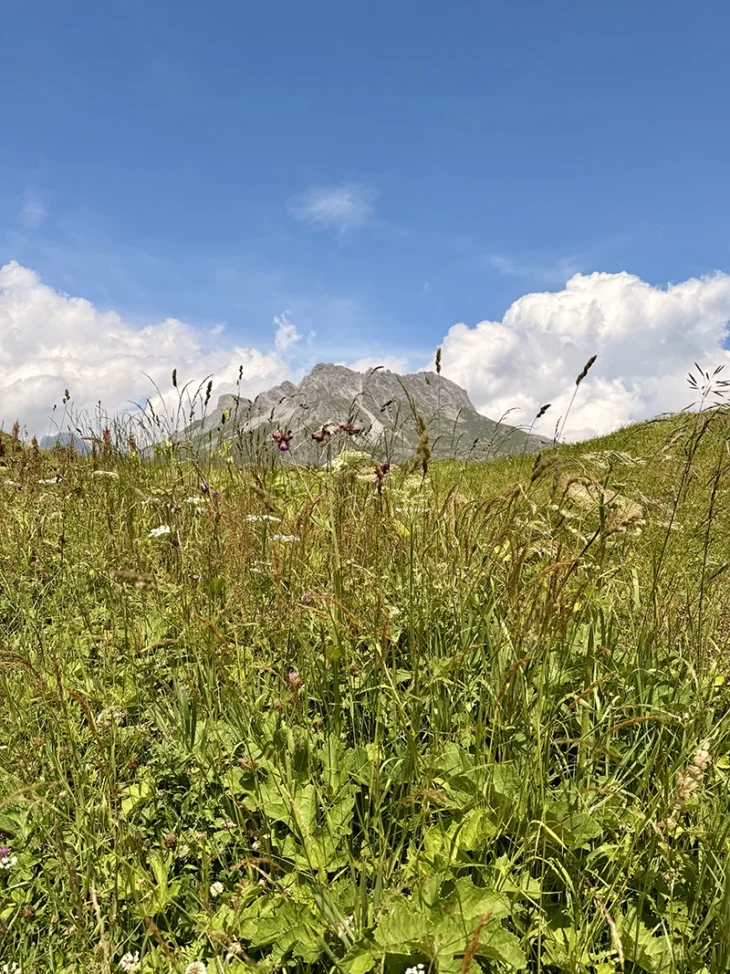
The Alps were already beautiful long before James Turrell arrived.
Skyspace Lech never tries to improve them.
It just reminds us that beauty isn’t just something we come across. It is something we learn to notice.
Perhaps this explains why the work welcomes such diverse audiences. Every day, hikers who have never heard of James Turrell share the same benches as collectors who have followed his career for decades. Architects sit next to families. Contemporary art is disappearing as a category. Expertise offers no particular advantage.
The long way to see the sky was never about the distance. It was learning how to look again.
They all enter through the same tunnel.
Everyone is looking at the same sky.
Everyone leaves carrying a slightly different version of him.
The long way to see the sky, it turns out, was never about the distance.
It was to discover that the work of art had quietly followed us out of the mountain and into the landscape, where, perhaps, it had always belonged.