
In a profession where deadlines are tight, inspiration is fleeting and procurement can quickly become a logistical maze, efficiency is no longer a luxury – it’s a necessity. Enter Material Bank, the digital marketplace that redefined material sourcing in North America continues to expand its presence across Europe.
Since 2023, Material Bank has steadily built momentum on the continent. Its promise is deceptively simple: make searching, sampling and identifying materials radically easier — and do it sustainably. At its core, the Material Bank is the world’s largest marketplace for architectural, design and construction materials. But scale alone is not what makes it transformative. It is the system behind it.

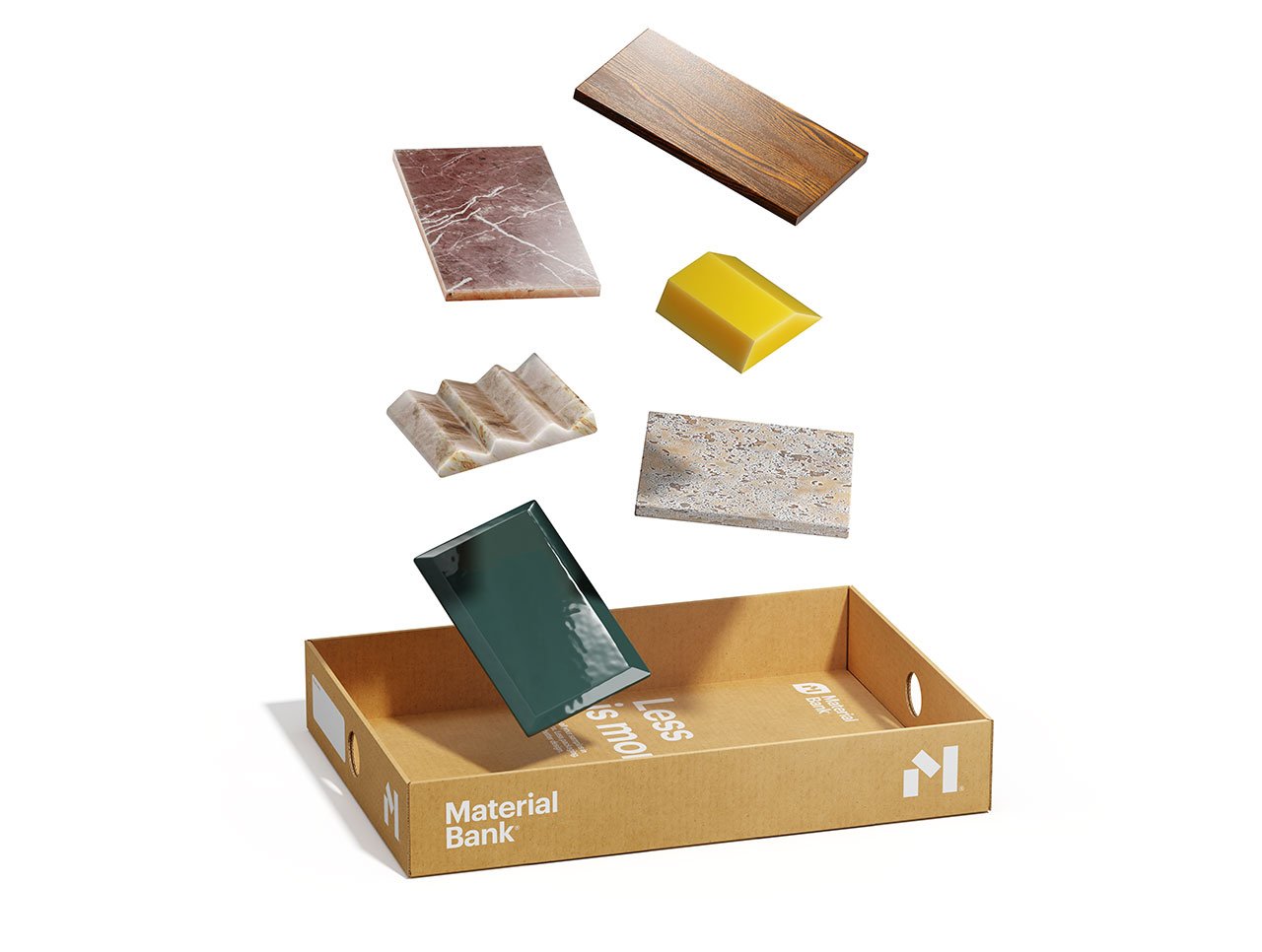
European architects, interior designers and corporate buyers can now search more than 56,000 materials in 40 categories—from paint and flooring to textiles, ceramics, acoustics and wall coverings—all in one place. Instead of reaching out to multiple manufacturers, juggling emails and waiting weeks for samples to come in, members digitally curate options and receive them in a single, centralized box—often next day with a sample and free delivery to trade professionals.
Saving time is not theoretical. “It’s a complete game changer and the time it saves us is amazing,” says Tadeas Kotyk, Co-Founder at 2prostory. “Finally, we don’t have to write to all the suppliers and manufacturers separately and ask them for samples and then wait weeks or months!”

Material Bank’s proprietary logistics facility aggregates samples from hundreds of brands, streamlining fulfillment in a way that appears almost invisible to the end user. The European platform already has more than 450 leading brands and continues to grow rapidly. For manufacturers, it offers instant access to an active, specialized audience of specifiers. For design professionals, it unlocks unprecedented visibility into materials and suppliers.
What sets the platform apart is not just width, but proximity. Designers can see disparate materials side by side—fabrics next to tiles, flooring next to wall coverings—enabling more intuitive, multi-layered decision-making. As Kyle Crossley, Architectural Assistant at DLA Architecture notes: “Being able to see the samples side by side on this site is so clever!”

This ability to compare, curate and improve in real-time reflects the way modern studios operate — collaborative, iterative and fast-paced.
The Material Bank model is not only efficient, but also environmentally conscious. By consolidating samples from multiple brands into a single shipment, the platform has eliminated more than five million packages from shipment to date. For European design professionals following increasingly stringent ESG standards and sustainability commitments, this integrated packaging waste reduction aligns with wider industry goals without adding friction to the workflow.

The expansion across Europe marks more than just geographical growth. It marks a wider modernization of the way the design trade operates. Material procurement—once fragmented and time-consuming—is becoming even more centralized, searchable, and digitally native. Material Bank seamlessly connects global manufacturers with specifiers and buyers while reducing friction and saving valuable time. The result is a shift in focus: less administrative overhead, more creative exploration.
For a generation of architects and designers accustomed to digital immediacy in every other aspect of their practice, this development is both timely and deeply welcome. As Material Bank continues to expand its European footprint, it is positioning itself not just as a sourcing platform, but as the infrastructure for the modern design economy: fast, sustainable and built for scale.
For more information about the Material Bank, visit materialbank.eu.
Images provided by Material Bank.