
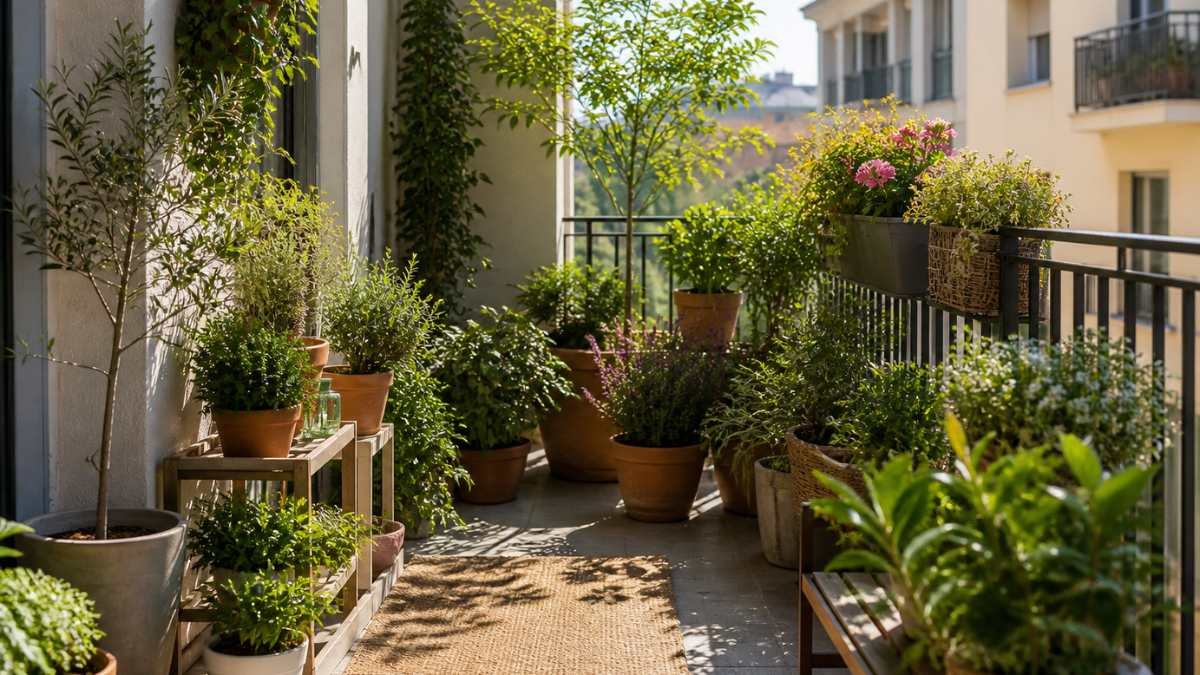

The location of the plants on the balcony is more important than the plant itself. Many people think that it is enough to choose the right species, but in reality it is the exposure, the air, the heat of the surfaces and even the height of the pot that determine whether a plant will last or not. Two balconies in the same city can give completely different results, even with the same plants.
Understanding where to put them is really about observing the space and using it intelligently, not haphazardly filling it.
Not all plants need the same light
The first mistake is to treat the balcony as if it is uniform. In fact, each spot has a different light during the day. The area near the railing, for example, is almost always the most exposed, while the area near the wall receives less direct sun but more reflected heat.
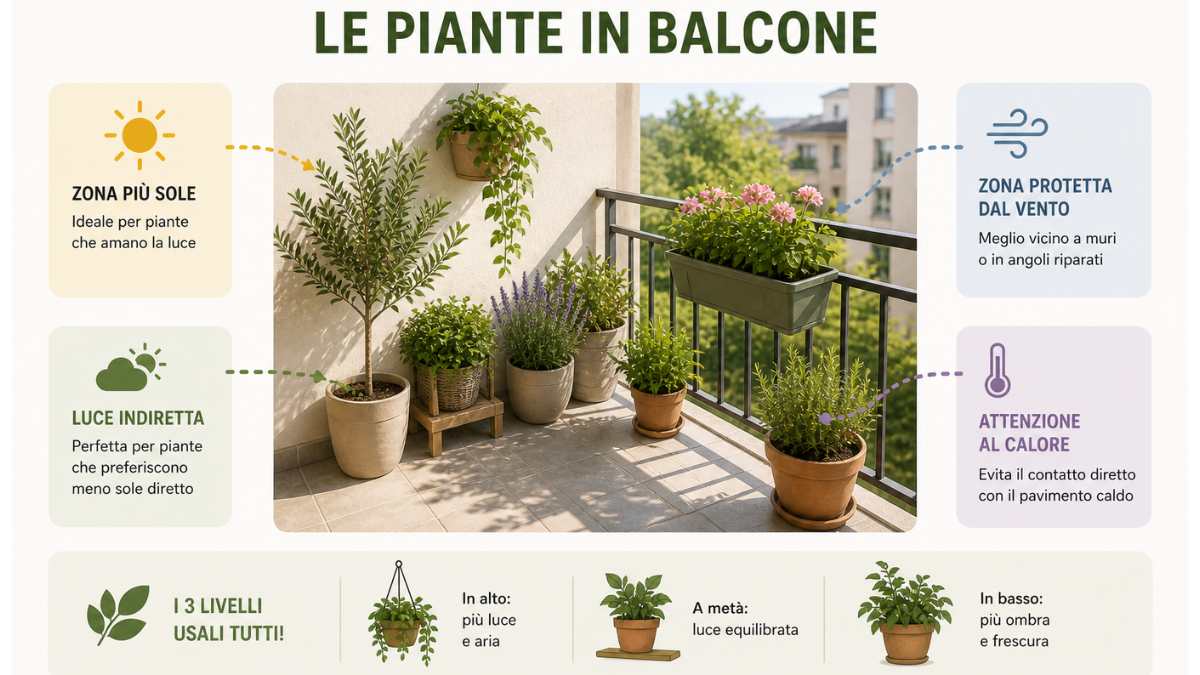
Sun-loving plants should be placed where they receive direct light for several hours, but without excess during the hottest hours. The more sensitive ones work better slightly back, where the light is filtered and less aggressive. Moving them even as little as half a meter can completely change their resistance.
The wind does more damage than the sun
Another underestimated factor is wind. On high floors or exposed balconies, the wind can dry out the soil very quickly and stress the plants even if they look healthy.
More sheltered areas, such as corners or places close to the wall, often suit the most fragile plants. The trellis, however, is the most exposed point and should be reserved for hardy plants, able to withstand sudden changes and constant currents.
The floor changes temperature
Not everyone considers how the floor affects the plants. Dark tile or concrete surfaces accumulate heat during the day and release it slowly, creating an environment that is much warmer than it feels.
The vases are placed directly on the ground suffer more from this effect. Elevating them slightly, even with just simple supports, helps maintain a more constant temperature and prevent overheating of the roots.
Not all shadows are the same
It is not enough to say “put it in the shade”. There is a difference between total shadow and indirect light. Many balcony plants do not like the dark, but simply avoid direct sun during the strongest hours.
A spot near a bright wall, for example, can provide diffused light throughout the day without ever exposing the plant directly to the rays. It is often the most stable position and the one that guarantees the most orderly growth.
Height makes more of a difference than it seems
The vertical position also changes a lot. Plants hanging or on shelves receive more light and air, while those in the ground are more protected but also more subject to accumulated heat.
The distribution of plants on several levels is not just an aesthetic choice, but helps to find the most suitable position for each one. The more durable they can be more exposed, the more sensitive they are lower or closer to the walls.
Where they actually last longer
Plants last when they find a stable location, not when they are constantly moving. The best spot is where light, air and temperature remain as constant as possible during the day.
It is almost never the most visible point of the balcony, but the most balanced. Once found, you can immediately see the difference: more regular growth, fewer damaged leaves, less need for constant interventions. It is not the balcony that must be adapted to the plants, but the plants that must be placed in the right place on the balcony.



