
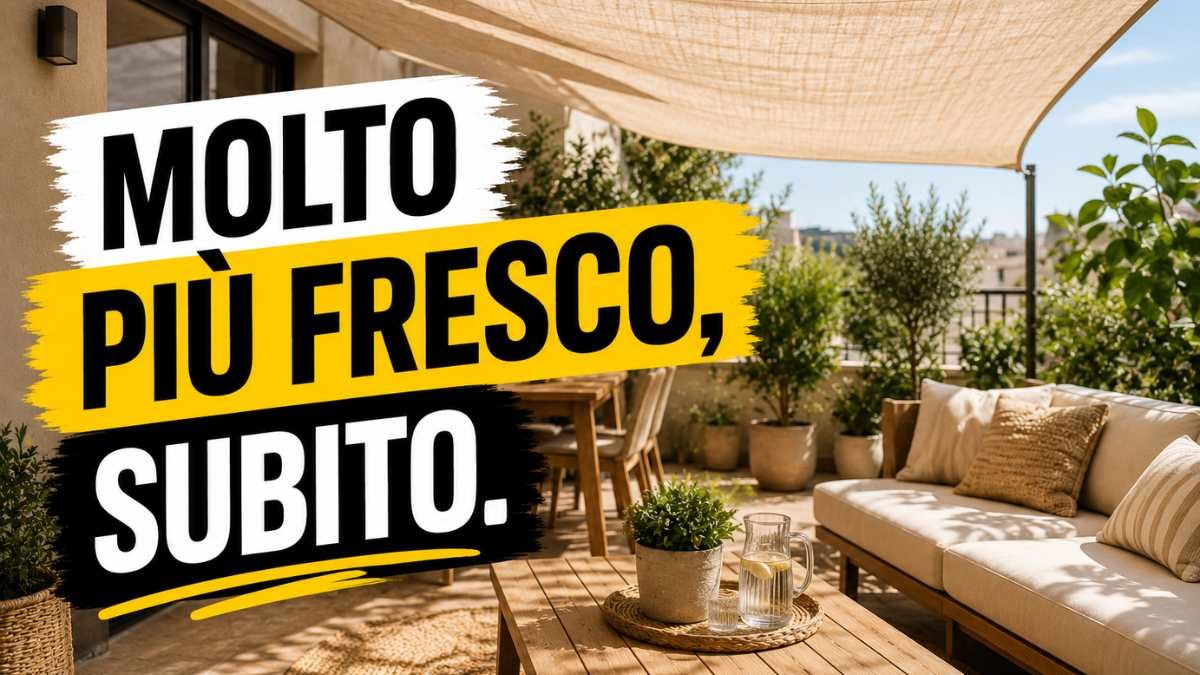

The dark waterproof sheet has covered millions of Italian terraces without anyone questioning it. Durable, economical, familiar. It was stretched over the pergola or along the perimeter of the balcony and the shadow problem seemed to be solved. The problem it created, however, was different: turning an open space into a stifling, closed, visually heavy area.
The effect is particularly noticeable on small south-facing balconies. A few square meters covered by a dark and solid material become one heat trap. The surface absorbs solar radiation instead of reflecting itthe perceived temperature increases and what should have been a cool corner ends up being unusable in the hottest hours.
The problem is not the shadow, but the kind of shadow
A dark tarp blocks the sun but also retains heat. A light and clear fabric filters it allowing air and movement to pass through. You can’t see the difference in the photo, you can feel it once you sit down.
Many modern terraces have been covered in charcoal, matte black or very bright gray because they make the light colored furniture and green plants stand out in the photo. Aesthetically they work. Thermally they accumulate temperature during central hours and release it in the eveningwhen you finally want to sit outside. The table gets warmer, the air seems heavier, the floor retains heat longer. On a small balcony this phenomenon is concentrated in the same place and becomes unbearable.
The fabric that filters instead of blocking
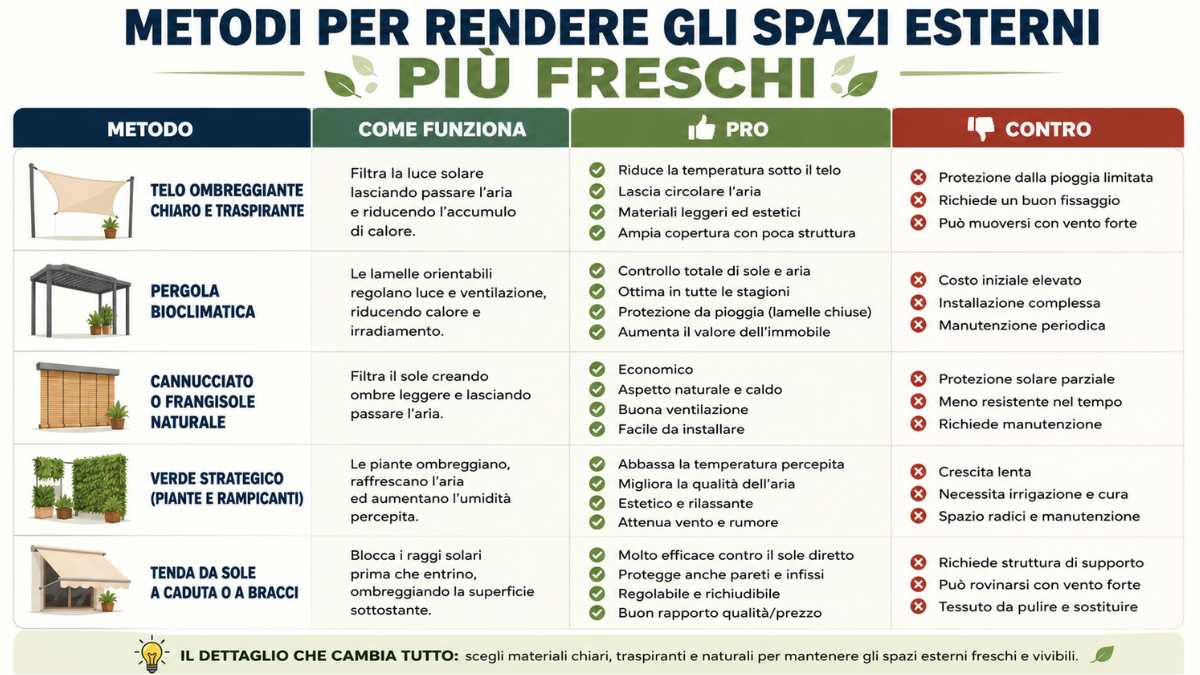
The direction followed by many modern terraces it is opposite to that of the classic waterproof sheet. Filtering curtains, light technical fabrics, light linen effect covers: materials that create shade without closing the space, which they let air through and diffuse light instead of blocking it.
Shade like sand, ecru, rope or hot gray they work extremely well. They reflect more heat than they absorb and when the fabric moves slightly with the wind, they make the terrace visually more airy. It is a difference that is perceived both thermally and aesthetically: the space is visible bigger, more breathable, less compressed.
Brands like Sunbrella, which has been producing technical outdoor fabrics for decades and is used by outdoor designers like Paola Lenti, work on exactly this balance: high sun protection, low optical weight, colors that do not absorb heat.
I raked them, but not the old ones
The natural kanishas are also returning, but with a very different interpretation than in the past. No more heavy and rustic covers that completely close the balcony, but bright screens placed to the side or above to filter the light creating soft shadows.
Used in this way, they do not obstruct air circulation and do not visually burden the space. In a terrace with a light floor and basic furniture, a Light canissa adds natural texture without turning the balcony into a dark corridor.
Because cover color matters more than you think
A charcoal gray or dark green sheet on an exposed balcony accumulates heat during the central hours of the day and releases it in the evening hours, when you would like to sit outside. It’s the same principle that says cities with lots of dark asphalt stay warm even after dark.
A Clear, breathable coverage breaks this cycle. It’s not just an aesthetic question: it’s physics applied to a space of a few square meters.
The coolest terrace in the summer is not necessarily the one with the most structured pergola or the most expensive cooling system. It’s often something that someone just has changed the cloth over the head.



