


An interior designer, a few years ago, declared that aromatic plants were the new decorative pillow. He meant that a few potted herbs are enough to give an environment that sense of intentional care that distinguishes a living space from a furnished space. He was right, but he stopped at the aromatics. Today the rationale has expanded: lettuces, radishes, mini tomatoes, kale.
What was once relegated to grandpa’s balcony or country garden has made its way into the living room, the kitchen, sometimes even the office. Not for fashion, or not only. Because a well-designed vegetable garden works just like a piece of furniture: brings color, texture, verticality or horizontality depending on how you set it and is updated every week. It certainly needs attention. But even a leather sofa needs attention. The difference is that the couch doesn’t give you a salad.
The windowsill issue: Not all desks are the same
Before you buy potting soil and trays, it’s worth being honest about one thing: Window exposure decides almost everything. A north-facing windowsill is a disaster for any vegetable. Lettuce and spinach tolerate a few hours of indirect light, but under four hours of direct sun a day even the hardiest plants begin to twist, that is, stretch toward the light, losing the compact shape that makes them decorative and productive.
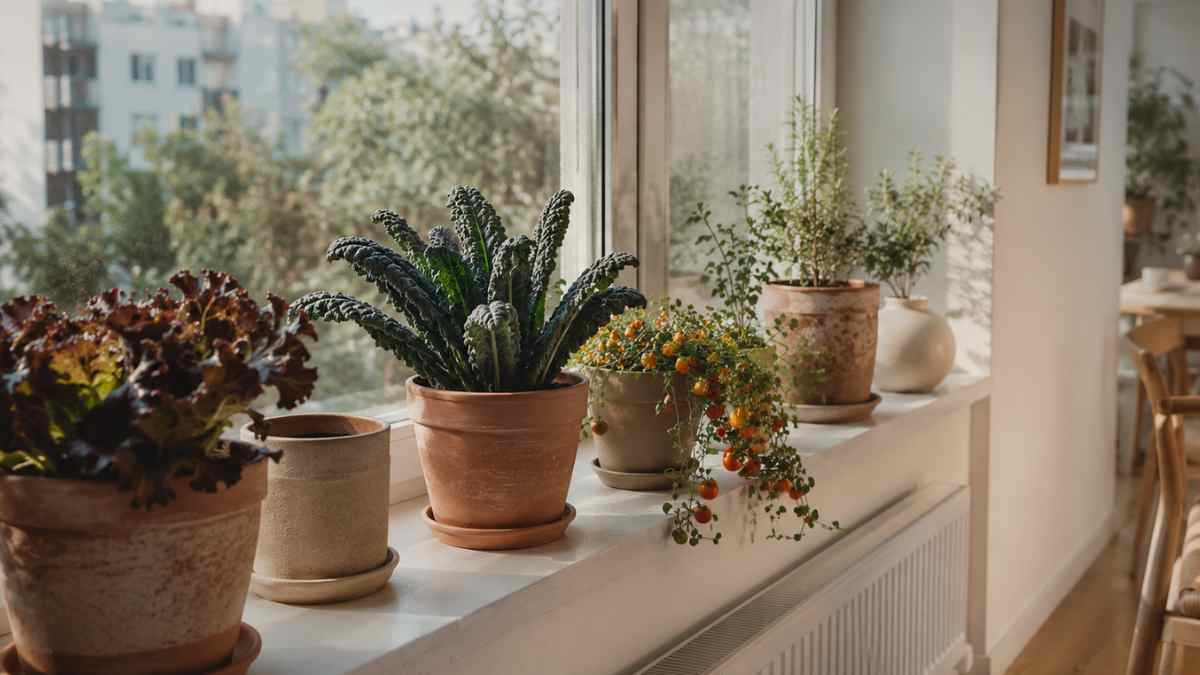
The ideal windowsill has a south or southwest orientation, with at least six hours of direct light in spring and summer. This does not exclude the winter months: with a well-exposed window and a heated apartment, radishes and valerian grow even in January. The width of the windowsill matters as much as the exposure: below 15cm, options are limited to single pots. From 25cm and above you can consider parallel rows or rectangular containers for an urban garden. Glass must also be taken into account: modern double glazing partially filters UV, which slightly slows growth compared to the outside, but does not compromise it.
A detail that few people consider is the heat of the window sill itself. Marble or natural stone windowsills accumulate cold at night in the middle season and can damage the roots of the most sensitive plants. A cork saucer or insulating mat solves the problem without aesthetic effects.
The one that really grows, without telling stories
The romance of the indoor garden soon collides with the reality of uncooperative plants. Classic tomatoes, for example, need much more root space than a windowsill pot can provide. However, there are dwarf and indoor varieties that are exceptions: Tumbling Tom by Suttons Seeds is a tomato specially designed for hanging containers or deep trays. The fruits are small, the plant stays below 40 cm and the decorative effect is remarkable.
Cutting lettuces, such as Lollo Rossa or Batavia, are the easiest to manage: they are sown directly in the container, do not need transplanting and are harvested in the outer leaves, leaving the center to grow. With a 30cm tray you can have a continuous supply for weeks. Radishes do the same thing in less time: from seed to harvest in three weeks, with a bright red shoot that looks great next to any pot.
Of the herbs, this works with basil, cilantro, chives and thyme. Rosemary tends to need more space and more drainage than an indoor plant can provide. Mint, on the other hand, grows very well: it is best to keep it in a single container because it colonizes any common container within a month.
An often overlooked but perfect indoor plant is the Black Tuscan Cabbage: leaves dark, almost blue, impressive structure, resistant to cold. It grows straight up to 50cm in a suitable pot and handles the fluctuating temperatures of an apartment very well.
Containers as style options, not alternatives
This is where the reasoning of interior designers comes in. The difference between a window sill with a vegetable garden and one that looks abandoned is almost always in the choice of containers. Clear plastic seedling trays are good for germination, not for show. Three weeks and then they are transfused into something chosen.
Hay, the Danish brand known for precisely designed home accessories, produces enameled metal containers available in neutral palettes that work well on both light-coloured window sills and dark surfaces. It costs around 25-40 euros depending on the size. Serax, Belgian brand with wide distribution in Italyhas a number of crude ceramic vases called Dusk that goes well with dark leaf lettuces: the texture-color contrast is already a composition.
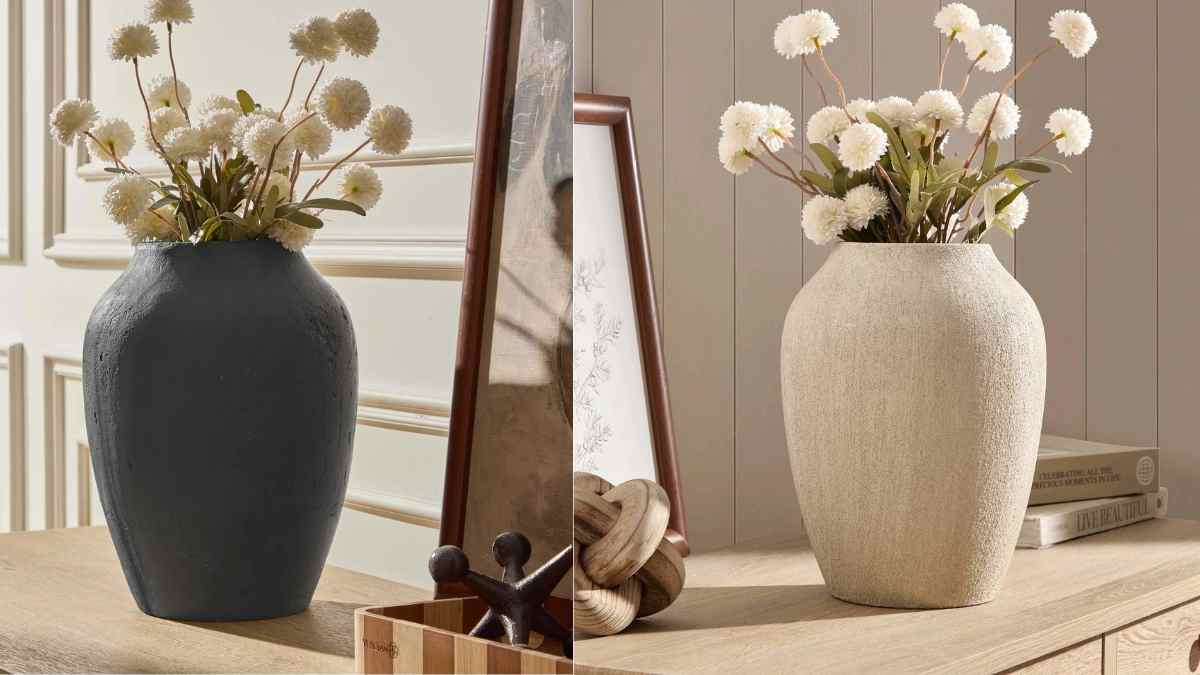
For those who want to spend less without sacrificing aesthetics, the Ikea terracotta pots from the Bittergurka range were specially designed for indoor herbs and vegetables and cost under 5 euros. They are not exciting individually, but lined up on a windowsill with three different varieties they become a neat and cohesive element.
The height of the pots is as important as the material: mixing tall and short pots on the same windowsill creates visual depth. A low-cut lettuce next to a tall black cabbage and a cascading tomato in a slightly raised container creates a composition that stands on its own, needing nothing else around it.
Vertical, hanging, on a shelf: when the vegetable garden becomes an installation
The windowsill is not the only option. Vertical wall structures are becoming an accurate reference in modern interior design, and not just because they do well on social media. In a studio apartment or a narrow kitchen, a vertical shelf with herbs and small vegetables solves both the problem of space and that of fitting the walls.
Rustik Ladana Swedish brand specializing in containers for urban gardens, produces steel wall panels with water-repellent felt pockets. They mount to any wall, require no deep drilling and hold up to 2kg per panel. Felt drains water slowly and maintains a constant humidity: a definite technical advantage, not just decorative.
Those who prefer a more handmade approach can work with wooden wall boards and clip-system vases, such as those from Manufactum’s Kräutertopf. Light wood with terracotta pots and dark green leaves is a combination that works in almost any setting, from minimal Scandinavian to warm Mediterranean.
The vases hang from the ceiling with macrame supports or metallic ones have a practical limit: they require a nearby window or the plants will spin or decay. But placed at a distance of one meter from a natural light source and combined with plants such as tomatoes or chives, they become an architectural element that structures the space vertically without occupying a horizontal surface.
A well-kept vegetable garden, with selected containers and healthy plants, it does exactly what a good piece of furniture does: it defines an angle, it brings an intention to the space. The salad on the windowsill, after all, is not an exaggeration. It’s just a choice of style that eats.



