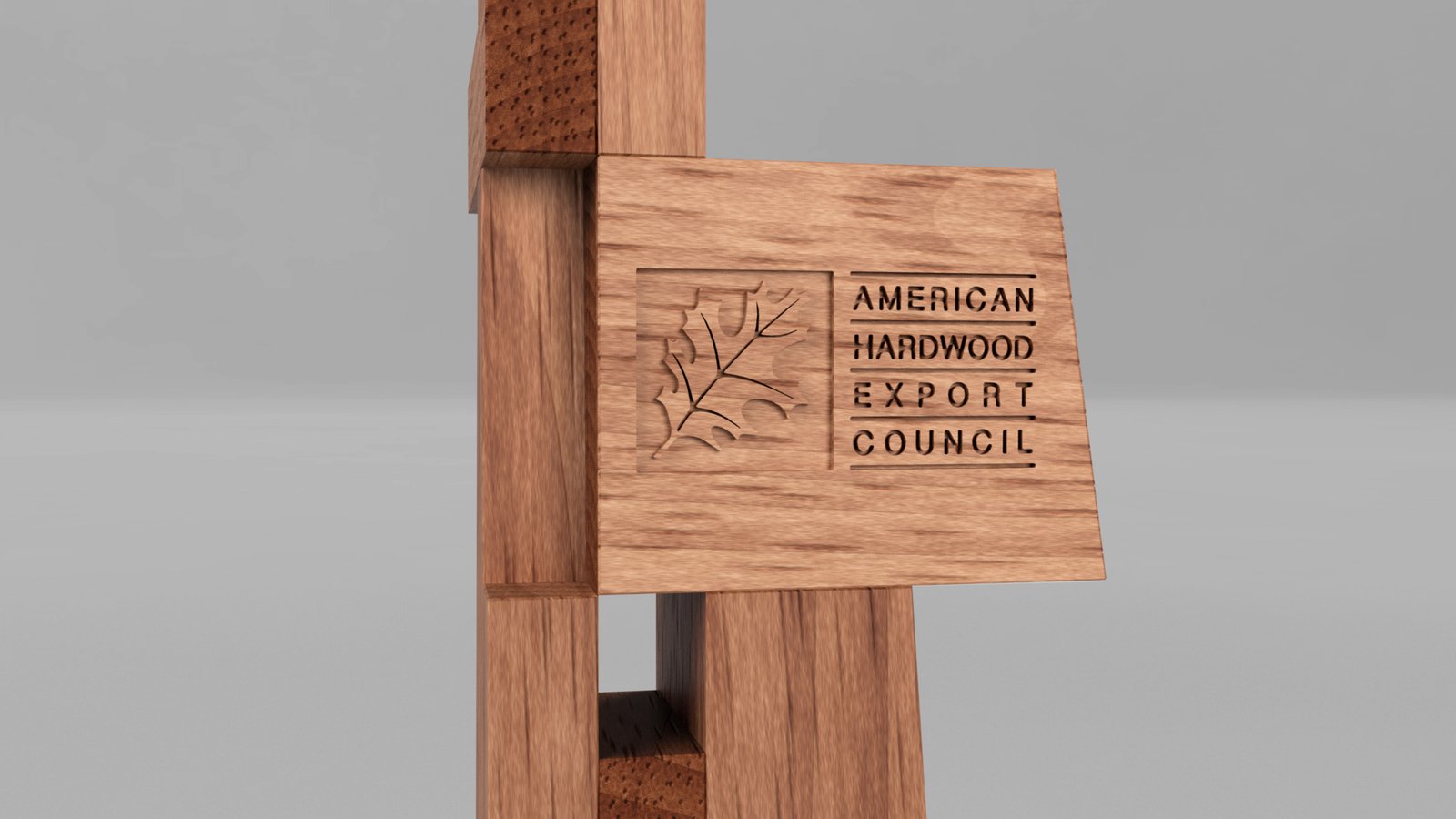

As design culture increasingly reckons with issues of sustainability, mass production and what meaningful innovation looks like, this year’s physical Clerkenwell Design Week Award it arrives as something refreshingly grounded: an object shaped by its own process, material intelligence, and quiet poetry.
Designed by Henry Marxthe sculpture prize uses American cherry to celebrate craft as an aesthetic language as much as a way of thinking. For Marks, whose practice bridges exhibition design and fine woodwork, the project also marked a deeply personal turning point. After almost two decades of designing museums, exhibitions and commercial environments in the UK and internationally, the founder of Marks Design began to re-examine his relationship with creativity following both the pandemic and the death of his father. “After years of working mostly in an office, I wanted to reconnect with the physical and practical side of the creative process,” he explains.
Currently completing a Diploma in Fine Woodwork, Furniture Design & Making at the Building Crafts College, London, Marks has adopted a more material-led practice where the construction itself creates form. Instead of approaching the CDW award as a conventional trophy, he re-approached it as an exploration of woodworking. The final object evolved around three basic gestures – engage, shift and receive – each derived from the natural logic of carpentry and timber construction.
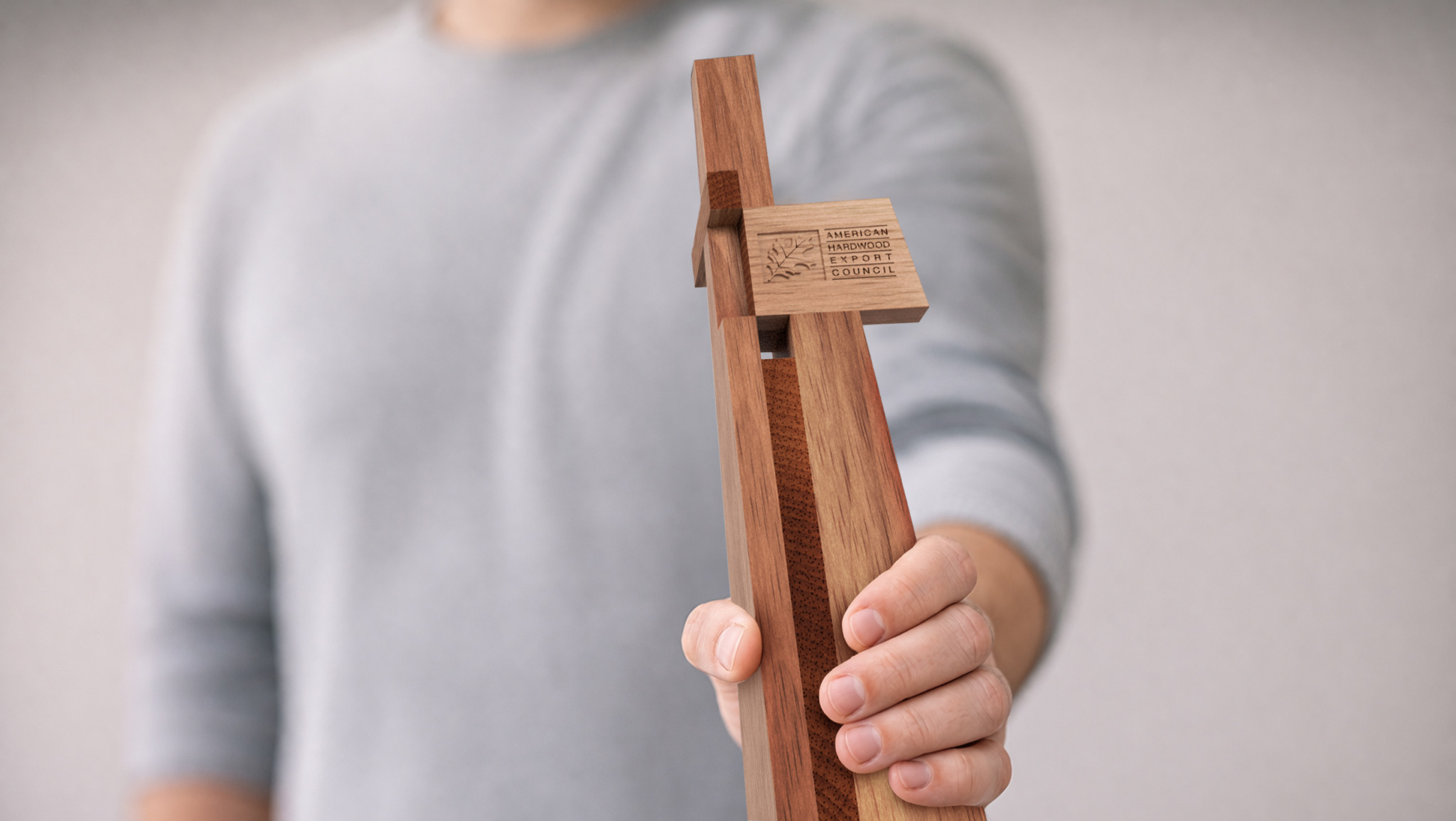
“The ‘ah-ha’ moment came when I stopped thinking of the object as a traditional trophy and instead approached it as a sculptural response to woodworking processes,” says Marks. “Once I allowed the geometry to take shape with the machining, offsets, rebates and voids created through fabrication, the design became much more clear and authentic to the material.”
This raw material approach resonated strongly with the American Hardwood Export Council (AHEC)which supported the initiative as part of its ongoing advocacy for essentially literate, responsible design. For David Venables, European Director of AHEC, the partnership was about driving the conversation forward. “We don’t care about branding,” he says. “We want to talk about a material.”
Crafted from wood supplied by AHEC, each award intentionally reveals tonal shifts, knots and grain variations that are often eliminated in commercial production. Marks embraced these inconsistencies as defining features rather than imperfections. “I was interested in exposing both the long grain and the end grain in the final form,” he explains, “allowing tonal variation and texture to become defining visual features of the object.”
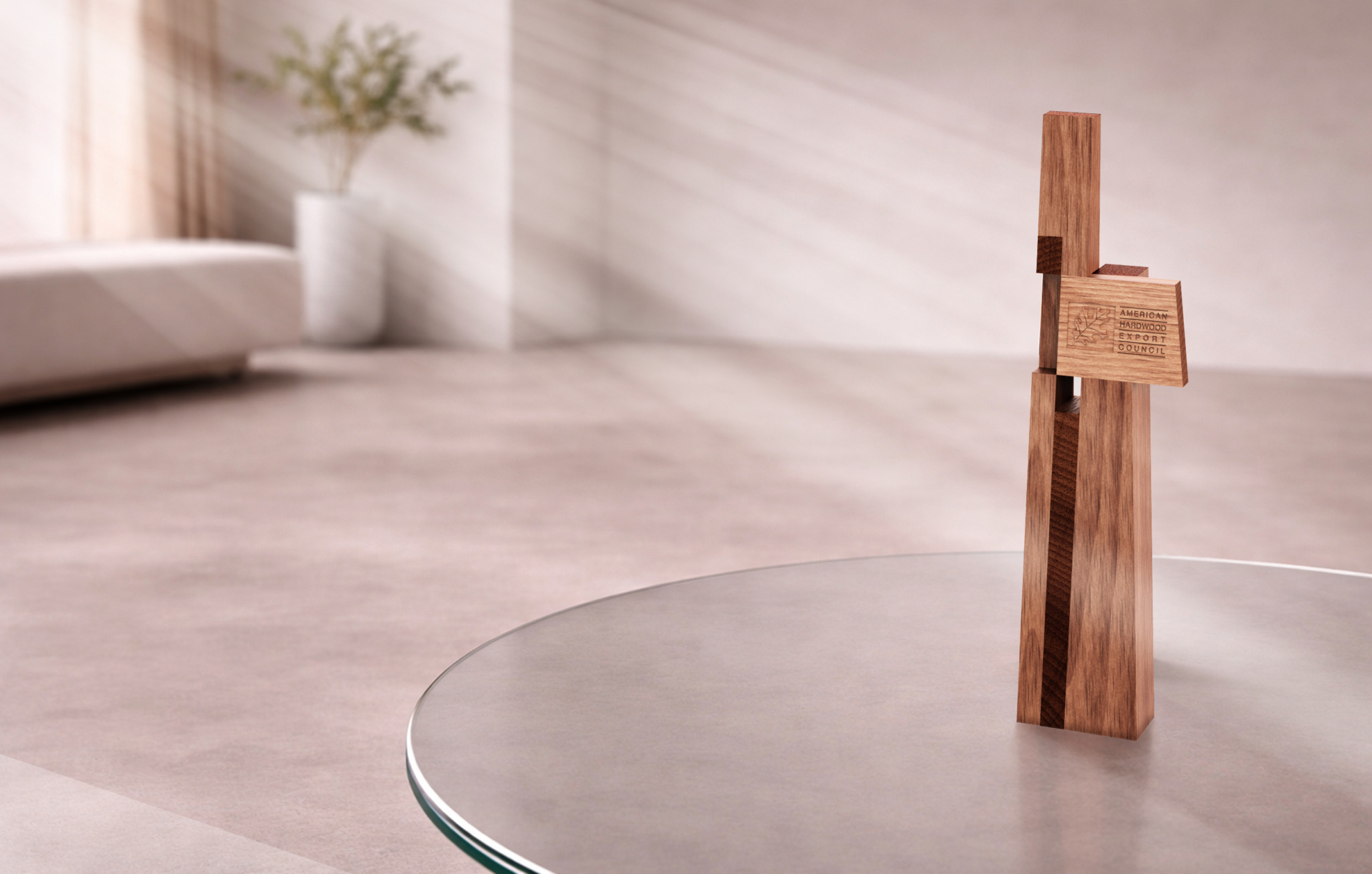
For Venables, this embrace of variation speaks directly to the designer’s future. “Nature doesn’t make consistency,” he says. “Each piece of wood is different … that’s the celebration.” In an age dominated by engineered surfaces and synthetic wood imitations, the award instead highlights the sensory and emotional qualities that only real wood can provide.
Even the production process reinforced these values. Working alongside the manufacturer Moe ReddishMarks refined the design through discussions of timber movement, grain direction, and laminating techniques. “Instead of treating production as a separate stage,” he says, “the processes of the workshop became the driving force behind the object’s geometry, character and meaning.”
The result is an enduring material story that will continue to evolve long after the ceremony itself as the cherry deepens in tone over time, bringing with it the marks of process, touch and use.