


Indoor plants seem to follow their own logic, oblivious to our care and schedules. You water consistently, you put them near the right window, you buy the soil recommended by the nursery. And then, almost out of spite, these leaves appear: first one, then three, then a whole branch that turns yellow for no apparent reason. The annoyance is understandable. But the problem, in the vast majority of cases, is not where you think.
Yellowing of leaves is one of the most misunderstood phenomena in houseplant care. It is almost automatically read as a sign of thirst and almost automatically responds with more water. This conditioned reflex destroys millions of plants in European apartments every year. The most common reason for yellow leaves is not drought: it is excess water and more specifically the resulting root rot.
Roots drowning in silence
Root rot develops when roots remain in contact with saturated substrate for too long. The roots stop working, they are no longer able to transport nutrients and water to the leaves, and the plant responds exactly as it would in a drought: it turns yellow. The physiological paradox is that an overwatered plant and a thirsty plant show the same visible symptoms.
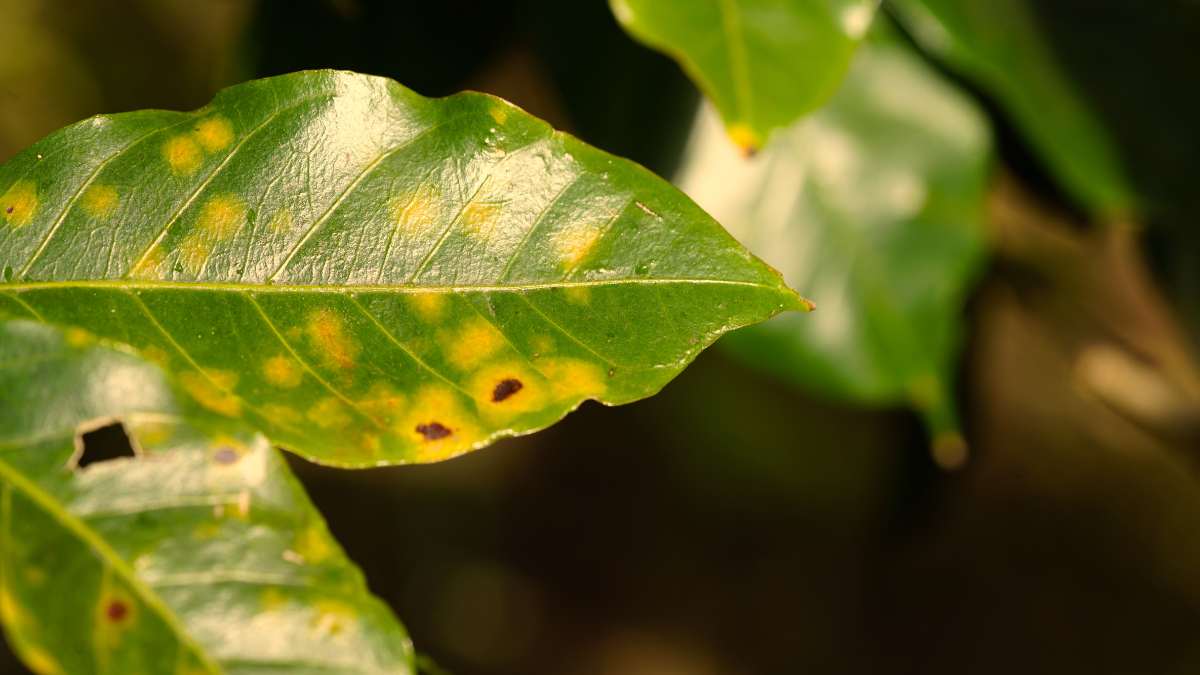
To complicate matters, pots without a drainage hole, very popular in modern interior design, retain excess water at the bottom of the substrate. Here an anaerobic environment is created where pathogenic fungi multiply, especially of the genus Pythium m Phytophthora. At that point the external appearance of the plant may remain intact for weeks, while below ground the damage is already extensive.
To check the actual condition of the substrate, simply insert a finger about three centimeters into the soil. If it’s still wet, don’t water it. For succulents and succulents the limit goes up: the soil must be completely dry before adding water.
The jar that looks right but isn’t
The choice of container has more influence than you might think. Decorative boxes, used without the inner perforated vase, are one of the main causes of stagnant water in Italian living rooms. Even the beautiful and widespread glazed ceramic jars slow down evaporation significantly compared to classic terracotta.
Brands such as Artevasi or Lechuza have developed water storage systems with level indicators to manage this problem: water is absorbed by the roots with a capillary system only when necessary. They are not cheap, the Lechuza Classico system starts at around 35 euros for the 28 cm shape, but they almost completely eliminate the risk of overwatering. For those who prefer to work with traditional pots, the layer of expanded clay at the bottom, at least two centimeters, remains the simplest and most effective solution to ensure drainage.
Size matters too. A pot that is too large compared to the plant keeps a moist substrate for weeks in the areas where the roots cannot reach. Rule of thumb: the diameter of the pot should not exceed that of the root by more than three centimeters.
When a single leaf turns yellow, the situation changes
Not all yellowing is pathological. Older leaves, the basal ones closest to the ground, naturally turn yellow during the plant’s life cycle. A Lyrata fig or one Monstera Delicious They regularly lose their older leaves and this does not indicate any problem. The difference is the distribution: if the yellow leaves appear scattered throughout the plant or on the younger branches, the problem exists. If it is exclusively the lowest and oldest leaves, it is normal physiology.
A second frequent scenario concerns nutritional deficiencies. Iron is the micronutrient most often lacking in indoor plants: its deficiency causes intravenous chlorosiswith the veins remaining green while the leaf blade turns yellow. It can be solved with liquid chelated iron, available at any garden center for a few euros, applied both foliarly and on the substrate.
Nitrogen deficiency, on the other hand, produces a uniform and progressive yellowing that always begins in the oldest leaves. In this case the answer is a balanced fertilization with an NPK fertilizer, such as the classic Substral or Compo Sana for green plants, to be used in the months of active growth, April-September, and suspended in winter.
The effect of location that no one really considers
Cold air currents are an often underestimated factor. A plant located near a window that is opened frequently in winter or next to an air conditioner in summer undergoes repeated temperature changes manifested by yellowing and leaf drop. The ideal temperature for most tropical apartments is between 18 and 24 degreeswithout sudden changes.
Modern apartment design has made this problem more common: large open spaces, floor-to-ceiling windows, ceiling fans. All architectural solutions that create micro-currents that are difficult to perceive but which the plants register accurately. Ficus, Calathea and Strelitzia are among the species most sensitive to this type of stress. Sansevieria, Zamioculcas and Pothos, less demanding, cope better with unstable conditions.
An ornate Calathea with leaves turning yellow at the tips before curling, in a centrally heated apartment eight months of the year, is almost certainly suffering from excessively dry air. The optimum relative humidity for this species is about 60 percent: a room humidifier or a saucer of gravel and water can make a difference without any chemical intervention.
Plants do not communicate with urgency, but with accumulation. That yellow leaf that seems to have appeared overnight says something that lasted for weeks. Reading the signal correctly, without projecting the answer we already had in mind, is half the battle.



