
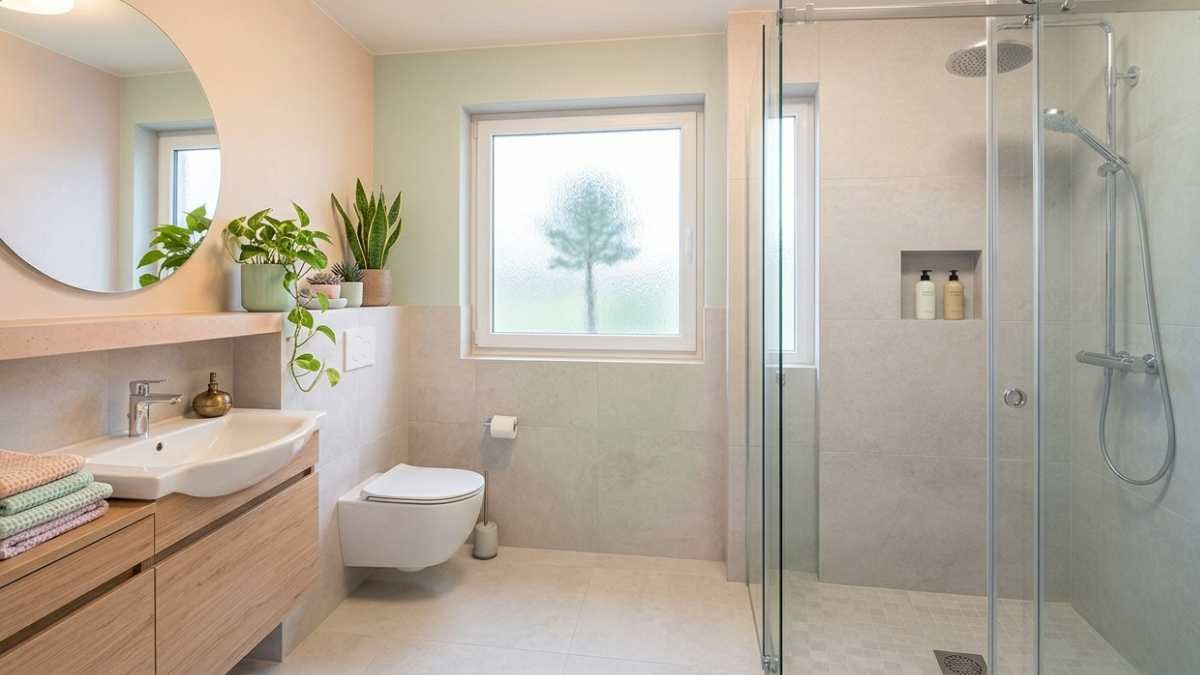

A small shower is not necessarily a problem. It can work very well, even in a compact bathroom, but only if the dimensions are planned correctly. When you’re wrong by a few centimeters, however, the difference is felt every day: limited movements, constant impacts, water coming out everywhere. And this is precisely the point that is often underestimated.
The problem is not that we have little space, but you don’t understand how much you really need to use it well.
How big should a small shower be?
Many bathrooms are designed starting from minimal theoretical measurements, but in practice the perception changes completely. A 60×60 cm shower, for example, may seem ample on paper, but once inside it quickly becomes apparent how restrictive it is. You can’t move freely, you hit walls easily and every gesture becomes more complicated.
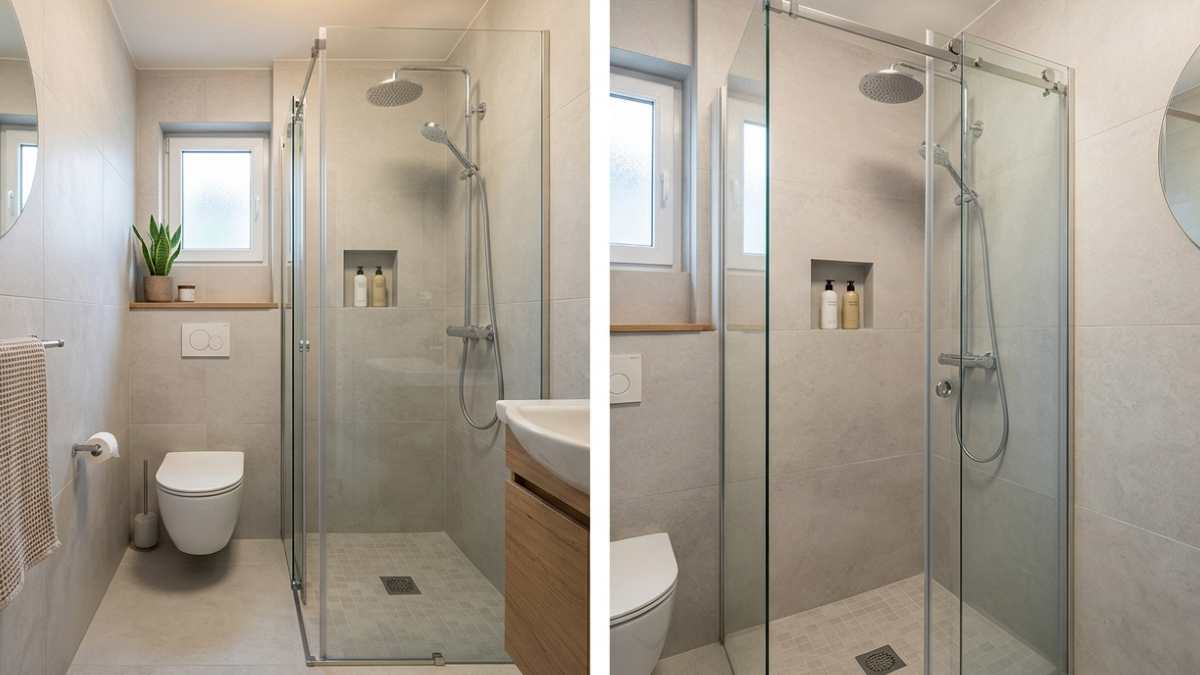
When you go up to 70×70 cm, the situation improves slightly, but it is still a marginal solution. It may work in extreme cases, but it is not a measure that guarantees comfort over time. It’s around 80×80 cm that a shower is starting to become really usable. The space allows for more natural movements, you can turn without difficulty and the experience changes completely.
Even better if one of the two dimensions is extended, reaching 80×100 or 90×90 cm. In these cases, even in a small bathroom, the shower becomes a space that is used without thinking about it. The difference is not just numerical, but practical. These are the ones a few centimeters higher which avoid the feeling of contraction.
How the perception of space changes
It’s not just the actual size that matters, but how it’s perceived. An enclosed shower with thick walls or very prominent profiles tends to appear smaller than it is. Instead, a lighter solution, maybe with transparent glass and without too many visual elements, it gives a feeling of greater openness.
Floor continuity also plays a fundamental role. When the The shower tray is integrated and does not create a clear break, the space seems wider. However, if there is a step or change in material that is too obvious, the shower immediately looks smaller. Light, as is often the case, makes all the difference. A shower with good lighting, perhaps with diffused and not direct light, is more welcoming and less “closed”.
The most common mistakes when designing a small shower
The most frequent mistake is choosing the smallest possible size thinking of saving space in the rest of the bathroom. In fact, it achieves the opposite effect: an uncomfortable shower that makes the environment less functional. Another mistake concerns openings. Hinged doors in small spaces they can become an obstacle, both inside and outside the shower.
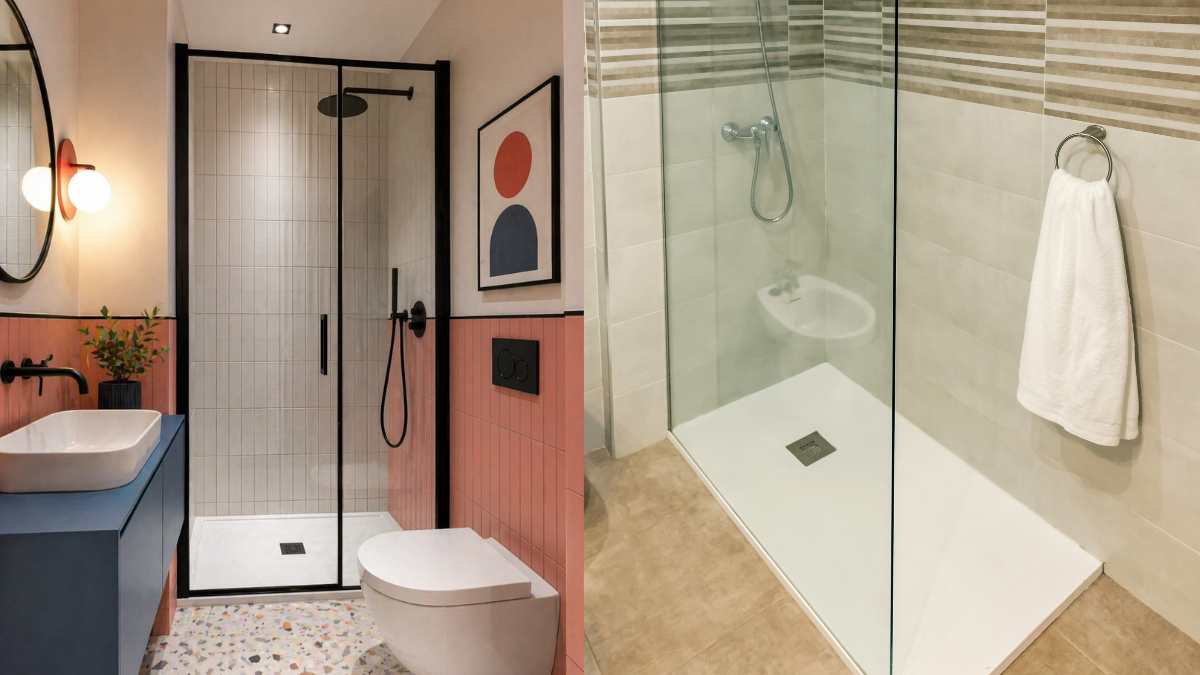
The location of the shower head or mixers is also often underestimated. If they are placed without taking into account the actual space, you risk finding yourself with water jets too close to the walls or with limited movements. Finally, there is the mistake of thinking only about measurement without considering everything else. A shower may also be the right size, but still be awkward when combined not coherently designed.
The golden rules for a practical and functional shower
A compact shower works when every element is proportionate. The dimensions are sufficient for movement, the surfaces do not weigh down the space and the whole is designed to be used daily without difficulty. In a small bathroom, this is often better give a few inches elsewhere to have a more comfortable shower. It’s one of those spaces that gets used all the time, so it has to really work.



